Back to All Buyer's Guides Sectors

Industrial Web Search Buyer's Guide Sector

Water & Wastewater Treatment Equipment

Equipment and systems for industrial water in both directions: process and utility water made from source water, and wastewater treated to a permit before it leaves. This sector covers equipment makers, system houses, and service companies behind neutralization, chemical treatment, clarification and flotation, biological systems, membranes and polishing, disinfection, and sludge handling; the permit framework that writes every specification; and the analysis-first buying sequence the whole trade runs on.

Overview

How Treatment Is Specified, Bought, and Proven

Orientation before the RFQ: a sector where the specification is written by a regulator, priced from a laboratory report, and proven by numbers a permit will someday audit.

The specification in this sector is not written by the buyer or the seller. It is written by a permit. If your plant discharges directly to a river or lake, you hold a national permit with a numeric limit for each pollutant. Most industrial plants discharge to a public sewer instead, and those live under three layers of rules at once: national prohibitions on anything that would pass through or upset the public treatment plant, federal limits set industry by industry at 40 CFR Parts 405 through 471, and the local limits each sewer authority writes to protect its own works. One definition is worth learning before anything else: significant industrial user. The standards section below states it in full, because misreading it is the most expensive mistake a reader could take from this page.

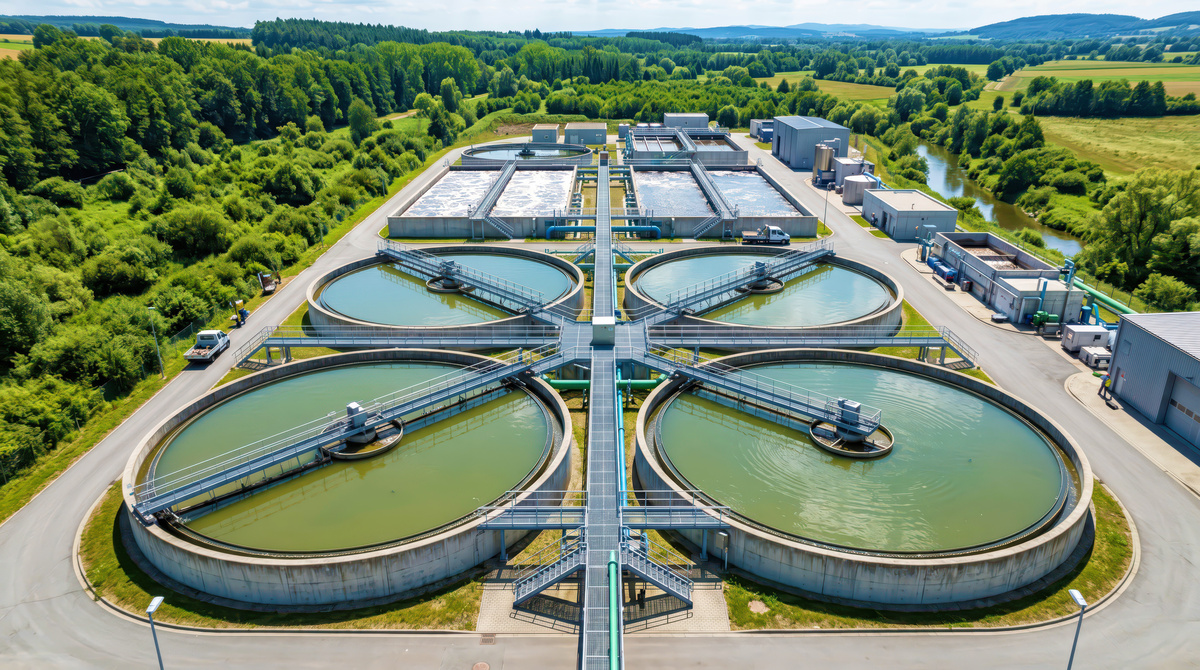
Industrial wastewater treatment system with chemical dosing, process instrumentation, neutralization equipment, and separation stages.

So the buying sequence inverts the usual order: the permit is page one of the RFQ, the laboratory analysis of your actual water, run to standard methods, is page two, and equipment answers those two documents rather than being the subject of the conversation. The sector serves both directions of the pipe: water made pure enough to use and wastewater made clean enough to leave, and its boundaries, the filtration sibling page for elements, separators, and presses, the heating page's feedwater, the pressure vessels page's tanks, and this wave's control panels page, each hold detail the first FAQ maps.

What a buyer controls is the sequence and the arithmetic. The sequence is analysis first: composite samples over real production, characterized by an accredited lab, then jar tests and treatability work, your water in beakers across chemistries and doses; this sector's version of the dust world's hazard-analysis-first rule, and only then a train, staged by contaminant class with equalization and neutralization doing the cheap universal work up front. The arithmetic runs on load, not strength: concentration times flow is pounds per day, and that number, not the brochure, sizes treatment. Three economic truths then govern the decade. Guarantees are written in influent and effluent, an effluent promise against a bounded influent envelope, and a guarantee without the envelope is weather forecasting. Sludge is the output nobody prices until it arrives, hauled by the ton on local rates, so dryness is a design lever and disposal math justifies dewatering. And the sector runs two commercial models: owned equipment with an operator burden, or the chemical-and-service programs whose attention is real and whose gravity toward chemical margin is also real, a choice the cards below insist be made deliberately, with exit terms written while everyone is still friends.

The supplier base tiers by direction, chemistry, and scale. Equipment manufacturers build the units, clarifiers, DAF systems, presses, feed skids, UV, largely sold through representatives and integrators. System houses and integrators engineer the trains, packaged plants at the small end, engineered biological and membrane plants at the large end, carrying the process guarantee this sector uniquely demands. The chemical-service companies run the program model, dominant in cooling and boiler work and common in chemistry-driven wastewater, selling attention and adaptation by contract. Around them: accredited laboratories producing the analyses everything rests on, treatability and piloting services, operations firms that staff what licensing requires, and the media, resin, membrane, and lamp supply whose consumable economics the filtration page's interchange lesson covers. Routing follows the pipe and the scale: utility-water programs to the service tier or the softening and demineralization specialists, permit-driven wastewater to system houses fluent in your industry's categorical standards, single-unit needs to manufacturers and their representatives, and anything with a compliance date attached to whoever shows treatability data first, because in this sector the calendar is regulatory, and the analysis is the schedule's first item either way.

Sourcing Considerations

How to Buy Treatment: 6 Things to Get Right

Six controls, from the permit that writes the spec to the sludge that rules the math. The first two set the sequence; the middle pair shape the train; the last two decide the decade.

01

Start from the permit and the analysis, in that order

Attach the permit, national, categorical, or local, because it is the specification, and attach the laboratory characterization of your actual water, composite-sampled over real production and analyzed to the approved methods of 40 CFR Part 136, the regulatory list that itself points into Standard Methods and its companions, because it is the price. State flows with their swings and loads in pounds per day. A treatment RFQ without these two documents is an invitation to assumptions, and assumptions here mature into permit excursions with your name on the notice.

02

Test before you buy

Run jar tests and treatability work before you select equipment; your water, candidate chemistries, real doses, scaled to piloting where the stakes justify. Treatability is cheap; it converts vendor claims into observed results, and it is the difference between a train engineered to your water and a train engineered to a brochure's. A bidder who quotes without asking for your water has quoted someone else's project.

03

Buy the train, and price the sludge with it

Specify by stage against contaminant class, screening and grit first so rags and stone never meet a pump, equalization and neutralization next, then removal matched to the analysis, and require every quote to state its outputs: expected sludge production, cake dryness, regeneration wastes, membrane concentrate. Concentrated residuals are the sector's invoice that arrives later, hauled at local rates forever, so the disposal math belongs in the evaluation, and the low bid that makes wet, abundant sludge is high in disguise.

04

Choose the commercial model with your eyes open

Service programs bundle chemicals, monitoring, and expertise, and their attention is real; so is their gravity toward chemical margin and supplier-tied equipment, this sector's proprietary element. Owned equipment trades that dependence for an operator burden that licensing may formalize. Either way, write the clean version: performance in effluent numbers against a bounded influent, consumption stated and reviewable, equipment title and data ownership explicit, exit terms agreed while everyone is still friends.

05

Specify the evidence layer with the treatment

The permit will be judged on records, so buy them together: discharge flow measurement, continuous pH with recording where regulated, composite samplers, analysis to the standard methods with chain-of-custody intact, and the telemetry that turns readings into the reports your control authority expects. Wire instrumentation into the same controls, calibrate on a program, and remember the sector's hard rule: a plant that treats perfectly and cannot prove it holds the same paper as one that failed.

06

Gate acceptance on permit numbers, and own the documentation

Stage acceptance the platform's way, factory acceptance on skids and controls, then the commissioning demonstration this sector adds: performance against the permit's parameters on your real water, sustained long enough to mean something, with biology given its honest startup time. Own the file, drawings, O&M manuals, calibration and commissioning records, control programs per this wave's panels page, and the consumables list with more than one source where interchange allows, because the file is what regulators audit and successors inherit.

Glossary

Water Treatment Glossary: Key Terms Explained

The terms you will meet on a permit, a water analysis, or a treatment quote, in plain English.

28 terms

Aeration and blowers

The oxygen supply for biological treatment: diffusers on the basin floor fed by blowers, usually the plant's largest electrical load, since the microbes doing the work breathe what the blowers deliver. Aeration efficiency is where wastewater energy bills are won; blower turndown decides how gracefully a system follows load, and a bidder's aeration story, diffuser type, blower technology, and controls, is a fair proxy for their engineering seriousness.

Biochemical oxygen demandBOD

The permit vocabulary's central number: how much oxygen microbes consume while eating organic matter in a water sample; the standard measure of biodegradable pollution. High BOD is what biological treatment removes; permits cap it because it suffocates receiving waters, and its ratio to the chemical measure below is a quick screen for whether biology will work on a given waste at all.

Biological treatment

Treatment by cultivated appetite: activated-sludge basins, moving-bed reactors with biofilm carriers, and their relatives, where maintained microbial populations eat dissolved organics that no filter could touch. Biology is powerful and alive; it needs steady food, oxygen, and temperature, punishes shock loads, and produces sludge as its byproduct, which is why the entries on aeration, sludge, and equalization keep orbiting it.

Chemical feed and metering

The dosing machinery of treatment chemistry: metering pumps, day tanks, dilution and injection hardware delivering coagulants, caustics, acids, and polymers in proportion to flow or to an instrument reading. Feed systems are small equipment with outsized consequences, since a failed pump is a permit excursion in progress, and redundancy, calibration, and chemical compatibility of wetted parts are specification items, not accessories.

Chemical oxygen demandCOD

The blunter, faster cousin of the biochemical measure: total oxygen demand of everything oxidizable in the sample, biodegradable or not, returned by the lab in hours rather than days. COD tracks total organic load; the gap between COD and BOD flags the fraction biology cannot eat; and industrial permits and surcharge bills often speak in it, which is why both numbers appear on any serious analysis.

Chlorination and chemical disinfection

The residual half of disinfection: hypochlorite feed as the industrial workhorse, gas chlorine at scale, chlorine dioxide where its chemistry earns the handling, all leaving the measurable residual that keeps protecting downstream, which is the property UV cannot offer and some duties require. The price is chemistry: disinfection byproducts where organics are present, dechlorination where permits cap the residual itself, and feed-system safety as a specification item. Choosing between the chemical and UV answers is an application decision, not a fashion.

Clarifiers and settling

Gravity doing the first and cheapest work: basins shaped so solids sink and clear water decants, from simple settling tanks to mechanically raked circular clarifiers, with plate and tube packs multiplying settling area inside small footprints. Clarification is bought by surface loading and solids characteristics; it anchors both ends of biological plants, and its failure mode, solids washing out, is usually an upstream chemistry problem wearing a downstream disguise.

Coagulation and flocculation

The chemistry that turns small dirt into big dirt: coagulants neutralize the charges that keep fine particles suspended, and flocculants knit the neutralized particles into settleable, floatable, or filterable floc. Dose and chemical selection come from jar testing rather than theory; the same water can need different programs season to season, and this chemistry is the hinge on which clarifiers, flotation units, and presses all perform.

Discharge permit

The document that writes this sector's specifications: for direct dischargers, the national permit with numeric limits per pollutant; for the majority who discharge to a public sewer, the pretreatment stack, national prohibitions against pass-through and interference, industry-specific categorical standards, and the local limits each treatment authority sets for its own plant. Every treatment purchase traces to one of these documents, which is why the permit, not a brochure, is page one of the RFQ.

Dissolved air flotationDAF

Clarification upside down: water saturated with air under pressure, released into the vessel as clouds of microbubbles that attach to fats, oils, and light solids and float them into a skimmed blanket. DAF owns the wastes that will not sink: food processing, oily wastewaters, and its performance rides on the coagulation chemistry ahead of it, which is why a DAF quote without a jar test attached is a shape without a size.

Equalization

The cheapest treatment there is: a tank sized to absorb the swings, flow surges smoothed, strong slugs blended into treatable averages, so every process downstream meets water it was designed for. Equalization is why batch plants can feed continuous treatment, why neutralization control stops hunting, and why the first answer to a variability problem is volume, not equipment; its sizing comes from the flow record, and its absence shows up everywhere else as oversized, twitchy, or excursion-prone stages.

Fats, oils, and greaseFOG

The permit vocabulary's plumbing enemy: the fraction that coats, congeals, and blocks sewers, capped by nearly every local authority and monitored with particular zeal around food industries. FOG drives interceptors, DAF systems, and skimming equipment; its limits are local and enforced with inspection authority, and it is the parameter most likely to bring a municipal inspector to an industrial door unannounced.

First article inspectionFAI

Full verification of initial equipment against the drawings and specification before shipment or quantity production; the gate every engineered sector on this platform runs through. Here it applies to skids, packaged plants, and fabricated equipment, staged as factory acceptance where controls can be exercised, and it sits beside, not instead of, the performance demonstration against permit numbers that this sector adds at commissioning.

Granular activated carbonGAC

Adsorption in a vessel: activated carbon beds grabbing dissolved organics, taste-and-odor compounds, and several of the persistent contaminants regulators keep adding to lists, until the carbon exhausts and is exchanged or reactivated. GAC is bought as vessels plus a carbon-change service rhythm; its economics are consumable, and breakthrough monitoring, knowing when the bed is spent, is part of the specification rather than an afterthought.

Influent and effluent

The sector's directional vocabulary: influent is what arrives at a treatment step, effluent is what leaves it, and every performance claim is a relationship between the two. The words matter commercially because guarantees are written in them: an effluent number promised against a defined influent envelope, and a supplier who guarantees effluent without bounding influent has promised you the weather.

Ion exchange and softening

Chemistry on beads: resin beds swapping ions, hardness out and sodium in for softening, cations and anions both for demineralized water, selective resins for targeted contaminants, regenerated in place with salt or acid and caustic on a cycle. Ion exchange runs process-water treatment across industry; its resins are consumables with the interchange economics the filtration page teaches, and regeneration waste is a sludge-like output that belongs in the operating cost from day one.

Jar testing and treatability

The sector's cheap first experiment: your actual water, dosed in beakers across a range of chemistries and doses, watched for what settles, floats, and clarifies, scaled up to piloting when stakes justify. Treatability work is to treatment what the dust hazard analysis is to dust collection: the analysis that comes before the equipment, and a treatment train quoted without it is a guess wearing a flow diagram.

Membrane bioreactorMBR

Biological treatment with the clarifier deleted: activated sludge run against submerged membranes that filter the treated water out directly, producing effluent quality conventional settling cannot reach in a fraction of the footprint. MBRs trade capital and membrane replacement for land and polish; they inherit the fouling-and-cleaning rhythms of all membrane systems, and they are the classic answer where space is tight, and reuse, or strict limits loom.

Membrane systems

The pressure-driven ladder applied to water: microfiltration and ultrafiltration polishing solids and microbes, nanofiltration and reverse osmosis removing hardness and dissolved salts, in trains with pretreatment ahead and concentrate management behind. The element-level story, ratings, fouling, integrity, lives on this platform's filtration and separation page; here, membranes appear as system decisions, recovery, cleaning cycles, and the concentrate stream that does not vanish because the permeate is clean.

Neutralization and pH control

The universal first job: acids and caustics metered against continuous pH measurement to bring wastewater inside the band nearly every permit specifies, commonly in the middle single digits to around nine. Neutralization looks trivial and is not: pH electrodes drift, and foul, reagent demand swings with production, and control stability under swinging load is the real specification, which is why equalization tanks are neutralization's best friend.

PFAS treatment

Regulators are moving on persistent fluorinated compounds, with limits that are jurisdiction-specific and changing, which is why this page names the technologies and leaves the numbers to your permit. The recognized removal tools are adsorption on activated carbon, selective ion-exchange resins, and high-pressure membranes, each producing a concentrated residual that must itself be managed, and the buying sequence is unchanged from everything else here: analyze, run treatability on your actual water, then size.

Scale and corrosion control

The process-water side's chronic chemistry: cooling towers and boilers concentrate minerals as water evaporates, and scale and corrosion race each other, managed by softening, blowdown, and inhibitor programs. This is where the sector meets this platform's heating and thermal world: boiler feedwater treatment protecting the equipment that page covers, and it is the classic home of the chemical-service commercial model the cards below examine.

Screening and grit removal

The train's actual head, ahead of everything this page stages: bar screens and fine screens taking rags, plastics, and solids that jam pumps and wrap clarifier rakes, and grit removal dropping the sand and stone that grind impellers and fill basins. Screening is protective rather than glamorous, its sizing runs on channel hydraulics and screenings handling, and a train described without it starts one unit operation downstream of where the water arrives.

Sludge dewatering

The output nobody prices until it arrives: treatment concentrates pollution into sludge, and sludge leaves the site by the ton, so dewatering equipment, presses, centrifuges, and their kin, exists to buy dryness. Cake solids in the double-digit percentages are the lever, since every point of dryness is hauling weight removed; disposal is quoted locally and rules the lifecycle math. The press-and-centrifuge machinery itself is shared territory with the filtration page next door.

Total suspended solidsTSS

The permit vocabulary's particle number: the milligrams per liter of material a filter catches from a sample, the measure of everything clarifiers, flotation, and filtration exist to remove. TSS is capped in essentially every discharge framework; it is the cheapest parameter to monitor and the fastest to violate when chemistry drifts, and paired with BOD it sketches a wastewater's character in two numbers.

Ultraviolet disinfectionUV

Disinfection by dose: water passes close to UV lamps whose light disables microorganisms without adding chemicals or byproducts, with performance depending on dose, lamp output, contact geometry, and water clarity. UV's dependence on transmittance makes upstream clarity part of the disinfection design; validated dose is the honest specification language; and lamps and sleeves are consumables on a schedule, one more annuity to price at purchase.

Units of the trade

The arithmetic the sector speaks: concentrations in milligrams per liter, interchangeable with parts per million for water; flows in gallons per minute for equipment and gallons per day for permits; and loadings, the number that actually sizes treatment, as pounds per day, concentration times flow times the conversion constant. Two waters with the same concentration and different flows are different projects, which is why every serious conversation here runs on load, not strength alone.

Zero liquid dischargeZLD

The end of the treatment spectrum: systems that return water for reuse and reduce the residual to solids, evaporation and crystallization behind heavy pretreatment, so nothing liquid leaves. ZLD is real engineering with real energy costs, bought where permits, water scarcity, or corporate mandates demand it, and its mention in an RFQ instantly sorts the supplier field down to the engineered-systems tier.

Standards

Water Treatment Standards: the Permit Stack, NSF/ANSI 61, and the Methods

What each framework governs and why a buyer should care. Which ones apply depends on where the water goes, what the permit says, and whether anyone will ever drink it.

Regulatory and certification frameworks

The permit stack: NPDES and pretreatment

Established under the Clean Water Act and administered by EPA, states, and local authorities together: direct dischargers hold national permits with numeric limits. At the same time, most industrial plants discharge to public sewers under the pretreatment program, three layers deep. National prohibitions bar discharges that pass through or interfere with the public plant; categorical standards, codified by industry at 40 CFR Parts 405 through 471, set federal limits for specific sectors; and local limits protect each treatment authority's own plant and sludge. One sourced threshold is worth knowing cold: at roughly 25,000 gallons per day of process wastewater, or five percent of the local plant's capacity, a facility becomes a significant industrial user, with a control authority, permits, and reporting attached. The buyer consequence is the page's thesis: the permit writes the specification, so it goes in the RFQ.

NSF/ANSI 61 and 372 potable contact

Published through NSF and ANSI as the certification standards for drinking water system components: the health-effects standard governing what materials in contact with potable water may leach, and its lead-content companion. They apply the moment treated water is destined for drinking or food contact, and they apply at the component level, pipes, tanks, coatings, gaskets, media, which is why potable-adjacent projects specify certified components by name and why suppliers serving that market print the marks. Outside potable service, their lesson still travels: contact materials are a specification, not a default.

Standard Methods and the analysis language

Published jointly by the water professions' associations as Standard Methods for the Examination of Water and Wastewater: the laboratory bible behind every number this sector runs on, the procedures by which BOD, COD, TSS, metals, and the rest are actually measured. It matters to a buyer because comparability lives in it: an analysis run to the standard methods by an accredited laboratory is the document treatment can be designed and guaranteed against, and permit compliance is demonstrated in its language. The specification habit is short: sample per the permit, analyze to the methods, and attach the report to the RFQ.

Design, validation, and the sibling boundary

AWWA standards

Published by the American Water Works Association: the waterworks equipment library, standards for tanks, valves, pipe, treatment chemicals, and plant practice that the drinking-water world builds to and the industrial water world borrows from freely. Their buyer value is specification vocabulary with pedigree: calling a tank, a valve, or a chemical to its AWWA standard summons known construction and quality without a custom specification, and suppliers fluent in the library are telling you which world trained them. The association itself reappears below as one of the sector's two institutional anchors.

UV disinfection validation

Framed by the drinking-water world's validation protocols and the certification standards for point-of-use systems: the discipline of proving delivered UV dose by bioassay rather than trusting lamp wattage arithmetic. It matters because UV performance is invisible; the water looks identical either way, so validated dose, monitored intensity, and transmittance assumptions stated in writing are what separate a disinfection system from an array of lamps. For industrial buyers, the borrowable habit is the specification form: dose, at what transmittance, demonstrated how.

Hydraulic Institute pump standards

Published by the Hydraulic Institute, the pump industry's standards body: the test, performance, and installation standards behind the sector's most numerous machines, since every train on this page moves its water with pumps, transfer, metering, sludge, and recirculation alike. Their buyer value is the vocabulary of honest pump buying: performance curves tested to standard, net positive suction head stated rather than assumed, and materials matched to the chemistry the analysis revealed. Pumps are where treatment systems quietly succeed or fail, and a system house fluent in the institute's language buys them accordingly.

Membrane and element standards

Carried on this platform's filtration and separation page, where the rating systems, integrity tests, and element economics live: the sibling territory this page deliberately does not duplicate. Here, membranes are bought as systems, recovery, pretreatment, cleaning, concentrate, while the element-level claims, what a rating means and how it is proven, follow the sibling page's rules. The boundary is a feature: one page teaches the element, this one teaches the train, and the two were written to be read together.

Quality, operations, and the institutional anchors

ISO 9001

Published by the International Organization for Standardization: the baseline quality registration across this sector's equipment makers and system houses. Here, its useful residue is documentation of engineered systems: drawings under revision control, weld and material records where vessels and tanks carry ratings, calibration behind the instruments that will someday testify to a regulator, and the factory-acceptance records this platform keeps telling buyers to own. Registration shortens the first conversation; treatability data, reference installations on water like yours, and commissioning records decide the rest.

Operator certification and the service boundary

States administer this: licensing frameworks for treatment operators, including industrial pretreatment in many jurisdictions, quietly shape how this sector is bought. Where licensed attention is required, and plants do not staff it, the service model fills the gap, and everywhere the question of who will run this belongs in the purchase alongside what we will buy. The honest specification names the operating assumption: staffed by whom, at what certification, with what remote support, because equipment that outruns its operators performs like its operators, not like its brochure.

WEF and AWWA, the two anchors

The Water Environment Federation on the wastewater side and the American Water Works Association on the water side: the sector's twin institutional anchors, publishers of the manuals of practice and the standards library respectively, co-publishers of the laboratory methods, and hosts of the industry's education and gatherings. Neither binds a buyer; both trained most of the engineers who will bid your work; and fluency in their literature is the closest thing this fragmented sector has to a shared method. A bidder who cites the manuals of practice unprompted has told you where their designs come from.

Frequently Asked Questions

Water & Wastewater Sourcing FAQs

Direct answers to the questions buyers ask most often when sourcing in this sector.

Equipment for industrial water in both directions: process and utility water made from source water, softening, demineralization, filtration trains, disinfection, boiler and cooling programs, and wastewater treated to a permit before it leaves, neutralization, chemistry and clarification, biological systems, polishing, and sludge handling. Each boundary has its own page here. Element-level filtration and membranes, oil-water separators, and the press machinery are shared territory with the filtration and separation sibling page, written to be read with this one. Boiler feedwater protects the equipment on the heating page. Tanks and pressure-rated vessels follow the vessel world's rules. And the control panels running every train belong to this wave's control panels page. What stays firmly here is the logic that connects them: an analysis, a limit, and a train engineered from one to the other.

Because the analysis is the project; typical water doesn't exist: two plating lines, two dairies, two mills produce different waters, and the same plant's water changes with production, season, and housekeeping. So serious suppliers price from a laboratory characterization, run to the standard methods by an accredited lab, covering flows and their swings, pH, solids, the oxygen-demand pair, fats and oils where relevant, metals where suspected, and the specific parameters your permit names. Sampling matters as much as analysis; composite samples over real production beat any grab sample's optimism. A quote produced without this is priced on assumptions, and in this sector assumptions have a habit of surfacing as permit excursions with your company's name on the notice.

The permit vocabulary: four numbers that sketch a wastewater's character. BOD is the oxygen microbes consume while eating biodegradable organics; it measures what biological treatment can reduce. COD is the broader total of everything oxidizable, measured in hours; the gap between COD and BOD flags the fraction biology cannot eat, which is why the ratio is the quick screen for whether a biological plant will work at all. TSS is the particulate matter that settling, flotation, and filtration remove, the cheapest to monitor and the fastest to violate when chemistry drifts. And FOG, fats, oils, and grease, is the sewer authority's plumbing enemy, capped locally and inspected zealously around food industries. An RFQ that states all four, with flows, has described its wastewater better than most brochures describe their equipment.

By contaminant class, in the order gravity and chemistry make cheap. Equalize first where flows and strength swing; a tank is the cheapest treatment. Neutralize pH, the universal first job. Then match removal to what the analysis shows: settleable and floatable solids go to clarifiers and flotation, with coagulation chemistry making small dirt big enough to catch; dissolved metals precipitate under pH control and then settle; biodegradable organics feed biological systems; and what survives all that, dissolved salts, persistent organics, meets the polishing tier: carbon, ion exchange, membranes. The deciding instrument is not a chart but a beaker: jar tests and treatability work on your actual water, this sector's version of the dust world's hazard-analysis-first rule, and a bidder who proposes a train without asking for your water has proposed it to someone else's.

This sector runs two commercial models, and choosing deliberately beats drifting into one. The service model, strongest in cooling, boiler, and chemistry-driven wastewater work, bundles chemicals, monitoring, and expertise, sometimes with equipment provided, and its virtues are real: attention, accountability, and chemistry that adapts. Its gravity is real too: programs priced through chemical margin reward chemical use, and equipment tied to a supplier's program is this sector's version of the proprietary element. Owned equipment with staff or contracted operations trades that dependence for an operator burden the licensing entry describes. The clean-hands version of either: performance defined in effluent numbers against a bounded influent, chemical consumption stated and reviewable, equipment title and data ownership explicit, and exit terms written while everyone is still friends.

Treat it as a moving regulatory target with a stable toolkit. Limits are jurisdiction-specific and changing, so the numbers belong to your permit and your counsel, not an evergreen page. The removal technologies are named and proven: adsorption on granular activated carbon, selective ion-exchange resins, and high-pressure membranes, each effective on the compounds to different degrees, each producing a concentrated residual, spent carbon, spent resin, membrane concentrate, whose management is part of the real cost. The buying sequence doesn't change: analyze for the specific compounds your jurisdiction lists, run treatability on your actual water because co-contaminants change everything, and size residual handling with the treatment. Suppliers fluent here talk about your residuals unprompted; suppliers who promise disappearance are describing a press release.

Because treatment does not destroy most pollution; it concentrates it, and the concentrate leaves your site by the truckload, priced locally by the ton, forever. The design lever is dryness: dewatering equipment exists to buy cake solids, and every percentage point of dryness removes hauling weight, which is why presses and centrifuges are justified on disposal math rather than on their own price tags. The upstream levers matter as much: chemistry that makes denser, better-dewatering sludge, processes that make less of it, and segregation that keeps clean streams clean. Any serious quote states expected sludge production and cake dryness, includes the dewatering train or says why not, and lets you extend the math with local disposal quotes, because the cheapest treatment system that makes wet, abundant sludge is not the cheapest system.

The permit's evidence layer, and it belongs in the equipment scope from the start. Flow measurement on the discharge, usually totalizing, is often the permit's first line. Continuous pH with recording where neutralization is regulated, because the record is the compliance. Composite samplers build the flow-proportioned samples that permits are judged on. Analysis to the standard methods, in-house for control, accredited labs for compliance, with chain-of-custody habits intact. And telemetry and data logging that turn it all into the reports your control authority expects, on schedule. The buying rule: instrumentation specified with the treatment, wired to the same controls, calibrated on a program, because a plant that treats perfectly and cannot prove it holds the same paper as a plant that failed.

Layer the clocks and start with the slowest one. Characterization and treatability run days to a few weeks, and gate everything honestly behind them. Packaged and skidded equipment, standard clarifiers, DAF units, neutralization skids, and chemical feed runs take several weeks to a few months through engineering and fabrication. Engineered systems, biological plants, membrane trains, and ZLD are project deliveries in months, with commissioning and performance demonstration against permit numbers as real phases, since biology, in particular, starts up on its own biological schedule. Consumables and instruments run on stock programs, days to weeks, and licensing and reporting arrangements deserve parallel starts. The date that governs is usually a regulatory one, a permit deadline or an enforcement schedule, which is one more reason the permit is page one of the RFQ: it is also page one of the calendar.

Buyer's Guides

Guides for Sourcing Water & Wastewater Treatment

In-depth guides covering the decisions above.

Buyer's Guide

Specifying Industrial Water Treatment: PFAS, Pretreatment, and Compliance

The two separate regulatory questions, where PFAS obligations actually reach an industrial site, and why pretreatment decides the rest.

Read the guide

More coming

This sector is growing.

Additional guides are added when there is something genuinely worth saying, not on a schedule. IWS is committed to providing educational content to help you find the right suppliers!

Downloadable Resources

Water Treatment Downloads: Checklists and Reference Tools

Practical tools you can take into a supplier conversation.

Find a verified water treatment supplier

Search the network for verified manufacturers, distributors, and service providers in this sector.

Every supplier verified · No pay-to-rank

Can't find it? We'll find it for you, free.

Tell us exactly what you require. Our team has spent 30+ years in industrial supply chains, and we'll track down qualified suppliers within one business day. No cost, no obligation.

Request Free Sourcing Help