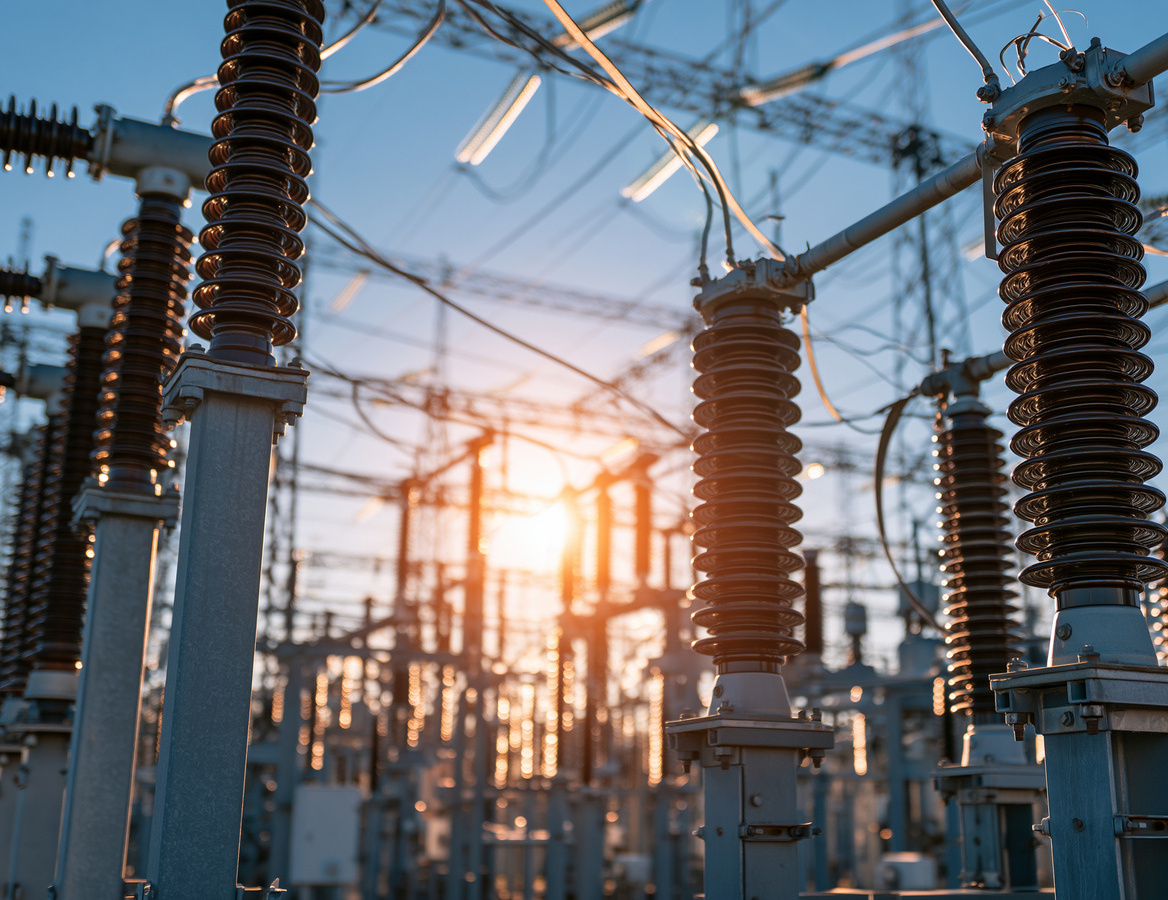
Arc-resistant construction
Switchgear designed and tested so that the pressure and hot gases from an internal arcing fault are directed away from personnel. Tested under a published IEEE guide and rated by accessibility type, which defines which sides of the equipment are protected. It is specified from a safety assessment rather than added as an option.
Accessibility type
The designation describing which sides of arc-resistant equipment are protected from the effects of an internal arcing fault. Type 1 protects the front only; Type 2 protects the front, back, and sides; suffixes extend protection to conditions such as open doors or inter-compartment faults. The type belongs on the specification, because equipment protected on fewer sides costs less and protects less.
Authority having jurisdiction
The organization, office, or individual responsible for enforcing the applicable codes and approving equipment and installations in a given location, such as a state or municipal electrical inspector. Installation questions on this page, including whether a liquid-filled unit may go indoors, are ultimately answered by this authority, which is why confirming requirements locally appears throughout the standards section.
Basic impulse insulation levelBIL
The insulation's rated ability to withstand a high voltage surge, such as a lightning strike or switching transient, expressed in kilovolts. It is specified alongside voltage class and is one of the electrical features that distinguishes otherwise similar transformer models.
Bushing
The insulated assembly that carries a conductor through the transformer tank or enclosure wall. Bushing type, rating, and configuration affect connection method and physical arrangement, so they belong in the specification rather than being left to the manufacturer's default.
Cast resin transformer
A dry-type transformer whose windings are encapsulated in cast epoxy resin. Tolerant of humidity, dust, and mechanical stress, and generally specified where the environment is harsh but a liquid-filled unit is unsuitable or not permitted.
Cooling class
The standardized letter code on a transformer nameplate describing how the unit is cooled, identifying the internal medium and how it circulates and whether cooling stages such as fans raise the rating. Two capacity figures on one nameplate usually correspond to two cooling stages, so the class is needed to read the rating at all.
Delta and wye configuration
The two ways transformer windings are connected. The configuration determines how the transformer handles unbalanced load, whether a neutral is available, and how it interacts with grounding and harmonics. Primary and secondary configurations are specified separately.
Distribution transformer
In United States federal efficiency regulation, a transformer within defined capacity ranges that steps voltage down for distribution to end users. The regulatory definition is narrower than common usage and excludes several transformer types, which matters because efficiency rules attach to the regulatory definition.
Drawout construction
A design in which the circuit breaker can be racked out of its compartment for inspection, maintenance, or replacement without dismantling the assembly. Standard in metal-clad switchgear and a significant factor in what maintenance costs over the life of the equipment.
Dry-type transformer
A transformer cooled by air or a solid insulating compound rather than liquid. Avoids the fire code and containment requirements associated with liquid-filled units, which is why it is common indoors, generally at lower efficiency and overload capability than a liquid-immersed equivalent.
Enclosure type
The rating describing what an enclosure protects against, such as dust, water, or corrosion, defined in the United States by NEMA enclosure type numbers. The international IP system describes similar protection differently, and the two do not translate directly, so specify both the system and the number.
Fire point
The temperature at which a liquid continues to burn after ignition. It is the defining property separating conventional mineral oil from liquids classified as less flammable, and it determines which installation rules in the electrical code apply to a liquid-filled transformer.
Impedance
Expressed as a percentage, the voltage required to circulate rated current through the transformer with the secondary shorted. It governs how much fault current can flow downstream and how much the output voltage sags under load, so it is coordinated with the protective devices rather than accepted as supplied.
Insulation class and temperature rise
The insulation system's rated thermal capability and the temperature increase above ambient the transformer is designed to operate at. Together they determine loading capability and expected insulation life, and a unit specified at a lower rise generally runs cooler and lasts longer at the same load.
Interrupting rating
The maximum fault current a breaker or fuse can safely interrupt, stated in amperes or kiloamperes. It must exceed the available fault current at the point of installation, which makes a fault current study a prerequisite rather than an optional exercise.
K-factor
A rating indicating a transformer's ability to serve nonlinear loads that draw harmonic currents, such as variable frequency drives and switching power supplies. A standard transformer feeding significant harmonic load will run hot, so K-factor is specified where such loads dominate.
kVA rating
The apparent power capacity of a transformer, in kilovolt-amperes. It is the headline size figure, but it means little without the voltage class, impedance, temperature rise, and cooling class alongside it.
Less-flammable liquid
An insulating liquid with a fire point at or above the threshold defined in the electrical code, including silicone, synthetic ester, and natural ester fluids. Its use permits installation options that conventional mineral oil does not, which is why it appears on indoor and building-adjacent projects.
Liquid-immersed transformer
A transformer whose core and coil assembly sits in an insulating liquid. Generally more efficient and more tolerant of overload than a dry-type equivalent, and subject to fire code requirements that depend on which liquid is used.
Load loss and no-load loss
The two components of transformer loss. No-load loss occurs whenever the transformer is energized, regardless of load. Load loss varies with the current drawn. Because a transformer is typically energized continuously and loaded variably, the balance between them drives lifetime energy cost.
Metal-clad switchgear
Medium-voltage switchgear built with drawout circuit breakers and grounded metal barriers isolating major components including the main bus and incoming and outgoing connections. Compartmentalization is what distinguishes it, and it is defined by an IEEE standard that covers a specific voltage range.
Metal-enclosed switchgear
A broader category of switchgear housed in a grounded metal enclosure. All metal-clad switchgear is metal-enclosed, but not all metal-enclosed switchgear is metal-clad, because metal-clad requires specific compartmentalization and drawout construction. The two terms are frequently used interchangeably, but they should not be.
Motor control centerMCC
An assembly of motor starters, drives, and associated control in a common enclosure with a shared bus. Distinct from switchgear and switchboards in purpose and in the standard it is built to, and specified by unit types and structural arrangement.
Pad-mounted transformer
A liquid-filled distribution transformer in a locked, tamper-resistant enclosure designed to sit on a concrete pad at grade without a fence or vault. Common for commercial and industrial services fed from underground distribution.
Panelboard
A distribution assembly of branch circuit breakers, mounted in a cabinet and accessible from the front. Smaller in capacity and interrupting rating than a switchboard, and a different product built to a different standard rather than simply a smaller version.
Short-circuit withstand rating
The fault current a transformer or assembly can survive without damage for a defined duration. Distinct from interrupting rating, which is about clearing a fault rather than surviving it, and confirmed by test rather than calculation.
Switchboard
A free-standing assembly of protective devices and instruments, typically front accessible and often with fixed rather than drawout devices. Built to a different standard than switchgear, generally at lower cost and with less maintenance flexibility.
Switchgear
An assembly combining switching and interrupting devices with associated control, metering, protective, and regulating devices in a coordinated structure. In North American usage, it implies a specific set of construction and testing requirements rather than describing any enclosure containing breakers.
Tap changer
A mechanism allowing the transformer turns ratio to be adjusted to compensate for supply voltage variation. De-energized tap changers are adjusted with the unit out of service. Load tap changers operate while energized, and cost considerably more. Which is required follows from how much the supply voltage varies.
Unit substation
A coordinated assembly combining an incoming section, a transformer, and a low-voltage distribution section as a single lineup. Purchasing it as a single unit places responsibility for the interfaces with a single supplier, which is the main argument for it over separately procured components.
Vacuum circuit breaker
A circuit breaker that interrupts current in a sealed vacuum interrupter. The interrupting technology most widely specified for new medium-voltage switchgear, valued for long contact life and low maintenance compared with older interrupting media.
Vacuum pressure impregnatedVPI
A dry-type transformer construction in which windings are impregnated with resin under vacuum and pressure. An alternative to cast resin, generally at lower cost, with different tolerance for moisture and contamination.