Back to All Buyer's Guides Sectors

Industrial Web Search Buyer's Guide Sector

Electric Motors & Drives

Industrial electric motors and the drives that control them: three-phase induction motors from fractional to large frame, single-phase machines, definite-purpose and severe-duty constructions, variable frequency drives, and soft starters, with the repair and rewind services that keep installed fleets running. This sector covers the manufacturers, electrical distributors, drive suppliers, and accredited service centers that supply it, as well as the frame, design, efficiency, and installation standards that make motors specifiable and interchangeable.

Overview

Types of Motors and Drives, the Nameplate Language, and Who Supplies Them

A working orientation to the sector before you request quotes: how the products divide, the nameplate vocabulary buying runs on, and the kinds of companies you will end up talking to.

The first question is what the load demands, because motors are bought backward from the driven machine: its torque at speed, its starting behavior, and its duty pick the motor, and the motor's construction then follows the environment. The landscape is mercifully standardized: three-phase squirrel cage induction motors carry industry, in standardized frames, with design letters describing their torque-speed personalities, wrapped in enclosures graded to the world they live in, plus single-phase machines at the fractional end and definite-purpose constructions, washdown, severe-duty, hazardous-location, where conditions demand.

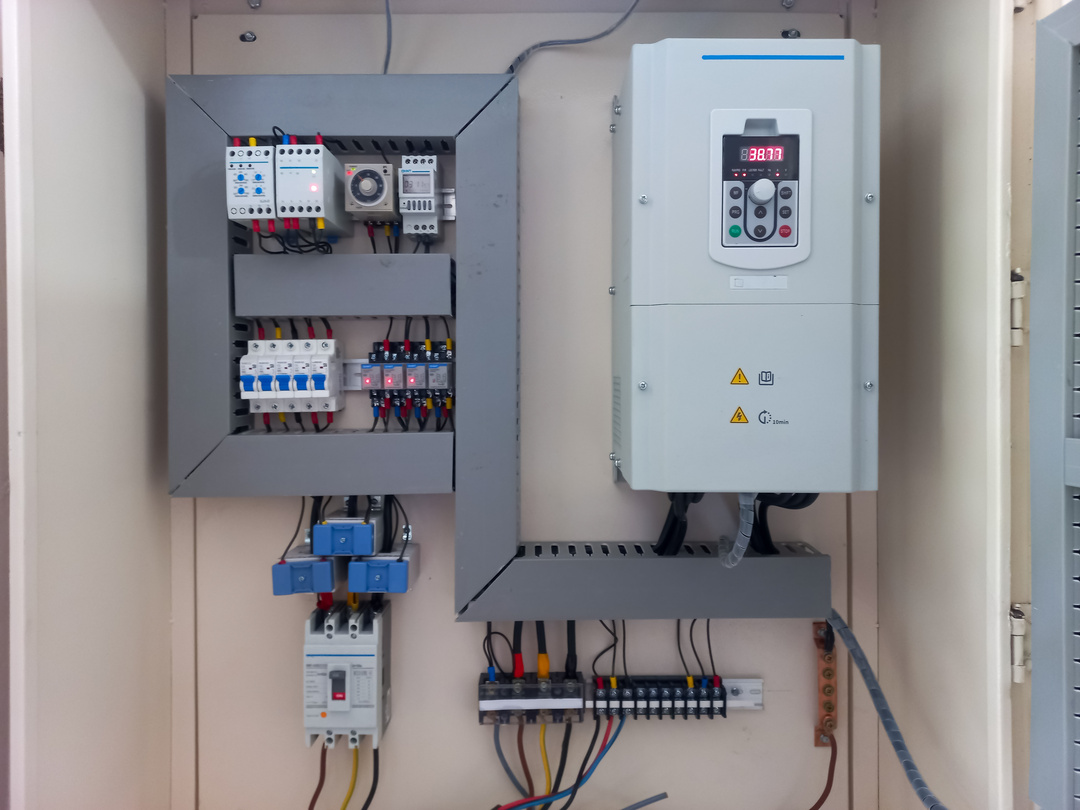
Industrial electric motor and variable frequency drive controlling production equipment.

Beside the motors sit their electronics: variable frequency drives, which give standard motors adjustable speed and gentle starting and, on fans and pumps, the energy savings of slowing down instead of throttling, and soft starters where only the start needs cushioning. One more axis decides which suppliers can serve you at all: size and voltage class. Fractional-horsepower machines, the integral-horsepower general-purpose world this page mostly describes, and large or medium-voltage motors, above roughly 600 volts, at 2,300 and 4,160 volts commonly, are three different purchases with different supplier populations, waits, and economics, and nothing said here about shelf stock applies to the big machines. The boundaries: servo and stepper motion belong to the motion control sector; gearmotors' mechanical half lives on this platform's power transmission page; generators are their own world; and the starters, contactors, and control panels around motors belong to the electrical controls aisle.

Buying in this sector runs on the nameplate language, and three of its dialects do most of the work. The interchange dialect: standardized frames fix mounting and shaft dimensions across makers, so a recorded frame, mounting, and design letter turn a failed motor into a stocking question, the sector's great buyer asset. The compatibility dialect: supply voltage, phase, and frequency; enclosure against the real environment; insulation class and service factor as thermal margin rather than sizing headroom; and, for anything on a drive, the inverter-fed construction and bearing protections that make the drive-motor pair one engineered system. And the efficiency dialect: regulated minimums floor the covered new motors; premium designations and IE codes grade what sits above; and lifetime energy dwarfs purchase price for continuously running machines, reframing the purchase and every later repair-or-replace call. State the load, supply, environment, and duty honestly, and the nameplate vocabulary does the rest.

Four kinds of companies supply this sector. Motor manufacturers build the machines and sell overwhelmingly through distribution, competing on breadth and the engineered ends of their catalogs. Electrical distributors are the buying channel: deep stock in the standard frames, cross-referencing as a counter service, and the availability that turns a burned-out motor into an afternoon errand. Drive suppliers and systems integrators size and apply the electronics, build the panels, and own the harmonics, cable, and protection questions that ride with drives. And motor service centers- the repair and rewind shops- keep installed fleets alive, with the industry's recommended practice and accreditation marking the shops that preserve a motor's efficiency rather than quietly spending it. It also tells you what to search for: a standard replacement means the distributors, nameplate photograph in hand; an engineered or definite-purpose machine means the manufacturers; speed control, starting problems, or energy projects mean the drive suppliers; and a failed large motor means an accredited service center, ideally chosen before the failure. The distinction determines who has it on the shelf, who engineers the system, and who touches your windings.

Sourcing Considerations

How to Choose Motors and Drives: 6 Things to Get Right

The decisions below are the ones that most often cause regret later. The first two, the honest load description and the interface match, determine everything after them, including the answers to the other four. The detail sits in the guides at the bottom of this page.

01

Size from the load's torque and duty, not a horsepower habit

State the torque at speed, the starting character, hard-starting loads want their design letter, and the duty, continuous or cyclic, and let power fall out. Keep the service factor as a thermal margin rather than sizing into it, because a motor operating at its factor runs hotter and ages faster. Motors sized from the load's curve are boring for decades; motors sized by horsepower and habit trip.

02

Match the interfaces: supply, frame, mounting, and enclosure

The supply's voltage, phase, and frequency as they actually are; the frame and mounting, foot, C-face, or D-flange, recorded for interchange; and the enclosure bought for the real environment, open drip-proof only where air is clean, enclosed constructions for dust, moisture, and washdown, certified machines for classified areas. The frame system is the sector's interchange asset, and the enclosure is its cheapest reliability.

03

Buy the drive and the motor as one engineered system

Declare drive service in the motor order: the inverter-fed section's compliance in writing, not the catalog phrase, plus shaft grounding or insulated bearings, the cooling honesty of the real speed range, and the drive maker's cable practice. Size the drive to the motor's nameplate and the supply's fault capacity, and ask the harmonics question while quoting, because mitigation is engineered in, not bolted on.

04

Treat efficiency as regulation floor plus lifetime arithmetic

Covered new motors already meet the federal minimums, so the real specification decisions live above the floor: whether the tiers beyond premium pay for themselves on your running hours, and the international IE classes where equipment crosses markets. For continuously running machines, lifetime energy dwarfs the purchase price, which is the honest arithmetic behind efficiency buying and every repair-or-replace call that follows.

05

Specify the protections and conditions the nameplate assumes

Thermal protection sized to the nameplate, embedded winding sensors where the machine warrants them, and the code's motor-circuit provisions given the real nameplate data to work from. State ambient and altitude where they exceed the standard assumptions, declare cyclic duty and frequent starts honestly, and put hazardous-area certification, class, division or zone, and temperature marking in the RFQ from the installation's own documents.

06

Plan the fleet: records, spares, and the repair-or-replace policy

Photograph nameplates at installation, record frames and design letters, and stock or pre-source the critical frames. Choose accredited service centers before the failure, name the recommended repair practice in rewind orders, and set the repair-or-replace policy in advance, with energy on the table, because plants with a standing policy decide better at two in the morning than plants deciding motor by motor.

Glossary

Motor and Drive Glossary: Key Terms Explained

The terms you will meet on a motor nameplate, a drive quote, or a repair estimate, in plain English.

28 terms

Ambient and altitude derating

The nameplate's fine print: ratings assume a standard maximum ambient temperature of 40 degrees Celsius (104 Fahrenheit) and a standard altitude of 3,300 feet; hotter rooms or thinner air mean the motor must be derated or specified for the condition. State the real ambient and elevation in the RFQ, because a motor is rated for a place as well as a load.

Bearing currents and shaft grounding

The stray electrical currents in drive-fed motors can pass through their bearings, eroding raceways into a signature washboard failure. The cures are specified, not hoped for: shaft grounding, insulated bearings on larger machines, and proper cable and bonding practice, all cheapest as checkboxes on the motor order.

C-face and D-flange

The standardized mounting interfaces on a motor's drive end: the C-face with its threaded holes for direct-coupling pumps and gearboxes, the D-flange with through-holes for flange mounting. They are part of the frame's interchange promise, and the mounting designation belongs in the order alongside the frame size.

Code letter

The nameplate letter indicating the motor's locked-rotor kVA per horsepower, the shorthand for how hard it hits the supply when started across the line. It matters when supply capacity or generator sizing is tight, and it is one of several nameplate facts worth recording before the motor is fifty feet in the air.

Constant and variable torque loads

The load classification drive sizing turns on: constant-torque loads, conveyors, hoists, positive-displacement pumps, demand full torque at every speed, while variable-torque loads, fans and centrifugal pumps, need torque that falls away as speed drops, which is exactly why slowing them saves so much energy. Name the load type in the drive RFQ, because the two size and cool differently, and the energy argument belongs to variable torque.

Design letter

The standardized torque-speed personalities of squirrel cage motors: Design B the general-purpose default, Design C for high starting torque on hard-starting loads, Design D the high-slip design for punch presses and cranes. The driven load picks the letter, and a replacement motor should match it, not just the horsepower.

Duty rating

The statement of how long the motor can run at rating: continuous duty for most industrial service, with intermittent and cyclic ratings for hoists, actuators, and start-heavy applications. A motor rated for brief duty is smaller and cheaper than a continuous machine of equal power, which is exactly why the duty must be stated honestly.

Efficiency class

The graded full-load efficiency designations motors carry: the premium-efficiency tier of the North American standard and the international IE code ladder, with regulations in major markets setting minimum classes for covered categories. The class is on the nameplate, and for continuously running motors the class difference compounds across every operating hour.

Enclosure types

The motor's housing philosophy: open drip-proof, ODP, breathing plant air, totally enclosed fan-cooled, TEFC, sealed against the environment, the TENV and TEAO variants, non-ventilated and air-over, for special cooling, and washdown and severe-duty constructions above them. The environment picks the enclosure, and an open motor in a dirty, wet, or washdown world is a rewind on a schedule.

Frame size

The standardized designation fixes a motor's mounting dimensions, shaft height, diameter, and extension, so that a given frame from any manufacturer bolts to the same base and couples at the same height. A designation like 213T decodes: the first two digits over four give the shaft height, five and a quarter inches here, with the T marking the current dimensional era. Frame standardization is the sector's interchange asset: record the frame, and a failed motor is a stocking question, not an engineering one.

Harmonics

The distortion a drive's rectifier front end reflects into the plant's supply: current drawn in gulps rather than smooth waves, which distorts voltage for every other load on the system. One small drive is invisible; many drives are a power-quality project, which is why the harmonics question- what mitigation this installation needs, line reactors, filters, or a low-harmonic front end- is asked at drive purchase and answered by the supplier against your supply.

Hazardous-location motors

Motors certified for classified areas where flammable gases, vapors, or dusts can be present, built and marked for the classification: Class I for gases and Class II for dusts, Division 1 or 2 by how likely the hazard is, or the zone system's 0, 1, and 2, with the T-number temperature marking alongside. The area classification is a property of the installation, decided by its documents and the authority having jurisdiction, the office empowered to approve the installation, and the motor must carry certification for it, not merely resemble one that does.

Horsepower and kilowatts

The two power languages of the motor world, North American nameplates leading with horsepower and international ones with kilowatts, are convertible but wrapped in different frame and voltage conventions. Power is what the load demands at its speed; it is derived from torque and speed, which is why sizing conversations should start from the load's torque curve rather than a horsepower guess.

Inrush and locked rotor current

The large current a motor draws at the instant of an across-the-line start, several times its running current, persists until the machine accelerates. Inrush is why starting method matters on large motors and weak supplies, why protection must ride through it, and why the supply and the starting method are specified together.

Insulation class and temperature rise

The winding insulation's thermal rating, classes in an alphabetical ladder, paired with the temperature rise the motor produces at rating. The margin between rise and rating is thermal life in the bank; drive service and hot ambients spend it, and the classic specification uses a higher class than the rise requires, buying life with the difference.

Inverter duty

The motor construction intended for operation on a drive: insulation built for the drive's voltage stresses, thermal design for reduced-speed cooling, and, where specified, bearing protection, per the motor standard's inverter-fed sections. The phrase on a datasheet is a claim; the standard's section on the nameplate or in writing is a commitment, and buyers should ask for the commitment.

Medium-voltage motors

The big-machine world above roughly 600 volts, commonly 2,300 or 4,160, where motors are engineered orders rather than shelf items: different construction, different starters and protection, different suppliers, and waits measured in months. Nothing about distributor stock or premium-efficiency swaps applies here, which is why knowing your voltage class is the first sorting question of any large-motor conversation.

Nameplate

The motor's identity: power, voltage, phase and frequency, full-load amps, speed, frame, design letter, code letter, insulation class and rise, service factor, duty, enclosure, efficiency marking, and serial. It is the record every replacement, repair, and troubleshooting call starts from, so photograph it at installation, while it is clean and at eye level.

Poles and synchronous speed

The winding's pole count sets the motor's synchronous speed at the supply frequency, yielding the familiar speed families of two-, four-, and six-pole machines, with actual speed slightly lower due to slip. Speed is bought in these steps for line-fed motors and continuously only with a drive, which is half the reason drives are on this page.

Power factor

The measure of how much of the current a motor draws does real work, with the rest magnetizing the machine. It matters at the plant level; utilities meter and sometimes bill for it, and correction is a system decision, so it appears on motor documentation and in plant electrical conversations more than in single-motor selections.

Rewind

The repair that replaces a motor's windings, one act in the larger repair repertoire of bearings, shafts, and machining. Done to the service industry's recommended practice by an accredited shop, a rewind preserves the motor's efficiency and life; done casually, it quietly costs efficiency forever, which is the argument for naming the practice and the accreditation when you buy repair.

Service factor

The multiplier on the nameplate stating how much continuous overload the motor tolerates at standard conditions. It is a margin for reality: voltage sag, hot days, load drift, not capacity to size into. A motor operating at its service factor runs hotter and ages faster, so the honest use is to buy the next size and keep the factor as the cushion it is.

Slip

The small speed difference between an induction motor's synchronous and actual speeds is the mechanism by which the machine develops torque, which rises slightly as load increases. It explains why nameplate speeds read slightly under the synchronous speeds, and why high-slip designs exist for loads that want the motor to yield rather than fight.

Starting methods

The ways a motor is brought to speed: across-the-line simplicity with full inrush, reduced-voltage and soft starters that cushion the supply and the machinery, and drives, which start gently as a side effect of controlling speed. Large motors, weak supplies, and delicate driven equipment are reasons to choose deliberately in the specification.

Thermal protection

The devices that keep an overheating motor from failing: overload relays in the starter sized to the nameplate amps and, where specified, sensors embedded in the windings for the controller to monitor. Protection is coordinated with the motor, the drive, and the code's motor articles, and it is part of the purchase, not an accessory.

Torque characteristics

The motor's torque at the moments that matter: locked-rotor torque to break the load loose, pull-up torque during acceleration, breakdown torque as the ceiling. Hard-starting loads are matched to these numbers through the design letter, and a motor that stalls on start was usually sized by horsepower when it should have been sized by torque.

Variable frequency driveVFD

The power electronics that convert a fixed-frequency supply into adjustable frequency and voltage, giving a standard AC motor adjustable speed, gentle starting, and, on variable-torque loads like fans and pumps, the large energy savings of slowing down instead of throttling. A drive purchase carries its companions: motor compatibility, cable practice, harmonics, and protection, engineered together.

Voltage, phase, and frequency

The supply facts the motor must match: three-phase for industrial machines with dual-voltage windings common, single-phase at the fractional end, and the two world frequencies behind the speed families. The motor is bought for the existing supply, and the supply's honesty, actual voltage, balance, and quality show up later as heat and trips.

Standards

Motor and Drive Standards: NEMA MG 1, IEC 60034, and the Efficiency Rules

What each standard governs and why a buyer should care. Which ones apply depends on the supply, the environment, the markets the equipment serves, and whether a drive is in the picture.

Motor and efficiency standards

NEMA MG 1

Published by the National Electrical Manufacturers Association (NEMA), titled Motors and Generators: the North American motor world's central standard, defining frame dimensions and their interchange, the design letters' torque-speed personalities, enclosures, insulation and temperature practice, service factors, nameplate content, and performance tolerances, with dedicated sections for machines used on drives: Part 31, the definite-purpose inverter-fed motor section whose requirements are what serious specifications mean by inverter duty, with Part 30 covering general-purpose machines applied to drives. It applies to essentially every industrial motor purchase in North America, usually silently. Its buyer leverage is citation: a specification that names the standard, the design letter, and, for drive service, the inverter-fed section's compliance, in writing, has converted marketing vocabulary into checkable commitments.

IEC 60034 and the IE efficiency code

Published by the International Electrotechnical Commission: the rotating machinery series covering ratings, duty types, and test methods, with IEC 60034-30-1 defining the IE code ladder for line-fed motors and IEC 60034-30-2 the companion classification for variable-speed machines, and IEC 61800-9, the drive-system efficiency standard, rating the motor-plus-drive package. It applies to imported equipment, global specifications, and any program serving both frame worlds, whose metric frame conventions and duty-type vocabulary arrive with it. For buyers, the IE code is the international efficiency language: classes on nameplates, regulations that set minimum classes in major markets, and a close-but-not-identical mapping to the North American premium tier, so global drawings deliberately name both systems.

U.S. DOE motor efficiency regulations

Issued by the U.S. Department of Energy under its energy conservation program for commercial and industrial equipment, incorporating the NEMA standard's efficiency tables and the recognized test methods by reference. The regulations set minimum full-load efficiency levels for covered categories of motors sold in the United States, defined by equipment class, with compliance marked on the nameplate through the nominal efficiency marking. They apply automatically: covered new motors simply must meet the floors, which for most general-purpose categories sit at the premium-efficiency tier. The buyer consequences are practical: efficiency below the floor is not on the new-motor menu; the categories and levels are updated by rulemaking, so current applicability is confirmed rather than remembered; and the interesting specification decisions live above the floor, not at it.

NEMA Premium

Administered by the National Electrical Manufacturers Association as its premium-efficiency motor program, the designation labels motors meeting the premium-efficiency levels in the NEMA standard's tables, the North American counterpart to the upper IE classes. It applies as the shorthand of efficient-motor buying: specifications call for the designation, nameplates and catalogs carry it, and the federal floors for most covered general-purpose categories align with it, which leaves the label describing the mainstream rather than the exception. Its remaining buyer content is at the margins: categories outside the covered scope, where the label still distinguishes itself, and the tiers above it, where drive-fed and specialty machines compete on efficiency that the label does not capture.

Drive, power quality, and installation standards

Drive product safety standards

Published by UL Standards and Engagement and the International Electrotechnical Commission as UL 61800-5-1, the harmonized product safety standard for adjustable speed power drive systems, the certification behind a listed drive's electrical safety, ratings, and protective functions, with the panel standard governing the enclosure it is built into. It applies to essentially every drive purchase: inspectors look for the listing, and the drive's short-circuit and protection ratings must suit the supply. For buyers, the content is coordination: the drive, its fusing or breaker, the panel, and the installation are certified pieces of one electrical system, so state the supply characteristics and fault capacity in the RFQ and let the drive be quoted to them.

IEEE 519

Published by IEEE, the Institute of Electrical and Electronics Engineers, this is the recommended practice for harmonic control in electrical power systems, the reference document for the distortion that rectifier front ends, drives above all, reflect into a facility's supply, with its recommended limits applied at the point where the facility meets the utility. It applies in proportion to the drive load a plant carries: a lone small drive is invisible; a wall of them is a power-quality project; and utility interconnection requirements often cite the practice directly. Buyers meet it as a question to ask at drive purchase: what harmonic mitigation, line reactors, filters, or low-harmonic front ends the installation needs, answered by the drive supplier against the plant's supply, not assumed either way.

NEC Article 430

Published by the National Fire Protection Association as part of the National Electrical Code: the code article for motors, motor circuits, and controllers, governing conductor sizing, overload protection, short-circuit and ground-fault protection, disconnecting means, and controller requirements for motor installations, with companion articles covering drives and hazardous locations. It applies to every motor installation in the United States, and it is why motor circuits are sized and protected differently from ordinary loads: the code accommodates inrush while insisting on running protection. For buyers, its content is mostly delegated to installers and panel builders. Still, this delegation works best when the order includes the actual motor data, because the nameplate is the starting point for the code's calculations.

Environment, service, and international regimes

Hazardous location motor certification

In North America, the National Electrical Code's classification system with motors certified by recognized testing laboratories for the class, division, or zone, and group; internationally, the ATEX framework and the IECEx scheme. Where flammable gases, vapors, or combustible dusts can be present, the installed motor must carry certification for the location's classification, including its temperature marking, and drive operation of certified motors is its own certification question, confirmed rather than assumed. It applies whenever motors are installed in classified areas, and the buying rule this platform repeats across sectors is: the area classification comes from the installation's documents and the authority having jurisdiction; it goes in the RFQ; and the certification is built into the motor, never retrofitted onto it.

EASA AR100 and service accreditation

Published by the Electrical Apparatus Service Association (EASA), the service industry's association, the recommended practice for the repair of rotating electrical apparatus defines good rewind and repair practice and is paired with the association's accreditation program, which audits service centers against it. It applies on the day a motor fails, which is why it belongs in the file before then: repair in accordance with recommended practice preserves a motor's efficiency and reliability. At the same time, casual rewinds can quietly degrade both for the rest of the machine's life. The buyer moves are simple: name the practice in repair purchase orders, prefer accredited shops for significant machines, and make the repair-or-replace decision deliberately, with the motor's efficiency class and remaining life on the table alongside the repair quote.

International efficiency regulations

Issued by regulators in the world's major markets, the European Union's ecodesign regulation for motors and drives most prominently, setting minimum IE classes for covered motor categories and, distinctively, minimum efficiency for the drives themselves. They apply to equipment placed on those markets, which reaches North American buyers through imported machinery, global equipment programs, and multinational specifications that must satisfy every destination at once. The buyer content is parallel to the domestic rule: floors exist and rise by rulemaking, current applicability is confirmed per market at order time, and a specification serving multiple markets names the required class per destination rather than assuming one region's floor satisfies another's.

SMMA, the motor and motion association

The association of the small-motor and motion world, the fractional-horsepower and specialty territory beneath this page's integral-horsepower center, convening manufacturers and publishing industry knowledge rather than issuing binding standards. It earns its place as a map: fractional and specialty motors are a different supplier population from the general-purpose frame world, and the association's membership charts it for a buyer whose search keeps returning conveyor-duty answers to an instrument-motor question. The binding documents remain the motor standards above, which the association would be the first to say.

Frequently Asked Questions

Electric Motor and Drive FAQs

Direct answers to the questions buyers ask most often when sourcing in this sector.

Start from the load, not from a horsepower guess. What torque does the load need at what speed, and, just as important, what does it demand during starting? Fans and centrifugal pumps start easily, while conveyors, crushers, and loaded machinery start hard, which is what the design letters exist to match. Power is derived from torque and speed. Around that core, gather the supply facts: voltage, phase, and frequency; the environment, which picks the enclosure and any hazardous-area certification; the duty, continuous or cyclic; and whether a drive will run it, which changes the motor's construction. A motor that stalls, trips, or runs hot was usually sized by horsepower and habit; a motor selected from the load's torque curve, the real environment, and the honest duty is boring for decades, which is the goal.

They are standardized torque-speed characteristics for squirrel-cage motors, so a letter indicates how a machine behaves between standstill and full speed. Design B is the general-purpose default, a balanced curve suiting fans, pumps, and most machinery, and what you get when nobody asks. Design C delivers high starting torque for loads that break loose hard, such as conveyors and compressors, at the expense of elsewhere in the torque curve. Design D is the high-slip design whose speed sags deliberately under shock, letting flywheels work on punch presses and cranes. Design A resembles B with different current limits and appears less often. The letter is on the nameplate and belongs on the order, and a replacement should match it: equal horsepower with the wrong letter is how a conveyor that started fine for years suddenly cannot.

For the motor: the load and its starting character, or the design letter if known; power and speed, or torque and speed; supply voltage, phase, and frequency; frame and mounting, foot, C-face, or D-flange, for replacements especially; enclosure for the environment, with washdown, severe-duty, or hazardous-area classification stated; insulation class, service factor, and duty; ambient and altitude where they exceed standard assumptions; and drive service declared, with the inverter-fed section's compliance and any bearing protections. For the drive: the motor's nameplate data, the supply's fault capacity, the available short-circuit current at your connection, a number from the plant's electrical drawings or the utility supplies, the load type, the actual speed range, cable distance, and the harmonics question asked. The replacement shortcut is straightforward: a clear nameplate photograph answers most of this in a single image.

For new purchases going on a drive, specify the motor for drive service and make the commitment checkable: the motor standard's inverter-fed motor section is what serious specifications cite, covering insulation built for a drive's voltage stresses and thermal design for running slowly with less cooling air. Ask for that compliance in writing, because "inverter duty," as a catalog phrase, is a claim, not a standard. Add the bearing question at the same time: drive-fed motors can pass current through their bearings, and shaft grounding or insulated bearings are ordered, not retrofitted, per the drive maker's cable practice. Existing motors are case-by-case: a healthy premium-efficiency machine on a short cable at moderate speeds often serves, while long cables, deep speed ranges, low-speed constant-torque loads, and older insulation argue for the purpose-built machine. The drive and motor are one system; buy them as one decision.

They describe how the motor deals with the world around it. Open drip-proof machines breathe plant air through ventilating openings: efficient, economical, and correct only where air is clean and dry. Totally enclosed fan-cooled machines seal the working parts and cool the shell with an external fan; the industrial default wherever dust, moisture, or weather is present. Non-ventilated and air-over variants serve special cooling situations, and above them sit the purpose-built constructions: washdown motors for hose-and-chemical sanitation, severe-duty machines for corrosive plants, and certified motors for classified areas, a certification matter rather than an enclosure style. The environment makes this choice, honestly described: an open motor in a dirty or wet world is a rewind on a schedule, and an enclosure bought up to the real conditions is the cheapest reliability money spends.

Two parallel systems for the same physics. North American practice specifies frames in the association's dimensional system, power in horsepower, and behavior through design letters; international practice uses metric frames, kilowatts, its own duty-type vocabulary, and the IE efficiency code. Both produce excellent motors; neither is a quality statement. Substitution is a dimensional and electrical exercise: metric and North American frames do not bolt up interchangeably, so a swap means an adapter, a base change, or matching within the same system; voltages and frequencies must genuinely match the supply rather than merely being close; and the vocabularies translate approximately. On imported machinery, the playbook is to record the full metric nameplate, source the matching metric replacement through distribution, and save cross-system conversion for the day the machine itself is reworked.

Structurally: federal energy conservation regulations set minimum full-load efficiency for covered categories of new motors, defined by equipment class and incorporating the industry standard's efficiency tables, with compliance marked on the nameplate; for most covered general-purpose motors the floor sits at the premium tier, and other major markets run parallel regimes in the IE vocabulary. The floors are updated by rulemaking, so current applicability is confirmed at order time rather than remembered. For a specification: below-floor efficiency is not on the new-motor menu, so the real decisions are above it: whether the tiers beyond premium pay on your running hours, and around it, since a continuously running motor's energy consumption dwarfs its purchase price over its life, the honest arithmetic behind efficiency buying and behind treating repair-or-replace as an efficiency decision too.

Make it a deliberate decision with three inputs. The machine: large, special, or long-lead motors, odd frames, hazardous-area certifications, favor repair, because replacement is slow or expensive, while small general-purpose machines in stock frames favor replacement, because a new premium-efficiency motor is on a shelf nearby. The repair: a rewind of the service industry's recommended practice by an accredited shop preserves efficiency and reliability, so the quality of the available repair itself is an input, and naming the practice and accreditation in that order is how you secure it. The economics: repair cost against replacement cost, with energy on the table, the older motor's efficiency against the new machine's floor, across the hours it actually runs. Plants that set this policy in advance, by motor class, make better calls at two in the morning than plants deciding motor by motor, at two in the morning.

Heat and trips are the motor reporting a mismatch: sizing, where a motor living in its service factor instead of its rating runs continuously hotter than designed; supply, where low voltage, phase imbalance, or poor power quality convert directly into winding heat; environment, where a hot room, a high site, or a blanket of dust defeats the cooling the rating assumed; duty, where frequent starts or cyclic loading exceed the rating's promise; and application, where drive operation at low speed starves a self-cooled motor of air. Everyone is addressable at specification time: size to the load, with the service factor kept as a margin; state the actual ambient and altitude; choose the enclosure for the actual dirt; declare the duty and the drive honestly; and include thermal protection in the purchase. Motors rarely fail mysteriously; they fail arithmetically, and the arithmetic is available in advance.

Buyer's Guides

Guides for Sourcing Motors and Drives

In-depth guides covering the decisions above.

Buyer's Guide

Selecting Electric Motors and Drives: Efficiency Classes, Duty, and Control

How to select motors and drives on duty type, efficiency classes and what they leave out, regulation, honest sizing and part-load losses, thermal margin, and what a drive does to the motor.

Read the guide

More coming

This sector is growing.

Additional guides are added when there is something genuinely worth saying, not on a schedule. IWS is committed to providing educational content to help you find the right suppliers!

Downloadable Resources

Electric Motors & Drives Downloads: Checklists and Reference Tools

Practical tools you can take into a supplier conversation.

Find a verified electric motor supplier

Search the network for verified manufacturers, distributors, and service providers in this sector.

Every supplier verified · No pay-to-rank

Can't find it? We'll find it for you, free.

Tell us exactly what you require. Our team has spent 30+ years in industrial supply chains, and we'll track down qualified suppliers within one business day. No cost, no obligation.

Request Free Sourcing Help