Back to All Buyer's Guides Sectors

Industrial Web Search Buyer's Guide Sector

Metal Stamping & Forming

High-volume production of metal parts from coil and strip using hard tooling: progressive, stage, transfer, and compound dies, deep drawing, fourslide forming, and fineblanking, with the tool and die building that makes them possible. This sector covers the contract stampers, die builders, and process specialists who supply it; the material specifications that stamping runs on; and the tooling economics, ownership, cost drivers, and qualification that make stamping a different purchase from fabrication.

Overview

Types of Stamping, the Tooling Economics, and Who Supplies Them

A working orientation to the sector before you request quotes: what makes stamping its own purchase, how the processes divide, and the kinds of companies you will end up talking to.

The first question is whether the volume justifies hard tooling, because that is the line between this sector and sheet metal fabrication. Fabrication cuts and bends with programmable machines: nearly nothing to start, real money per piece, forever. Stamping inverts the deal: a dedicated die, expensive once, then parts at a fraction of the piece price, at rates measured in strokes per minute. The die families ladder by volume and geometry: stage tooling as the affordable middle rung; progressive dies carrying strip through many stations for the highest volumes; transfer dies moving blanks between stations for large and deep parts; compound dies cutting flat precision in one stroke.

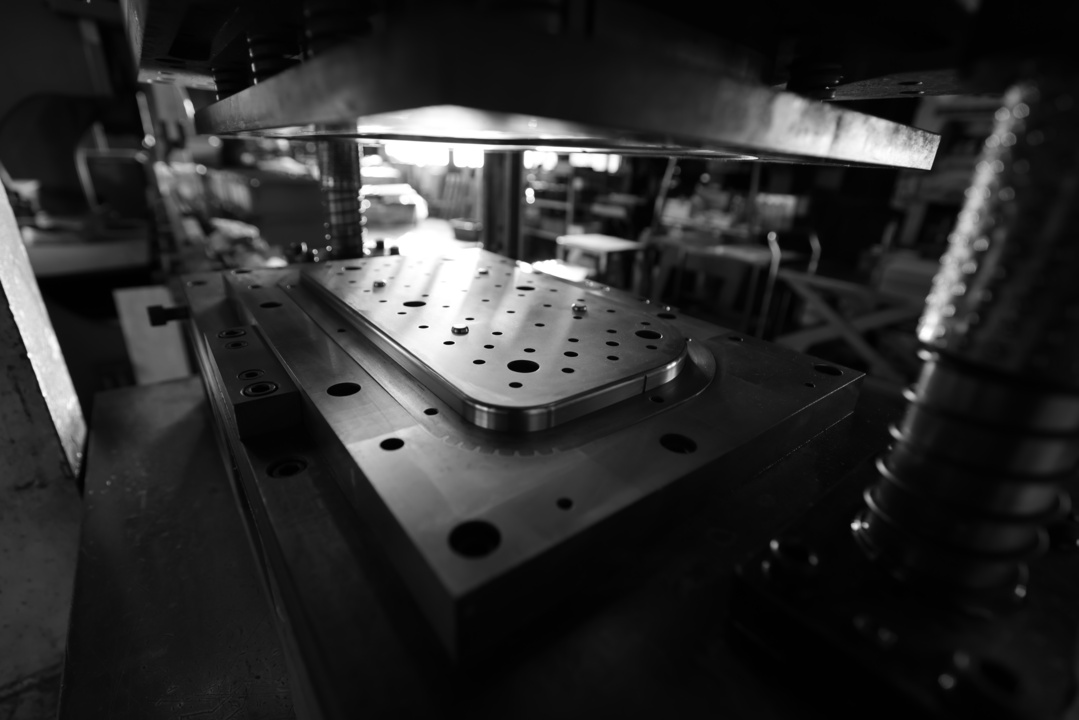
Coil-fed metal stamping press producing formed components through dedicated tooling.

Around them sit the specialties: deep drawing for cups and enclosures, fourslide and multislide for small intricate formed parts, fineblanking where edges must approach machined quality. One more axis sorts the supplier base: press class. Small precision stampings, connectors, contacts, electronics hardware, mid-size brackets and housings, and large deep-drawn or structural work are three largely separate supplier populations with different presses and different tolerance habits, so place your part on that axis before sending RFQs. The boundaries, each with a page on this platform: sheet metal fabrication has its own sector; springs and wire forms have their own; and castings and forgings have theirs; finishing routes to the coatings page.

What governs a stamping program is the twin purchase at its heart: you are buying a capital asset, the die, and then a recurring service, the parts, and the two have different economics, different risks, and different paperwork. The die's cost is driven by the work the print demands, stations, precision, material strength, and expected life, which is why the design review over the strip layout is the buyer's highest-leverage hour. The parts' cost is driven by material, commonly the largest element, so utilization and material specification, grade, temper, coating designation, and thickness tolerance, are engineering, not procurement trivia. Between the two purchases stands qualification: tryout, first articles, and, in automotive work, the formal approval submission, the evidence gate where the die becomes your asset. And through it all runs ownership: whose die it is, who maintains it, what records exist, and whether it could ever move, all cheapest to settle in writing on day one.

Four kinds of companies supply this sector. Contract stampers run the presses, from short-run shops through high-volume houses serving automotive tiers, their press lists defining what they can quote. Tool and die shops build and repair the dies, independently or inside the stampers, and their craft sets die life and part quality alike. Process specialists concentrate where the physics demands it: deep-draw houses, four-slide and multi-slide shops, fine blankers. And material service centers slit and supply the coil below mill quantities, their slitting quality arriving at the die as camber and burr. It also tells you what to search for: production parts mean contract stampers matched to your volume; a die built, repaired, or engineered means the tool and die shops; cups, small formed clips, or machined-quality edges mean the respective specialists; and coil questions mean the service centers. The distinction determines who owns the strip layout, who stands behind the die, and who answers when parts drift.

Sourcing Considerations

How to Buy Stamped Parts: 6 Things to Get Right

The decisions below are the ones that most often cause regret later. The first two, the honest volume and the twin-purchase structure, determine everything after them, including the answers to the other four. The detail sits in the guides at the bottom of this page.

01

Prove the volume before you buy the die

State lifetime and annual volumes honestly, and run the crossover: tooling cost against the piece-price gap between stamping and fabrication. The standard journey is a migration: fabricate at launch, stage tooling as demand proves, progressive die at real volume, and good suppliers help plan it. The twin mistakes: a progressive die for a program that dies young, and years of fabricated prices for a part that earned its die long ago.

02

Buy the die and the parts as two purchases, on paper

The die is a capital asset with its own price, ownership record, maintenance responsibilities, data rights, and approval gate; the parts are a recurring service priced per piece. Settle in writing who owns the die, who sharpens and repairs it, what records the stamper keeps, and what tryout evidence releases tooling payment. Die disputes are this sector's classic falling-out, and nearly all were one paragraph short of being prevented.

03

Spend the design hour on the strip layout

Review the strip layout before steel is cut: grain orientation, carrier and pilot scheme, material utilization, burr side, and which features are to be coined. Every feature and tolerance on the print is a line item in the die, and material is commonly the largest component of the cost. Hence, nesting gains and deleted stations outweigh most negotiations. This hour is the cheapest engineering the program will ever buy.

04

Specify the material completely, and know who buys it

Specify the grade on the formability ladder, temper, coating for precoated stock, and thickness with tolerances. Determine if the stamper or buyer supplies the coil and manage certifications accordingly. Establish the pricing mechanism, including surcharges, index pass-through, and adjustment windows, since the highest cost is a traded commodity and a fixed price is just a snapshot. Lot-to-lot variation leads to issues like springback and burr, so a complete callout is essential for diagnosing drift.

05

Tolerance features, not title blocks

Hold the holes and relationships function actually needs; give formed angles springback-realistic limits, call out burr side and height where assemblies care, and leave everything else commercial. Cut features repeat beautifully; formed features vary with the material; and coining or fineblanking are the exceptions. A title block that tightens everything prices every station as if it were the critical one, and the quote will read that way.

06

Gate production on evidence, and keep the program portable

Define the qualification gate: first articles against the print, capability on designated features, the formal approval submission at the customer-required level in automotive work, and tie tooling acceptance and payment to it. Then keep what portability requires: die records, maintenance history, design data rights, and standard practices, because a die that was never meant to move cannot, at exactly the moment you need it to.

Glossary

Metal Stamping Glossary: Key Terms Explained

The terms you will meet on a stamping quote, a die drawing, or a tryout report, in plain English.

27 terms

Blanking

Cutting the part's outline from a strip or sheet in one press stroke, producing a blank for further forming or a finished flat part. Blanking is where material utilization is won or lost, because the strip layout determines how much of the coil becomes parts and how much becomes engineered scrap.

Burr

The small raised edge left on the cut side of a stamped feature, opposite the die's entry. Burr height and burr side are specifiable and worth specifying: assemblies care which face the burr lands on, and a drawing that calls out burr direction has prevented a very common surprise.

Camber

The edgewise curvature of slit coil stock, a supply condition rather than a defect within limits, with those limits published in the material standards. Excess camber fights the die's pilots and guides. It is one reason stampers care who slits the coil, and why coil problems surface as die problems.

Capability study

The statistical demonstration that a process holds a tolerance: measured parts against the specification limits, distilled into a capability index (Cpk), with the customary minimum for designated characteristics being 1.33. It is what buying evidence rather than promises looks like: name the characteristics, require the index, and a drifting station announces itself in arithmetic before it does in rejects.

Coil stock and slitting

Stamping's raw material: mill coils slit to the strip width the die was designed around, bought from mills at volume or from service centers below it, in thicknesses from a few thousandths of an inch to around a quarter inch, with most work under an eighth of an inch. Width, thickness tolerance, temper, and surface condition are all purchase specifications, and the slitting source is part of the process, not ahead of it.

Coining

Compressing metal between die surfaces hard enough to flow it, producing precise thicknesses, sharp features, and flattened edges. Coining is how stamping achieves precision on selected features, and it is the standard answer when one dimension requires more than cutting and bending can provide.

Compound die

A die that blanks and pierces a part in a single stroke at a single station, producing flat parts with excellent hole-to-edge relationships. It suits flat, accurate parts at volume. Formed features push the job toward progressive or stage tooling instead.

Deep drawing

Forming sheet into cups, shells, and enclosures by pulling a blank into a die cavity through successive draws. It is its own specialty with its own physics, thinning, wrinkling, and draw-quality material grades, and dedicated deep-draw houses exist because the craft is real.

Die maintenance and sharpening

The ongoing care of hard tooling: periodic sharpening of cutting sections, replacement of wear details, and the records that accompany both. Every die purchase should settle who performs it, who pays, and what triggers it, because an unmaintained die quietly converts into a quality problem billed as a tooling dispute.

First article inspectionFAI

The full measurement of initial parts against every print requirement, the qualification gate for non-automotive tooled work, formalized in aerospace as the AS9102 first article inspection report. It is the scaled-down cousin of the automotive approval process: evidence before volume, tied to tooling acceptance, and worth naming in the purchase order by exactly that phrase.

Fineblanking

A specialized stamping process that produces fully sheared, straight edges and flatness approaching machined quality in one operation, on dedicated presses with dedicated tooling. It earns its premium where edge quality or flatness would otherwise force secondary machining, and it lives in specialty houses.

Fourslide and multislide

Machines that form strip and wire from multiple directions in one cycle, excelling at small, intricate formed parts, clips, brackets, contacts, at high volume with modest tooling cost compared to progressive dies. The strip side of that work lives in this sector; wire forms and springs have a sector of their own.

Grain direction

The rolling direction of the coil, along which the metal's properties differ from across it. Bends running with the grain crack sooner than bends across it, so strip layout and part orientation respect grain, and a print that lets the stamper choose orientation prices better than one that fights it.

Hard tooling and soft tooling

The sector's economic divide: hard tooling means dedicated dies cut for one part, expensive once and cheap per piece; soft tooling means the programmable processes of fabrication, lasers and press brakes, cheap to start and costlier per piece. Volume decides between them, and the crossover is the first calculation of every stamping purchase.

In-die operations

Work performed inside the die beyond cutting and forming: tapping, fastener insertion, staking, and sensing, which eliminate downstream operations by doing them in the press stroke. They raise tooling cost and lower piece cost, the sector's recurring trade, and they belong in the die conversation at design time, not after.

Material utilization

The fraction of purchased coil that leaves as parts, set by the strip layout and part nesting. In high-volume stamping, material is commonly the largest cost element, so utilization is a design outcome worth engineering, and small part changes that improve nesting can outweigh larger savings anywhere else.

Piercing

Cutting holes and internal features, stamping's bread and butter, with the slug as its waste. Pierced holes carry a characteristic edge, part sheared and part broken. Hole size relative to material thickness has practical limits, which is why very small holes in thick stock invite a design conversation.

Pilot

The die's locating pins enter pre-pierced holes to register the strip precisely at each station of a progressive die. Pilots are why station-to-station relationships hold, and why the strip layout often adds small holes whose only job is location. Those holes are the die talking.

Press tonnage

The force a press can deliver, which the job's cutting and forming demands must fit within, with the part's size and the die's footprint fitting the press bed. Tonnage and bed size determine what a given stamper can quote, and why press capacity is a fair pre-award question.

Progressive die

The die that carries strip through a sequence of stations, cutting and forming progressively until finished parts exit at the end of the press stroke, at rates no other approach matches. It is the high-volume workhorse and the sector's largest single tooling investment, which is why progressive-die jobs are two purchases: the die, and then the parts.

Springback

Metal's elastic return after forming: bend to an angle, and the part relaxes slightly open when the pressure leaves. Dies compensate by overbending, but springback varies with the material's strength and lot-to-lot properties, which is why formed-angle tolerances deserve realism and why higher-strength materials hold looser angles.

Stage tooling

Separate simpler dies run as sequential operations, each in its own press hit, trading piece price and labor for much lower tooling investment. Stage tooling is the classic middle path between fabrication and a progressive die, and the migration from stage to progressive as volume proves out is a standard, plannable journey.

Strip layout

The die designer's plan for how the part nests and progresses along the strip: grain orientation, carrier webs, pilot holes, and station sequence. It fixes material utilization and much of the die's cost at once, and reviewing it before die construction is the buyer's best moment of influence.

Temper

The condition of the coil's mechanical properties, from soft and formable through hard and springy, specified alongside the material grade. Temper determines what forming the material tolerates and how it springs back, and the formability grade ladder in the sheet standards exists so that drawing severity and material are deliberately matched.

Tolerance by feature

The practice of assigning tolerances where function needs them rather than tightening the whole title block: critical holes and datum relationships held closely, formed angles given springback-realistic limits, and everything else left commercial. It is the single strongest lever a buyer has on stamped part price, because blanket precision prices every station as if it were the critical one.

Transfer die

A die arrangement in which individual blanks are mechanically transferred between stations rather than carried on the strip, suiting large parts and deep forms that a progressive strip cannot carry. Transfer work overlaps drawing and large stampings, and it is a capability question to ask when parts are big.

Tryout

The proving of a new die: running it, measuring parts, and tuning until the die makes conforming parts at rate. First article inspection and, in automotive work, the formal production part approval submission follow. Tryout parts are evidence, and the tooling purchase should say what tryout includes and what approval releases payment.

Standards

Stamping Standards: ASTM Sheet Specifications, PPAP, and ASME Y14.5

What each standard governs and why a buyer should care. Which ones apply depends on the material, the industries the parts serve, and how the drawing speaks.

Material specifications

ASTM A1008

Published by ASTM International: the specification for cold-rolled carbon steel sheet, spanning commercial, structural, and high-strength low-alloy grades, and containing the formability ladder stamping selection runs on, commercial steel through drawing steel, deep drawing steel, and extra deep drawing steel. It applies to most uncoated cold-rolled stamping stock. The ladder is the practical content: forming severity picks the grade, deeper draws want the deeper-drawing designations, and a print that names the grade honestly lets the stamper and the mill deliver material the die was designed for. Cold-rolled is the default where surface and formability matter; its hot-rolled sibling covers the heavier, rougher end.

ASTM A1011

Published by ASTM International: the specification for hot-rolled carbon steel sheet and strip, covering commercial, structural, high-strength low-alloy, and improved-formability grades into ultra-high strengths. It applies to heavier-gauge and cost-sensitive stamping where a hot-rolled surface is acceptable, commonly as hot-rolled pickled and oiled; the descaled condition stampers actually run. Its buyer content mirrors its cold-rolled sibling: name the grade, not just the gauge, because the strength grades that save weight also spring back harder and shear harder, and the material's designation is part of the die's design assumptions, not a purchasing detail beneath them.

ASTM A653 and A924

Published by ASTM International: the specification for steel sheet zinc-coated (galvanized) or zinc-iron alloy-coated (galvanneal) by the hot-dip process, and the general-requirements specification behind all hot-dip metallic-coated sheet. Coating designations state minimum coating weight totaled across both faces, G90, for one, meaning at least 0.90 ounces of zinc per square foot, with the A-prefix designations, A25 through A60, marking galvanneal, so the callout should always carry the particular designation, since corrosion protection scales with the zinc the designation buys. It applies whenever parts are stamped from precoated stock rather than being finished afterward, the standard economy for high volumes. Specify grade, coating designation, and surface treatment together, and mind that galvanneal exists for the sake of welding and paint.

ASTM A568

Published by ASTM International: the general-requirements specification for carbon and high-strength low-alloy steel sheet, hot-rolled and cold-rolled; the document behind the product specifications that carries the default dimensional tolerance tables, thickness above all, plus the rules for ordering, sampling, and certification. It applies to every uncoated steel coil purchase at one remove, because the product standards lean on it. The buyer relevance is concrete: thickness tolerance is a purchased property with published default tables, a die is designed around nominal thickness, and material at the far edges of tolerance behaves differently in the die, which is why serious programs specify what they need rather than discovering what arrived.

Stainless and aluminum sheet specifications

Published by ASTM International: the stainless chromium and chromium-nickel sheet, strip, and plate specification on the stainless side, and the aluminum and aluminum-alloy sheet and plate specification on the aluminum side, each carrying its own grade and temper systems. They apply when the part's service, corrosion, appearance, food contact, weight, or movement would steer the job away from carbon steel. The stamping consequences travel with the material: stainless work-hardens and springs back harder, demanding it be specified with its condition and formed with realistic angle tolerances; and aluminum tempers range from soft and formable to strong and crack-prone, so alloy and temper are chosen with the forming, not after it.

Quality system and approval standards

ISO 9001

Published by the International Organization for Standardization. The general quality management system standard, the baseline registration most contract stampers hold, covering the disciplines a buyer leans on without naming them: document control, traceability, corrective action, and calibration. It serves as the floor for supplier qualification in this sector, the reasonable minimum required for production work. Registration indicates that the system exists; it does not specify the shop's precision class, press capacity, or die-building depth. That is why the certificate check is the beginning of the qualification process, and the press list, sample parts, and references make up the rest.

IATF 16949

Published by the International Automotive Task Force, it is built on the general quality standard and adds the automotive sector's requirements for defect prevention, traceability, and supply chain discipline. It applies if your parts flow into automotive production, where the requirement comes from your customer rather than any regulator, and stampers serving that chain make registration table stakes. For buyers outside automotive, it is a useful signal with a price attached: an automotive-registered stamper runs deeper process controls, and charges for the overhead whether your bracket needs it or not, which is a matching question rather than a quality ranking.

AIAG PPAP and APQP

Published by AIAG, the Automotive Industry Action Group: the production part approval process, the standardized submission, dimensional results, material certifications, process capability studies, sample parts, by which a customer approves a supplier's part and process before production, at defined submission levels; and advanced product quality planning, the framework that schedules quality work alongside die design and tryout rather than after them. They apply by flow-down in automotive work and by borrowing everywhere else, since a scaled-down first-article-plus-capability submission is simply good practice for any tooled part. Name the required level in the tooling purchase, because approval is the natural gate that releases tooling payment.

Drawing language and the institutional anchor

ASME Y14.5

Published by ASME, the American Society of Mechanical Engineers: the dimensioning and tolerancing standard, the language of datums, feature control frames, and geometric tolerances that serious stamping prints are written in. It applies to every drawing exchanged in this sector, and its leverage for a stamping buyer is specific: datums chosen from how the part functions and is fixtured, position tolerances on the holes that matter, and profile where form matters, let precision land exactly where function needs it. That is the drawing-language half of feature-based tolerancing, and a print that speaks it clearly gets quoted faster, priced better, and disputed less, because everyone measured the same part the same way.

PMA and the metalforming knowledge base

The Precision Metalforming Association (PMA) is the sector's trade association, publishing technical resources, design guidance, and training for metalformers and running the industry's principal events, with membership spanning contract stampers, fourslide houses, and tool and die shops. It is not a standards body, and nothing here is mandatory; it earns its place as the institutional anchor a buyer can use: the member directory maps the supplier landscape, the design resources translate stamping's tribal knowledge, and a supplier's engagement with the association is one modest signal of seriousness in a sector where process knowledge is the product. The deeper design-for-manufacture conversation, though, always happens with your stamper, over your strip layout.

Frequently Asked Questions

Metal Stamping FAQs

Direct answers to the questions buyers ask most often when sourcing in this sector.

When lifetime volume can repay hard tooling, fabrication, lasers, turrets, and press brakes start almost free and stay expensive per piece; stamping pays for a die first and then makes parts at a fraction of the piece price, at rates fabrication cannot match. The crossover is a calculation, not a rule: honest lifetime volume, piece-price difference, and tooling cost, weighed together. The standard journey is a migration: fabricate the launch quantities, move to stage tooling as demand proves out, commit to a progressive die at real volume, and good suppliers will help you plan it rather than sell you their process. The expensive mistakes are symmetrical: a progressive die for a program that dies young, and years of fabricated piece prices for a part that earned its die long ago.

Mostly the work you ask the strip to do. Station count is the largest driver: every cut, bend, and formed feature earns stations, and in-die operations add more. Then the precision class: tight tolerances mean better die materials, closer die construction, and coining stations, priced accordingly. The material being stamped matters; thicker and higher-strength stock demands heavier die construction, and abrasive or high-strength materials push tool steels and coatings upward. Part size determines the die's physical mass and the press it must fit in. And expected die life- the volumes the die is engineered to survive between sharpenings and overall- is a specification of its own. The practical consequence: every feature and every tolerance on the print is a line item in the die, which is why the design review before steel is cut is the cheapest engineering you will ever buy.

The part, fully described: the model or print with material specification, grade, temper, and coating designation, thickness, feature tolerances, burr side if it matters, and finish requirements. The volumes, honestly: annual quantity, program life, and release patterns, because they size the tooling decision and the price breaks. The quality context: PPAP level if automotive, first article expectations otherwise, and any traceability requirements. And the commercial frame: who buys material and on what price mechanism, who will own the die and whether tooling is amortized, what tryout and approval gate payment, and the supply-chain scope, a real decision in itself: bare stampings with finishing managed by you, stamped-and-finished parts with the stamper managing plating, heat treat, and hardware, or an assembled subassembly, three arrangements with different lead times and different names to call when a plated part fails salt spray. Volumes are the answer stampers need most and trust least, so expect the quote to price tooling and pieces at multiple volumes, and treat that structure as information rather than hedging.

Convention says the buyer who pays for the die owns it. The paper should say so explicitly, a tooling record identifying the die, its ownership, and its location, for two reasons beyond tidiness: much tooling is amortized into the piece price rather than invoiced, so ownership before amortization completes and the true-up owed on shortfall or exit must be written down, and many states have tooling lien statutes under which builders and stampers can hold interests in tooling in their possession regardless of the convention, which is precisely why the convention goes on paper. Ownership alone, though, is only the headline. The working questions are maintenance, who sharpens, who replaces wear details, and who pays, since normal maintenance customarily rides with the stamper's piece price while damage and engineering changes are negotiated; records, what die history the stamper keeps; insurance and liability while your asset sits in their building; and exit, what condition, what data, and what cooperation you are entitled to if the die ever moves. Settle all of it at purchase, in writing, while everyone is friendly. Die ownership disputes are the sector's classic falling-out, and nearly all of them were one paragraph short of being prevented.

Four answers to how the part moves through its operations. A progressive die carries the strip itself through sequential stations in a single press, with finished parts exiting each stroke: the highest tooling cost, the lowest piece price, the volume workhorse. Stage tooling breaks the same operations into separate simple dies run as individual press hits: modest tooling, higher piece cost, the natural middle rung and prototype-to-production path. A transfer die moves individual blanks mechanically between stations, freeing parts from the strip, which is what large parts and deep draws need. A compound die does its cutting in one station and one stroke, the flat-part precision answer. Volume, part size, and geometry determine which to choose among them, and the migration from stage to progressive as volumes prove out is a standard, plannable journey your stamper can help schedule.

Because metal is both elastic and plastic, forming a bend causes the material to spring partway back when the die opens, so the die overbends to compensate. The compensation is tuned to a material, and there is the catch: springback follows the material's strength, which varies lot-to-lot within specification, so formed angles wander in ways cut features never do. Higher-strength materials spring back more and vary more. The remedies are shared. Buyers specify material tightly, grade, temper, and source consistency, and put realistic tolerances on formed angles; tighter tolerances cost real money. Stampers control coil sources, tune dies, and sometimes add restrike stations to reduce variation. When an angle must be precise, say so on the print and let the die be built for it; when it need not be, a generous tolerance there is free money.

The production part approval process is automotive's standardized gate between tooling and production: a submission package, dimensional results on tryout parts, material certifications, process capability on designated characteristics, sample parts, at a defined level of rigor, which the customer approves before production ships. If your parts flow into that chain, the requirement arrives from your customer, level and all. Outside automotive, you do not need PPAP by name. Still, you need its skeleton: first-article inspection against the print, material certs, and evidence of capability for the features that matter, gating tooling acceptance, and final payment. Any competent stamper can deliver that scaled-down version on request. The principle is the same in both worlds: parts are approved on evidence before volume, and the approval is the natural moment the die changes from the stamper's project into your asset.

If you own them, yes, and the move goes as well as the preparation went. What decides it: the die's condition and maintenance history, which is why those records were worth requiring; the design data, strip layout, and spare details, which travel best when the tooling purchase secured your rights to them; and the receiving stamper's presses, since a die built for one press line's tonnage, bed, and feed does not automatically suit another. Expect the new stamper to inspect, possibly refit, and re-prove the die through tryout and first articles, and expect the transition to consume real calendar time. The deeper lesson points backward: portability is bought at purchase, in ownership paper, data rights, and standard design practices, and a die that was never meant to move usually cannot, at exactly the moment you need it to.

Feature by feature, three families behave differently, and the bands are knowable: on cut features in light and middle gauges, tolerances around plus or minus five thousandths of an inch are routine, and hole-to-edge and hole-to-hole relationships within one die station are the most trustworthy dimensions on the part. Formed angles realistically carry about a degree; asking for less is a costly conversation, priced as one. Formed features, angles, and flange positions exhibit springback variation and deserve looser, realistic limits. Across-the-form and station-to-station relationships sit in between. When one feature genuinely needs more, the sector has answers: coining for thickness or edge, fineblanking when edge quality and flatness rule, secondary operations as the last resort, each buying precision at a cost. The governing principle is feature-based tolerancing: put precision where function demands it and commercial tolerance everywhere else, because a title block that tightens everything prices every station as if it were the critical one, and your quote will read exactly that way.

Buyer's Guides

Guides for Sourcing Metal Stamping

In-depth guides covering the decisions above.

Buyer's Guide

Metal Stamping Quotes Explained: Tooling Costs, Volumes, and Lead Times

Why volume picks the die, how the strip layout drives material cost, press capacity, tool life in hits, tool ownership, and lead time broken into stages.

Read the guide

More coming

This sector is growing.

Additional guides are added when there is something genuinely worth saying, not on a schedule. IWS is committed to providing educational content to help you find the right suppliers!

Downloadable Resources

Metal Stamping Downloads: Checklists and Reference Tools

Practical tools you can take into a supplier conversation.

Find a verified metal stamping supplier

Search the network for verified manufacturers, distributors, and service providers in this sector.

Every supplier verified · No pay-to-rank

Can't find it? We'll find it for you, free.

Tell us exactly what you require. Our team has spent 30+ years in industrial supply chains, and we'll track down qualified suppliers within one business day. No cost, no obligation.

Request Free Sourcing Help