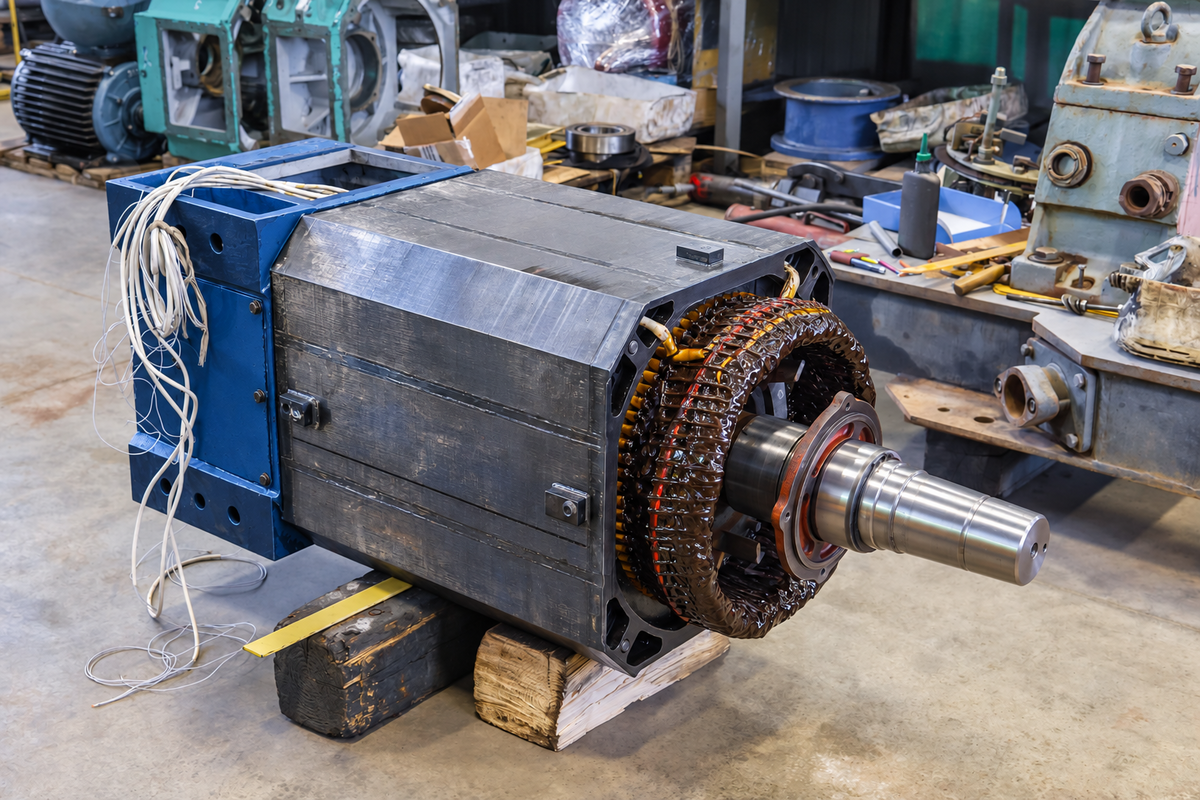
The Short Version
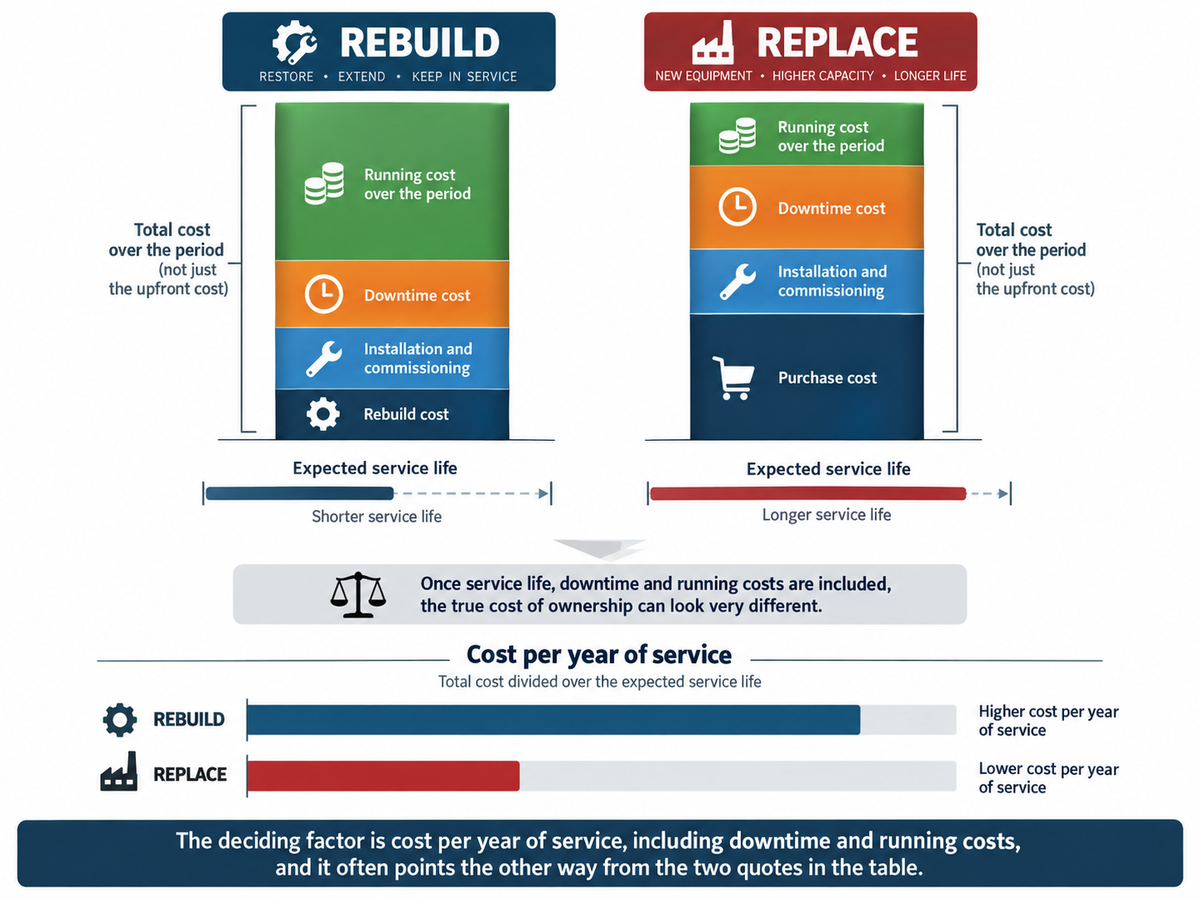
- Compare the cost per year of remaining service rather than the rebuild price against the replacement price. A rebuild at a third of the price that delivers a third of the life is not a saving.
- Rebuild, remanufacture, and repair are used loosely and mean different things. Establish what you are being quoted, because the difference determines what is replaced, what is verified, and what is warranted.
- A rebuild quote before teardown is an estimate. What is found inside changes the work, and the terms governing that discovery matter more than the headline number.
- Establish whether you get your unit back or a unit back. Exchange programs are fast and legitimate, and they mean the equipment returning is not the one you sent.
- For some equipment, a recognized repair standard and accreditation program exist. Where one exists for your equipment type, asking about it is the quickest way to separate shops.
- As-found condition is the record that tells you what was actually wrong and what was actually done. A shop that does not document it is asking you to take the outcome on trust.
- Downtime usually dominates the economics, and the arrangement that manages it, whether a spare, an exchange, or a staged rebuild, is frequently worth more than the difference between quotes.
Repair or replace decisions are made under pressure, usually with production stopped. That pressure produces a predictable shape: somebody gets a rebuild quote, somebody else gets a price for new, and the cheaper number wins. That process is fast, and it answers a question nobody asked, because the two numbers describe different things.
A rebuild returns equipment to some condition short of new, for some period, with some level of assurance. A replacement delivers new equipment with a known life and a warranty. Whether one is better value than the other depends on how long each will serve, what each costs to run, how long each takes to obtain, and what happens if either is wrong. This guide covers how to make that comparison properly, and then how to qualify whoever does the work, because a good decision executed by the wrong shop produces the same outcome as a bad one.
01. The comparison most buyers make, and the one they should
The common comparison is capital against capital: the rebuild quote against the replacement price, frequently expressed as a percentage. It is easy to produce, and it leaves out most of what matters.
What the comparison needs to include
Remaining service life comes first, and it most often changes conclusions. A rebuild that restores a machine to a condition good for a few years and a replacement good for two decades are not comparable at any price ratio. Establish what life the rebuilder expects to deliver and what that expectation is based on, then divide each option's cost by the years it buys.
Then running cost. Older equipment is frequently less efficient, and on anything running substantial hours, the energy difference compounds. Where the equipment is a motor, a drive, a compressor, or a pump, this can be large enough to decide the question on its own, and it is worth calculating rather than assuming.
Then downtime, which is usually the largest number in the comparison and the one most often left out. How long is each route, from decision to running production, and what does an hour of that cost? A rebuild that takes six weeks and a replacement that takes six months are separated by more than their prices.
Then the risk attached to each. A rebuild carries the risk that teardown reveals worse damage than expected, which section 04 covers. A replacement carries the risk that installation is more involved than anticipated, because new equipment may not fit the existing foundation, services or controls.
Then the consequences nobody wants. A rebuild preserves the existing interfaces, spares, documentation and operator familiarity. A replacement may improve all of those, or it may create a second standard in the plant to maintain. Neither is automatically better, and both are real.
When the answer is clear without arithmetic
Three situations settle themselves. Where spare parts are no longer available, rebuild becomes progressively harder, and the calculation shifts toward replacement, whatever the current quote says. Where the equipment is already at or beyond the capacity the process now needs, rebuilding restores the wrong machine. And when a safety or regulatory requirement changes such that the existing equipment cannot be brought into compliance, rebuilding creates a problem.
Conversely, where the equipment is a long-lived asset with a sound structure and the wear is in replaceable elements, rebuild is frequently the better value by a wide margin.
02. How the category divides
Rebuild providers are not one population, and the divisions are sharper here than in most categories because the equipment types have little in common.
By equipment type, which is the hard division
Rotating electrical equipment, meaning motors and generators, is served by a large population of electromechanical service centers and has its own repair standard and accreditation program, covered in section 06. Pumps, gearboxes and hydraulic components each have their own specialist populations. Machine tools and spindles are a separate discipline again. Compressors, turbines and large process equipment are served by specialists and by the original manufacturers. A shop that rebuilds pumps is not thereby a spindle rebuilder.
Machine tool and spindle work, which runs on its own calendar
This deserves its own section because buyers routinely underestimate it. Precision rebuild work on spindles and machine tools involves grinding, precision bearing fitting, balancing, and a run-in period, and the run-in in particular cannot be compressed: bearings need to be brought up to speed progressively and allowed to stabilize, and rushing it produces a spindle that fails early.
So a spindle rebuild quoted with a short turnaround either does less than a full rebuild or skips the run-in, and either is worth knowing about. Ask what the run-in schedule is and whether the shop will provide the vibration and temperature data from it. That question separates precision rebuilders from general machine shops faster than any other.
By who is doing the work
Original equipment manufacturers hold the drawings, the specifications, and the parts, and can generally return equipment to original specification with the strongest warranty position. They are usually the most expensive and not always the fastest.
Authorized service centers operate under the manufacturer's approval and have access to parts and documentation, often offering the best combination of capability and responsiveness.
Independent specialists rebuild across manufacturers, sometimes with deep expertise in a specific equipment type and sometimes with capability the original manufacturer no longer offers on obsolete equipment. They vary more than the other two categories, which makes the qualification questions in this guide more important, not less.
General repair shops handle a wide range of equipment and are the right choice for straightforward mechanical work and the wrong one for precision or specialized equipment.
By scale of engagement
A single component repair, a full equipment rebuild, a retrofit that modernizes controls while rebuilding the mechanics, and an ongoing maintenance contract are four different purchases. Retrofit, in particular, is worth naming because, on older equipment with sound mechanics and obsolete controls, it often delivers most of the benefit of replacement at a fraction of the cost and disruption.
03. Repair, rebuild, remanufacture: what the words mean
These terms are used loosely and priced very differently, and the first thing to establish in any conversation is which one you are being quoted.
A repair addresses a specific fault. Something failed, it is fixed, and the rest of the equipment is left as it is. It is the cheapest and fastest option, and it returns equipment whose overall condition is unchanged, which means the next failure may be close behind.
A rebuild goes further, typically involving disassembly, inspection of major components, replacement of wear items, and reassembly to defined tolerances. How far it goes varies enormously between shops, which is why section 04 exists.
A remanufacture generally means returning equipment to a condition that meets the original specification, with wear components replaced as a matter of course rather than on inspection, verification against the original specification, and a warranty comparable to new. It is the most expensive of the three and the most defined.
Those definitions are industry usage rather than legal ones, and different shops use them differently. That is exactly the point: don't accept the word. Ask what is disassembled, what is inspected, what is replaced regardless of condition, what is replaced only if found defective, what is measured and against what, and what is warranted.
A shop that answers those six questions precisely is quoting a defined scope. One that answers with a word is quoting a price.
04. Scope, and the teardown problem
This is the structural difficulty in buying rebuild work, and it cannot be designed away, only managed.
Nobody knows what is wrong with a piece of equipment until it is apart. A quote produced before teardown rests on assumptions about what will be found, and the honest ones say so. The dishonest version is a low quote that becomes a different number after disassembly, when you have no alternative because your equipment is in pieces on somebody's floor.
How to handle it
Separate the teardown from the rebuild commercially. A common and sensible arrangement is to purchase teardown and inspection as a defined piece of work with its own price, resulting in a report on what was found and a firm quote for the work required. Then you decide, with that information, whether to proceed.
Establish what happens if you decide not to proceed. Who owns the disassembled equipment, what does reassembly cost, and can it be returned in a usable state? Agree on this before teardown rather than discovering it afterward.
Establish the scope in the three categories that actually matter. What will be replaced regardless of condition, which is the part that determines how thorough the rebuild is. What will be replaced only if inspection finds it defective, and against what criteria that judgment is made. And what will be reused without question.
Then establish the authorization threshold. A rebuild that stops for approval on every small item takes forever; one that proceeds without limit produces an invoice nobody expected. Agree on a value below which the shop proceeds and above which they call you, and agree how quickly you will respond, because your response time is part of their schedule.
What to require from the inspection
Ask for the as-found condition documented, with measurements rather than descriptions and with photographs. This matters for two reasons beyond the immediate decision. It tells you what actually failed, which may point at something in your operation rather than at the equipment. It also gives you a baseline for the next rebuild, which is worth having on a long-lived asset.
05. Your unit back, or a unit back
This distinction catches buyers out, and it is simple to establish in advance.
Under a straight rebuild, you send the equipment you receive, rebuilt. Under an exchange arrangement, you send your unit and receive a different one that was rebuilt previously, with yours going into the pool to be rebuilt for somebody else. Exchange is faster, sometimes substantially, because the rebuild has already happened.
Both are legitimate, and exchange is a genuinely good answer for common equipment where downtime dominates. But establish which you are getting, because three things follow.
Traceability. If your equipment carries serial-numbered history, sits in a regulated environment, or has documentation tied to it, an exchange breaks that chain. In some settings, that is unacceptable, and you should ask before the unit leaves.
Configuration. Equipment accumulates modifications, and a pool unit is built to a standard configuration. If yours has been modified for your application, an exchange unit may not match, and finding that out on the installation shift is expensive.
Condition of the core. Under exchange, the unit you send is assessed, and you may be charged more if it is deemed beyond economic rebuild. Establish the criteria and the charges before sending anything, because that assessment happens after you have committed.
The pool is not permanent
One further point for anyone building a downtime strategy around exchange. An exchange arrangement depends on a pool of rebuildable units existing for your specific model, and pools shrink. As a model ages, cores become scarcer, parts become harder to obtain, and providers narrow what they will accept, until the fast turnaround that justified the strategy is no longer available for your equipment.
This rarely announces itself. It appears as a longer quoted turnaround, then as an exchange offer for a superseded model, then as no offer at all, usually at the point you need it. Confirm periodically that the pool still covers your model, and treat a lengthening turnaround as the early signal it is, not as a scheduling inconvenience. For critical equipment approaching the end of its supported life, the honest answer is often to keep a spare.
06. Standards, accreditation and how to sort shops quickly
For some equipment types, a recognized repair standard exists, and when one does for your equipment, it is the fastest way to separate shops.
Rotating electrical equipment
The clearest example is motors and generators. ANSI/EASA AR100, Recommended Practice for the Repair of Rotating Electrical Apparatus, published by the Electrical Apparatus Service Association, is the American National Standard for the repair of motors and generators. It describes practices for repairing, rewinding, and testing electrical apparatus, with the stated aim of maintaining or enhancing the energy efficiency and reliability of both alternating current and direct current machines. Like all American National Standards, it is periodically reviewed and reapproved, so ask which edition a shop works to.
Two things in it are worth knowing as a buyer. It recommends recording and checking the accuracy of the as-found winding data before removing the old winding, which is the only opportunity to capture what the machine actually was. It treats exact duplication of the original winding characteristics as central to maintaining performance and efficiency, which is the mechanism behind the widely held concern that a careless rewind permanently costs efficiency.
There is also an accreditation program for service centers built on that standard, along with good-practice guidance derived from a study of the effect of repair and rewinding on motor efficiency. It uses independent third-party auditors to evaluate service centers for evidence of compliance. Accredited shops are a smaller population than shops claiming to follow the practice, and asking whether a shop is accredited rather than whether it follows the standard is a sharper question.
Where no standard exists
For most other equipment types, no equivalent exists, and qualification rests on the questions throughout this guide: what is measured, against what specification, with what documented result, and what warranty stands behind it. Ask also whether the shop holds any quality system certification, what the scope of it covers, and whether the manufacturer of your equipment recognizes them, because manufacturer authorization carries access to parts and specifications that an independent may not have.
07. What comes back, and how you know it is right
The deliverable is equipment plus evidence, and the evidence is what distinguishes a rebuild you can rely on from one you hope about.
Testing before it ships
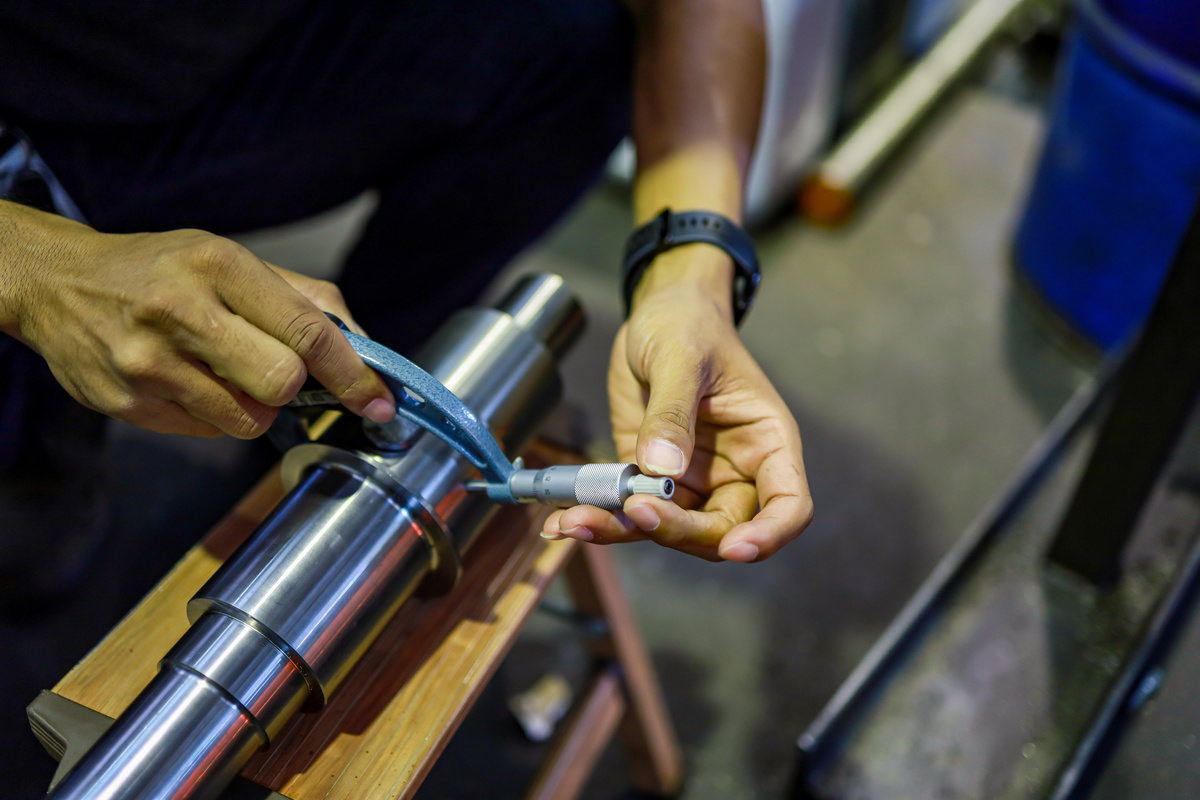
Establish what testing is performed on the rebuilt equipment before it leaves, and require the results. For rotating equipment, this normally includes electrical testing, vibration measurement, and a run at operating speed. For hydraulic components, it includes pressure and flow testing. For machine tools and spindles, it includes runout measurement, thermal behavior during run-in, and vibration signature.
The useful question is not whether they test but whether they will send you the numbers. A shop that produces a test report with actual measured values is showing you its work. One that returns equipment with a tag saying tested is asking for trust.
Ask also whether you may witness final testing. For a critical item, it is worth the trip, and a shop's reaction to the request is informative in itself.
The documentation
Require, at minimum, the as-found condition report with measurements, a record of what was replaced and with what, a record of what was measured after rebuild and against what specification, the test results, and any settings or parameters configured during the work.
Where the equipment is part of a maintenance history, ask for the documentation in a form you can file and retrieve. A rebuild whose record exists only in the shop's system is a rebuild you cannot account for later.
Warranty
Establish four things about the warranty rather than accepting a period. What is covered, since some cover only the parts replaced rather than the equipment. How long, and whether the period runs from shipment or from commissioning, because equipment sitting as a spare for eight months under a twelve-month warranty is nearly out of cover when it is first used. What voids it, including installation practices and operating conditions. And what happens if it fails, specifically whether you get a repair, a replacement, or a refund, and who pays for removal, transport, and reinstallation, which on heavy equipment can exceed the value of the repair.
Compare warranty positions alongside prices, not after. A shop offering a longer warranty is pricing its own confidence, and that is useful information.
08. Downtime, and the arrangement that manages it
On most rebuild decisions, downtime costs more than the rebuild. The arrangements that manage it are worth more than the price difference between shops, and they need to be set up before failure, not after.
Holding a spare is the simplest and most capital-intensive option. It eliminates downtime and makes sense where equipment is critical, lead times are long, or failure consequences are severe. Where a spare is held, it needs proper storage and, if required, must be turned or exercised, and its warranty position should be understood as noted above.
Exchange programs, covered in section 05, buy speed at the cost of receiving a different unit.
Staged or planned rebuild removes the urgency entirely. Equipment rebuilt on a planned schedule, during a shutdown, with the work scoped in advance, costs less and disrupts less than the same work done in an emergency. This is the highest-value thing in this guide for anyone with a fleet of similar equipment: monitor condition, plan the rebuilds, and never make this decision under pressure. That recommendation depends on one thing: knowing the equipment is degrading before it stops. Vibration analysis on rotating equipment, oil analysis on anything with a lubricated system, and thermographic inspection on electrical and mechanical assets are the practices that provide it, and none of them are exotic. A plant with condition monitoring on its critical assets can schedule rebuilds into shutdowns and negotiate them without pressure. A plant without it will keep making this decision at the worst possible moment, no matter what the rest of this guide recommends.
Emergency service is what remains, and the questions there are practical. Does the shop offer it? What does it actually mean in hours? What does it cost? And have they done it for you or for a reference before? An emergency service claim that has never been tested is marketing.
Logistics
Establish who removes, packs, transports, and reinstalls, and who is liable at each stage. Damaged heavy or precision equipment in transit is a real and recurring problem. Also establish whether the shop can collect, since coordinating a rigger, a transporter, and a rebuilder is work somebody has to do. Usually, it's you unless agreed otherwise.
Reinstallation is part of the rebuild, whether or not anyone contracted it that way
The logistics questions above establish who is liable if equipment is damaged in transit. That is the wrong risk to be worried about, because the common failure is not damage. It is a properly rebuilt machine installed slightly wrong.
A rebuilt motor or pump misaligned at reinstallation will fail within months. A machine tool set on a foundation that has moved since it was originally installed will run and produce out-of-tolerance work. In both cases, the symptom is indistinguishable from a defective rebuild, which is precisely why these become disputes: the rebuilder points at the installation, the installer points at the rebuild, and the only party without evidence is you.
What to require
Treat reinstallation as a deliverable with a documented result, exactly as this guide treats the rebuild itself.
- Who performs the alignment, and whether they are the rebuilder, the rigger, your own maintenance team, or a specialist. Any of those can work; nobody being named does not.
- The alignment tolerance being worked to, and where it came from, since the equipment manufacturer's figure and a general shop practice can differ substantially.
- The method and the documented result. An alignment performed with modern instrumentation produces numbers, and those numbers should arrive with the job rather than staying in the technician's head.
- Whether thermal growth has been accounted for, since equipment aligned cold and running hot may only be aligned when it is switched off. On anything running at temperature, this is the difference between an alignment and a number recorded at ambient.
- The condition of the base, the foundation and the mounting. Soft foot, a distorted baseplate, or a foundation that has settled since the original installation all defeat an otherwise correct alignment, and checking them is quick compared with the consequence of not doing so.
- A baseline vibration reading taken after reinstallation and before the equipment returns to normal service. This is the most useful item on the list because it establishes the machine's condition at a known point and gives both you and the rebuilder something factual to refer to if performance is later questioned.
Why this belongs in the purchase rather than in the shutdown plan
Two reasons. The rebuilder's warranty almost certainly excludes damage caused by improper installation, so evidence that the installation was proper is what makes the warranty usable. And the alignment and baseline data cost very little at the time and cannot be reconstructed afterward.
Establish at the order which party is responsible for alignment and its documentation, and whether the rebuilder will perform or witness it. A rebuilder who offers to attend the reinstallation is worth taking up on it, and one who asks who is doing the alignment before you raise it is telling you they have had this argument before.
09. What good and poor answers sound like
The distinctions below appear early and are more informative than a reference list.
On the decision
Good: Asks how long you need the equipment to last and what downtime costs you, and is willing to say that replacement is the better answer for your situation.
Poor: Quotes the rebuild without asking what it is for, or argues against replacement as a matter of policy.
On scope
Good: Offers teardown and inspection as a separate priced step, and clearly distinguishes what is always replaced, what is replaced on inspection, and what is reused.
Poor: Quotes a rebuild as a single figure before seeing inside, without qualifying it.
On the unit
Good: States unprompted whether you get your unit back or an exchange, and raises configuration and traceability.
Poor: Leaves it ambiguous, or treats the question as unimportant.
On standards
Good: Names the standard they work to for your equipment type and the edition, and can say whether they are accredited as distinct from compliant.
Poor: Says they follow best practice, or treats the question as bureaucratic.
On evidence
Good: Provides as-found measurements and final test data as standard, and offers to let you witness final testing.
Poor: Returns equipment with a test tag and no numbers.
On what failed
Good: Tells you what they think caused the failure and whether something in your installation or operation contributed to it.
Poor: Replaces what was broken without comment on why it broke.
Take This to Your Next Conversation
Eighteen questions drawn from this guide.
- How many years of service should I expect from this rebuild, and what is that based on?
- What would this equipment cost to run after rebuild compared with a modern replacement?
- Is this a repair, a rebuild, or a remanufacture, and what is the difference in what you will do?
- What will you replace regardless of condition, what only if found defective, and what will you reuse?
- Can I buy teardown and inspection as a separate step, and what happens if I then decide not to proceed?
- What authorization threshold do you want, and how quickly do you need me to respond?
- Do I get my unit back or an exchange unit, and what happens to my configuration if it is an exchange?
- If it is an exchange, on what criteria would my core be rejected, and what would that cost?
- Which repair standard applies to this equipment, which edition do you work to, and are you accredited?
- What as-found data will you record and provide before you start work?
- What testing do you perform before shipping, and will I receive the measured values?
- May I witness final testing?
- What does the warranty cover, when does it start, what voids it, and who pays for removal and reinstallation if it fails?
- What is the realistic turnaround, and does that include transport in both directions?
- What do you think caused this failure, and is there anything in my installation contributing to it?
- Given what caused this failure, should this be restored to original specification or upgraded, and what would the upgrade cost while it is apart?
- Who performs the alignment at reinstallation, to what tolerance, and will I receive the documented result and a post-installation vibration baseline?
- For an exchange arrangement: does the pool still cover my model, and what is the realistic outlook for it over the next several years?
About this guide
Written by the Industrial Web Search editorial team. This guidance is general and does not replace engineering advice for a specific asset or decision. The standards referenced here are revised and reapproved periodically, and their current editions are the authority. Terminology in this sector, including repair, rebuild, refurbishment and remanufacture, is industry usage rather than legally defined, and its meaning varies between providers, which is why scope should be established by description rather than by term. Expected service life after rebuild, achievable performance and warranty positions vary with the equipment, its condition and the provider, and cannot be determined from general guidance. Where equipment serves a safety function or falls under a regulatory framework, requirements for repair, requalification and documentation may apply. Confirm these with a qualified engineer and the relevant authority.