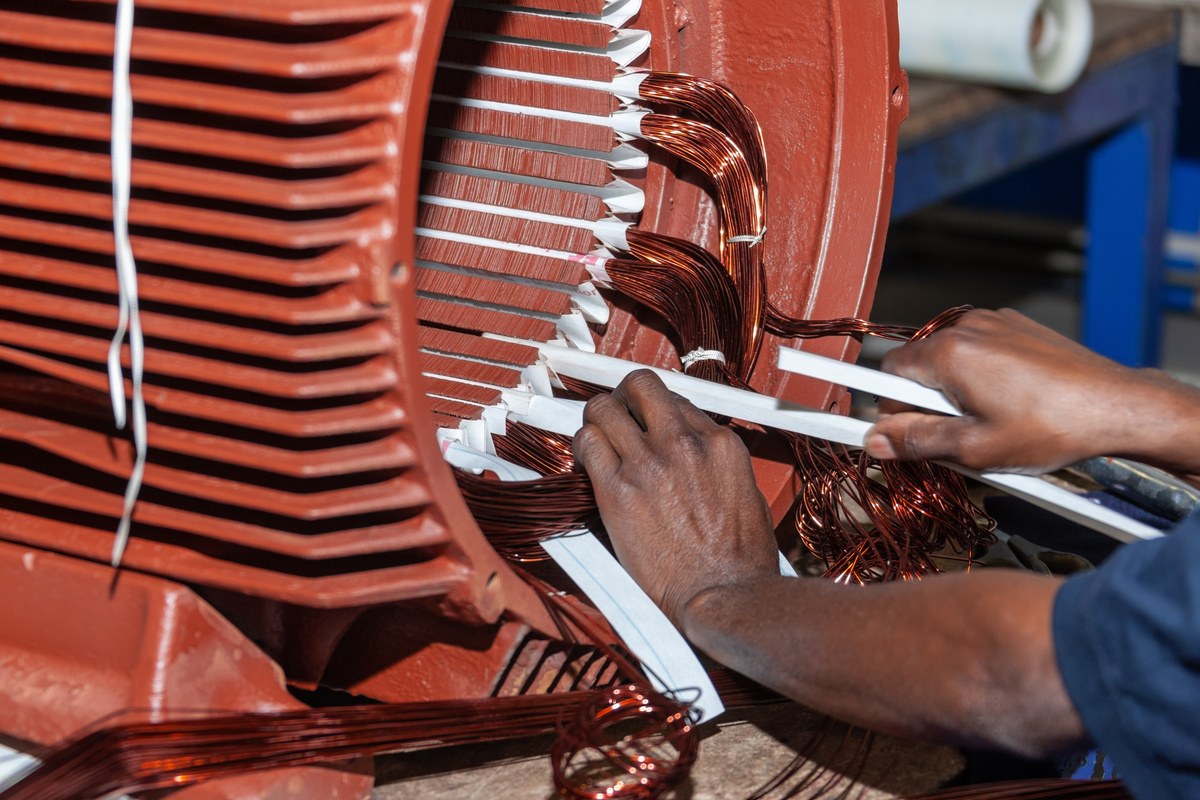
As-found condition and the teardown report
This sector's version of the platform's analysis-first rule: the unit is disassembled, measured, and photographed before anyone commits to a price, with the findings written into an inspection report: what failed, what wore, what measures out of tolerance, and the quote built from it. The teardown gate is where good repair buying lives; a diagnostic fee is honest money, and a firm repair price quoted before teardown is an estimate in costume.
Balancing and balance grades
The rotating world's smoothness specification: residual unbalance corrected to the grades of the international balancing standard, stated as G-numbers, tighter single-digit grades for machine-tool spindle territory, more ordinary grades for general machinery. The grade is a specification item, named in the repair scope rather than assumed, and the balance certificate with the achieved numbers belongs in the repair file, because balanced to our usual standard is not a number.
Baseline vibration signature
The repaired machine's opening statement: vibration measured at commissioning, by position and frequency, filed as the reference every later reading is compared against. The baseline is what turns condition monitoring from adjectives into trends; it is cheap at startup and unbuyable afterward, and a repair shop that hands one over unprompted is telling you it expects its work to be measured.
Bearing fits and shaft repair
The machining half of most rebuilds: worn journals and bearing seats restored by welding and turning, metalizing, sleeving, or plating, back to the fits the bearings were designed for, since a new bearing pressed into a worn housing inherits the housing's problems. Fit restoration is skilled, dimensioned work; its measurements belong in the repair report, and the classic false economy is new rolling elements on old geometry.
Boiler and equipment rental
The sector's bridge tier: temporary boilers, chillers, compressors, and generators that carry the plant while its own equipment is down, planned for outages or summoned in emergencies. Rental buying is its own discipline, connections and utilities surveyed in advance, contracts clear on delivery, commissioning, and fuel, and the mature version is a standing plan: knowing what would arrive, where it would sit, and how it would tie in, before the night it must.
Core and exchange programs
The sector's speed lever: rebuilt units from an exchange pool shipped against the return of your failed core, days instead of weeks, with core charges crediting on return and the pool absorbing the rebuild time. The trade is identity: an exchange unit is equivalent, not yours, which works for commodity machines and raises a real question for serialized, validated, or matched equipment, so the identity decision is written before the swap, not discovered at the audit.
First article inspectionFAI
The full verification of initial units against the specification before quantity production, the platform's standing gate, appearing here in the sector's own dialect: the post-repair test and inspection record that proves the rebuilt unit meets its named specification before it ships. On repair programs covering fleets, the first rebuilt unit's file sets the pattern the rest follow.
Field service and shop repair
The sector's two venues: field crews who repair in place, machining, alignment, and balancing included, for equipment too large or too integrated to move, and the shop floor where teardown, machining, and testing have their full toolkit. Many jobs split honestly between them: removal and reinstallation field-side, the rebuild in the shop, and the RFQ that states which venue it expects, and who owns rigging and reinstallation, has priced the whole job instead of the middle of it.
Gearbox rebuilding
The gear-drive specialty: boxes torn down to inspection, gearing evaluated against wear patterns that diagnose their own causes, bearings and seals renewed, housings line-bored where seats have wandered, and backlash and contact patterns set to specification at reassembly. Gear work reads history in metal; its inspection reports are diagnostic documents worth keeping, and replacement gearing ranges from catalog to reverse-engineered, with lead time depending on the split.
Hydraulic component repair
The fluid power page's service tier: cylinders resealed and re-chromed, pumps and motors rebuilt, valves refurbished, and the bench testing that proves pressure, flow, and leakage afterward. The system-side rules live on that page; here the buyer content is the repair loop's own discipline: contamination-controlled assembly, test reports in numbers, and root cause chased upstream, since a component that failed from dirty fluid will happily fail from it again.
Lockout tagoutLOTO
The energy-isolation discipline that governs every repair's beginning: equipment isolated from its energy sources, electrical, hydraulic, pneumatic, gravitational, locked and tagged under the workplace rules before anyone opens anything. It appears on this page because service work crosses it constantly: field crews work under your program, coordination between your locks and theirs is planned rather than improvised, and a service provider fluent in isolation procedure is exhibiting the culture the whole purchase depends on.
Machine tool rebuild and retrofit
The machine-tool world's second lives: rebuilds restoring mechanical accuracy, ways, spindles, ballscrews, geometry realigned to specification, and retrofits replacing controls and drives so a sound iron frame outlives its obsolete electronics. The two are different purchases with different promises, geometry versus capability, often bought together, and the acceptance is the machine-tool trade's own: geometric test results against the named tolerances, documented on the machine you get back.
Maintenance, repair, and operationsMRO
The plant-side umbrella this sector serves: the maintenance world's spares, services, and repair decisions, where the repair-versus-replace question lives alongside stocking strategy. The connection worth stating: a repair program is part of spares strategy; exchange units and rebuilt spares on the shelf are inventory that repairs bought; and the platform's standardization logic, fewer varieties, deeper coverage, applies to repairable assets exactly as it does to elements and rollers.
Obsolescence and legacy support
The demand that keeps half this sector busy: equipment outliving its manufacturer's support, drives, controls, and electronics repaired at component level because replacements no longer exist, mechanical parts reverse-engineered from worn originals. Legacy repair is legitimate and skilled; its honest companion is a migration plan, because component-level repair buys time, not immortality, and the platform's panels page carries the modernization half of this conversation.
OEM and independent repair
The sector's structural split: manufacturers' own service networks, which hold the drawings, the warranty leverage, and the parts channel, and the independent repair industry, which offers speed, price competition, multi-brand fluency, and often a deeper teardown culture. Neither is generically right: warranty terms, data access, and parts availability push OEM-ward; cost, turnaround, and obsolete equipment push independent, and honest RFQ pricing can serve both.
Overhaul
The middle rung of the sector's ladder: beyond repairing the failure, the unit opened fully, wear parts renewed as a set, tolerances checked throughout, and the machine returned to serviceable condition with a defined scope behind the word. Overhaul is the scheduled version of rebuild thinking, common on a calendar or an hours meter, and its value depends entirely on the scope sheet, which is why this page keeps insisting the word be defined in writing.
Performance testing
Proof in the equipment's own language: pumps run against their curves per the Pump Institute's test standards, motors through the Repair Standard's electrical and mechanical test series, hydraulics benched for pressure and flow, spindles proven for runout, balance, and thermal behavior. The test report is the deliverable that separates repaired from reassembled; its numbers are compared against the specification the repair is named to, and an untested repair is a hypothesis shipped in a crate.
Remanufacture
The top of the ladder and a defined term: the industrial process, standardized by the remanufacturing industry's American National Standard, that returns a used product to same-as-new condition, or better, with warranties to match, through complete disassembly, part-level restoration or replacement, and testing against original specifications. Remanufactured is a claim with content when the process behind it matches the definition, and marketing use of the word without that process is exactly what the definition exists to expose.
Repair specifications
The sector's central question, wearing its answer: repaired to what. The candidates are real documents: the motor repair standard for rotating electrical work, the pump institute's standards on that side, OEM specifications where access allows, and the unit's own drawings where they exist, with as-found dimensions and engineering judgment filling honest gaps. A repair without a named specification is a cleaning with paint, and an RFQ that names the reference makes every bid comparable.
Root cause analysisRCA
The discipline that keeps repair from becoming a subscription: determining why the unit failed, misalignment, lubrication, contamination, application, electrical stress, not merely what broke, because a repair without root cause buys the same failure twice. Failed components are evidence; wear patterns and winding burns read like testimony; and a repair report that states a cause and an upstream recommendation is worth more than the repair, since the repair fixes one machine and the cause fixes a habit.
Rewinds and the efficiency question
Motor repair's oldest argument, settled by study: the joint investigation by the repair industry's association and its British counterpart demonstrated that motor efficiency can be maintained through repair and rewind when defined good practices are followed, the practices the repair standard and its accreditation program codify. The buyer translation: rewind versus replace is an economics question, not an efficiency superstition, provided the shop demonstrably follows the practices the accreditation exists to audit.
Spindle repair
The precision end of the sector: machine-tool spindles rebuilt in clean rooms of their own, bearings matched and preloaded, tapers ground, runout measured in tenths and better, balance to the tight grades, and thermal behavior proven at speed. Spindle work is bought on the shop's metrology as much as its hands, its test reports read like calibration certificates, and the platform's rule of matching the supplier's precision culture to the work's applies here at full strength.
Warranty scope
The promise attached to the word the RFQ defined: what is covered, the repaired components, the workmanship, or the whole unit, for how long, and against what operating conditions, with remanufactured units carrying the same-as-new expectation their definition implies. Warranty terms differ legitimately across the ladder's rungs, exclusions for causes outside the repair are fair, and the scope in writing beats the scope in goodwill by exactly the amount at stake.
Wear parts and repair kits
The consumable logic inside the service: bearings, seals, wear rings, brushes, and kitted sets set up common rebuilds, with genuine-versus-equivalent parts a stated decision rather than a discovered one. Kit availability is half of turnaround, parts provenance belongs in the repair report, and fleets that standardize equipment inherit standardized kits, one more compounding return on the platform's standardization habit.