Back to All Buyer's Guides Sectors

Industrial Web Search Buyer's Guide Sector

Industrial Coatings & Surface Treatment

The finishes and treatments applied to manufactured parts and industrial assets: powder and liquid coatings, plating, anodizing, conversion coatings, galvanizing, passivation, and the surface preparation beneath all of them. This sector covers the job-shop finishers and coating applicators who perform the work, the coating and chemistry suppliers behind them, and the specifications, preparation grades, and acceptance tests that make a finish an engineering requirement rather than an appearance.

Overview

Types of Coatings and Surface Treatments, What Governs the Result, and Who Supplies Them

A working orientation to the sector before you request quotes: which world your job belongs to, what actually determines coating life, and the kinds of companies you will end up talking to.

Buyers arrive in this sector on two paths, and the suppliers, specifications, and vocabulary differ between them. The first path is part finishing: manufactured components are sent to job-shop finishers for powder coating, liquid paint, zinc and nickel plating, anodizing, chem film on aluminum, e-coat, passivation of stainless, or hot-dip galvanizing of fabricated steel, each specified under its governing specification by type, class, and thickness. The second path is asset protection: engineered coating systems applied to structures, tanks, and equipment against a classified environment, the world of surface preparation grades, multi-coat systems, certified applicators, and coating inspectors. The processes overlap; the purchases do not. Fabrication itself, including which finishes a fabricator manages, is covered under the sheet metal and fabrication sector, and this page covers the finishing itself on both paths.

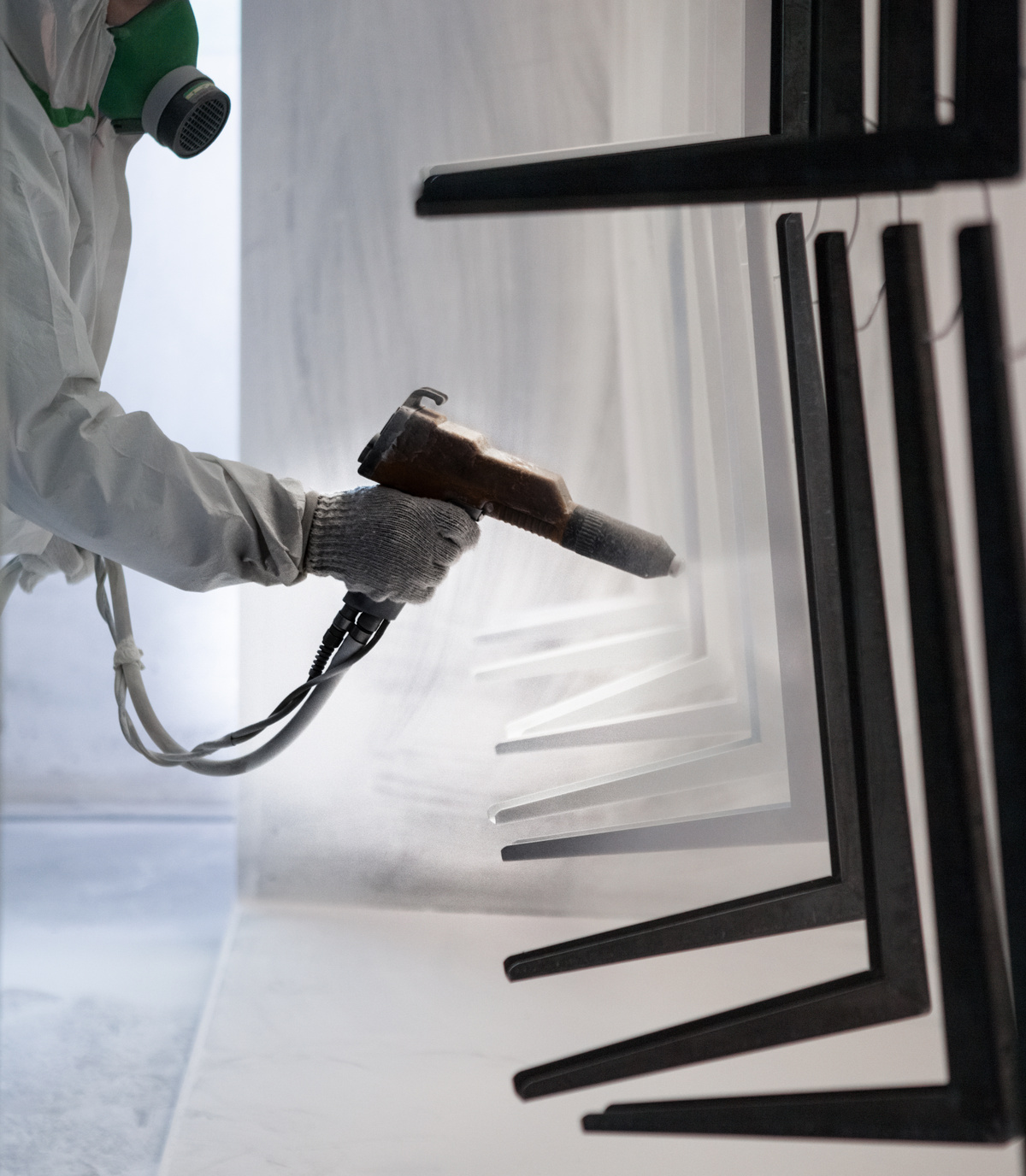
Metal components receiving an industrial coating on a controlled finishing line.

What determines coating life is decided below the coating, which is the sector's central and least glamorous truth. Preparation and pretreatment, the cleanliness grade, the surface profile, the conversion layer, and the window between preparation and coating control adhesion and therefore everything, and most failures trace there rather than to the product on top. The specification is the second governor: a finish specified by its standard with type, class, and thickness is checkable, while a finish specified by trade name and adjectives is a future dispute, and the acceptance tests- thickness by the measurement standards, adhesion by the named methods, corrosion testing used as a benchmark rather than a prophecy, are what make the requirement real. The third governor is regulatory: restricted chemistries and air rules shape what processes run where, which is part of why this work is outsourced at all, and why the chemistry family belongs in your specification, not the shop's discretion.

Four kinds of company supply this sector. Job-shop finishers run the plating lines, powder and paint booths, anodize tanks, and e-coat lines through which manufactured parts flow, each qualified by their pretreatment, process controls, and the specifications they certify to. Galvanizers are their own trade, built around molten zinc kettles and structural steel. Coating applicators and painting contractors apply engineered protective systems to assets, in-shop and in the field, and the qualification programs and inspectors of the protective coatings world attach to them. Coating and chemistry manufacturers formulate paints and powders, develop process chemistries, and provide technical service that specifies systems and troubleshoot lines. It also tells you what to search for: parts to finish means job-shop finishers by process and by the specification you need certified; fabricated steel for outdoors means galvanizers; a structure, tank, or lining means coating applicators, with inspection engaged separately; and a system to specify or a line problem means the manufacturers' technical service. The distinction determines who certifies what, who warrants the work, and which body of standards you are buying under.

Sourcing Considerations

How to Choose Coatings and Surface Treatment: 6 Things to Get Right

The decisions below are the ones that most often cause regret later. The first two, naming the specification and controlling the preparation, determine everything after them, including the answers to the other four. The detail sits in the guides at the bottom of this page.

01

Specify the finish by its standard, not its adjectives

Call out the governing specification with type, class, and thickness, the color and gloss against a named standard, and the chemistry family where alternatives exist, because the same finish name can be run more than one way. A finish specified as its standard is checkable and portable between shops; a finish specified as a trade name and a look is a dispute waiting for a delivery date.

02

Buy the preparation, because the coating only keeps what it promises

Specify the cleanliness grade and surface profile for blasted work, the pretreatment for finished parts, and the window between preparation and coating, and give the finisher's pretreatment line more qualification attention than their color booth. Most coating failures trace to below the film, and the coating that peels was never attached in the first place. Preparation is invisible on the finished part and decisive in its life.

03

Design the part for the process before it exists in metal

Every process has geometry rules: recesses that electrostatic application avoids, venting and drainage that galvanizing requires, growth that hardcoat, the thick wear-grade anodize, and galvanizing add to threads, rack contact points and their marks, masked areas that must be defined unambiguously, and bakes that heavy sections and sensitive components must survive. An hour with the finisher before tooling is cut is the cheapest finishing money you will spend.

04

Match the system to the environment, stated in the industry's categories

State the corrosivity category and required durability for protective work, and the actual service conditions for finished parts, then propose systems against the requirements. Use salt spray and cyclic testing as named benchmarks with specified durations and criteria, never as a life prediction, and distrust proposals that cannot situate themselves within the category framework. The environment, not the brochure, determines the system's size.

05

Specify the chemistry where regulations fork the process

Restricted chemistries, hexavalent chromium above all, and qualified alternatives can satisfy the same callout invisibly, and air rules change what formulations run where. State the chemistry family you require, obtain compliance declarations for the exact process used, requalify when a finisher converts chemistries or a coating is reformulated, and confirm local limits before standardizing one product across sites. Silence in the specification means the shop decides.

06

Define acceptance and inspection in the contract, at the right formality

Name the thickness measurement standard and plan, the adhesion method and value, any corrosion benchmark, and the certifications that ship with the work. For asset protection, require qualification programs and independent inspection during application, with hold points for preparation, thickness per coat, and cure, because inspecting the work beats litigating a failure. Scale the formality to the consequence, and put it in writing before the first part hangs.

Glossary

Coatings and Surface Treatment Glossary: Key Terms Explained

The terms you will meet on a finish callout, a coating specification, or a finisher's quote, in plain English.

25 terms

Abrasive blasting

Propelling abrasive media against a surface to remove rust, scale, and old coatings and to roughen the surface for adhesion. The result is specified twice: a cleanliness grade under the published preparation standards and a surface profile depth matched to the coating. Blasting is where coating life is won, which is why specifications lead with it.

Adhesion testing

The standardized checks of how well a coating grips its substrate include cross-cut and tape methods for thin films, and pull-off methods that measure the stress required to detach a dolly glued to the coating. Each is run to a published test method, and an adhesion requirement without its method and acceptance value is not enforceable, so specifications name both.

Anodizing

An electrochemical conversion of an aluminum surface into a controlled oxide layer, in types running from thin decorative and corrosion-protective films to thick hardcoat for wear. Anodizing is not a coating on the metal but a transformation of it; it provides electrical insulation, and type, class, thickness, color, and sealing are specified under the governing specification, not assumed.

Chromate conversion coating

A chemical film on aluminum, also called chem film, providing corrosion protection and a conductive base for paint, specified by class for protection versus low electrical resistance: Class 1A for maximum corrosion protection and Class 3 where grounding and bonding need a conductive film. Traditional hexavalent chemistries face restrictions in many markets; trivalent alternatives are established, and the specification should state which chemistry and class you require rather than leaving it to the shop's default.

Coating system

The full stack applied to a surface: pretreatment or primer, intermediate coats where used, and topcoat, with each layer's product, thickness, and recoat window defined. Protective coatings are specified and warranted as systems, and mixing layers from different systems or makers voids the engineering behind them, which is why the system, not the topcoat, is the unit of purchase.

Corrosivity category

The environmental classification in the international protective coatings standard runs from benign interiors through industrial and coastal atmospheres to the severest categories, with separate classes for immersion. The category, with the required durability, is how an asset owner tells the industry what the coating must survive, and it selects the system rather than the adjectives in a brochure.

Cure schedule

The time and temperature a coating needs to reach its properties, from air-dry paints to powder and e-coat bakes measured at the metal's temperature, not the oven's air. Heavy parts heat up slowly, and heat-sensitive components limit what a part can survive, so the part's mass and any temperature limits belong on the RFQ, as they can determine the process.

Dry film thicknessDFT

The thickness of the cured coating, the most-measured number in the sector, checked with calibrated gauges under published measurement standards that define how many readings and where. Applicators also measure wet film thickness during application; the wet coat is sized to dry down to the specified figure, which is why thickness checks belong at the hold points, not only at the end. Thickness drives both protection and problems: too thin fails early, and too thick cracks and runs. Specifications state a range per coat and the measurement method.

E-coat

Electrodeposition coating, in which charged paint particles deposit on an immersed, electrified part, producing a thin, uniform, highly corrosion-resistant film that reaches into recesses no sprayer can. It is a high-volume pretreat-and-prime process, usually followed by a topcoat, and access to it means finding coaters running lines that fit your part size and volume.

Electroless nickel

A nickel-phosphorus plating deposited by chemical reaction rather than electric current, giving uniform thickness on every surface including bores and recesses, with hardness and corrosion resistance varying by phosphorus content. Its uniformity is the reason to choose it over electrolytic nickel for complex parts, and the phosphorus class and thickness are the specifications.

Faraday cage effect

The tendency of electrostatically applied powder and paint to avoid recesses, inside corners, and cavities, because the field that attracts the coating shields exactly those areas. It is a geometry problem solved by design, application technique, and sometimes process choice, and it is why deep recesses on a powder-coated part deserve a conversation before tooling exists.

Galvanizing

Immersing fabricated steel in molten zinc, hot-dip galvanizing, to form a bonded zinc-iron coating that protects sacrificially, meaning the zinc corrodes preferentially to spare the steel, which is why a scratched galvanized part keeps protecting where a scratched paint film rusts, including at cut edges and scratches. It is a different product from zinc electroplating, thicker and rougher, sized for decades outdoors, with design rules for venting and draining that the galvanizer should see before fabrication is finished.

Holiday detection

Electrical testing that finds pinholes and voids, called holidays, in coatings on conductive substrates, essential for immersion and buried service where a single discontinuity concentrates corrosion. It is specified by test method and voltage for the coating thickness, and it belongs in the inspection plan for tank linings and pipeline coatings, not in the warranty argument afterward.

Hydrogen embrittlement

Delayed, brittle failure of hardened high-strength steels caused by hydrogen absorbed during cleaning and electroplating. The controls are specified, not optional: plating processes are managed for it, and a post-plate bake is performed within a defined timeframe. If you plate-hardened fasteners or springs, the embrittlement relief bake should be explicitly included on the purchase order.

Masking

Protecting areas that must stay uncoated, such as threads, sealing surfaces, electrical contact points, and bores, with plugs, caps, tapes, and custom fixtures. Masking is manual work that drives finishing costs and quality complaints alike, so the drawing should unambiguously define every masked area, and reducing the number of masked features is a design-stage saving.

Passivation

Chemical treatment of stainless steel that removes free iron left by machining and restores the metal's protective oxide layer, performed to published specifications with defined test methods. It is not a coating and adds no thickness, because stainless is not inherently rust-proof, only rust-resistant. At the same time, its chromium oxide layer is intact, which is exactly what passivation restores. Stainless parts that rust in service are frequently parts that skipped it, which makes it a specification line, not a shop courtesy.

Plating

Electrodeposition of a metal layer, zinc and its alloys for corrosion protection on steel, nickel for wear and corrosion, tin for solderability, and precious metals for contacts, specified by metal, thickness, and the class and type of the governing specification. Thickness distributes unevenly with current on complex shapes, which racking and specification both address.

Powder coating

Dry powder is applied electrostatically, then fused in an oven to form a continuous film. This process results in a thick, durable finish that is essentially solvent-free and achieved in a single coat. For successful application, the part being finished must be conductive and able to withstand the baking process. Additionally, the design should address the issue of recesses. The quality of the finish depends heavily on the pretreatment, which can ultimately determine the success of the powder coating job.

Pretreatment

The chemical stages before coating, cleaning, and conversion layers such as phosphates on steel or zirconium-based chemistries that remove contamination and create the surface the coating actually bonds to. Pretreatment is invisible on the finished part and decisive in its life, which is why a coater's pretreatment line is worth asking about in detail.

Racking

How parts hang or fixture through a coating or plating process: the rack carries the electrical contact, determines coverage and thickness distribution, and leaves small uncoated contact marks. Where those marks may and may not fall is a drawing decision, and racking density is part of why part geometry drives finishing price.

Salt spray testing

The accelerated corrosion test in which coated panels are exposed to a standardized salt fog for a specified number of hours, conducted per the published test method. Its correct use is to compare coatings and check process consistency; hours in the cabinet do not translate into years of service life, and a specification should use them as a benchmark, not a prophecy.

Surface preparation grades

The standardized cleanliness levels for blast-cleaned steel are published as the SP series maintained by the industry association and, internationally, as the pictorial Sa grades, with established equivalences between them. The grade determines what the coating bonds to and is verified visually against the standards; specifying the grade by designation makes preparation enforceable.

Surface profile

The roughness the blast leaves, the anchor pattern, measured in depth and matched to the coating system, since thin films drown in a heavy profile and thick coatings need one to grip. Profile is measured with tape or gauge methods to published standards, and it is specified alongside the cleanliness grade because the two together define the prepared surface.

VOC content

The volatile organic compounds a coating releases, regulated by federal, state, and district rules whose limits vary by coating category and location. The rules bind where the coating is applied, which is a reason outsourced finishing exists, and compliant formulations of familiar products do not always behave identically, so requalification after reformulation is prudent.

Zinc coatings

The family of sacrificial zinc protections for steel: electroplated zinc and zinc alloys, thin and paintable, for indoor and mild service; hot-dip galvanizing, thick and rugged, for outdoor structures; and zinc-rich paints and mechanically applied zinc, with the latter between them. They share the same chemistry but differ in thickness, appearance, and life, which is why zinc-plated and galvanized are not interchangeable terms on a drawing.

Standards

Coating Standards and Specifications: SSPC, ISO 12944, and MIL-A-8625

What each standard governs and why a buyer should care. Which ones apply depends on the substrate, the finish, the environment, and which of the sector's two worlds your job belongs to.

Surface preparation and protective system standards

AMPP and SSPC surface preparation standards

Published by the Association for Materials Protection and Performance (AMPP), the organization formed by the merger of SSPC, the Society for Protective Coatings, and NACE International, whose legacy designations remain the industry's working language. The SP series defines surface preparation methods and cleanliness grades for steel, from solvent cleaning through hand and power-tool preparation to blast-cleaning grades, with joint SP and NACE numbering for the widely specified grades. They apply to essentially all protective coating work on steel, where the specified grade determines what the coating bonds to. Specify preparation by designation, and expect existing project specifications to cite the legacy SSPC and NACE numbers, which remain valid under the merged organization.

ISO 8501

Published by the International Organization for Standardization (ISO). The pictorial standard for rust grades and preparation grades of steel substrates, defining the Sa blast cleanliness grades assessed by comparing the prepared surface to reference photographs, with established equivalences to the North American SP grades. It applies to international projects and wherever European specifications govern, and its photographic method reduces argument about what a grade means. When a project mixes specification traditions, state the governing standard and use the published equivalences deliberately, because the systems align well but are not word-for-word identical.

ISO 12944

Published by the International Organization for Standardization (ISO). The multi-part standard for corrosion protection of steel structures by protective paint systems, classifying environments into corrosivity categories from benign interiors to the severest coastal and industrial exposures, with separate immersion classes, and mapping categories and required durability to proven coating system types. It applies whenever an owner specifies protection for structures and assets, because stating the category and durability makes the requirement engineering rather than an adjective. Use it to write the requirement and to test proposals, since a bidder who cannot place their system in its framework is asking you to buy on faith.

Finish specifications

MIL-A-8625

Published by the United States Department of Defense. The specification for anodic coatings on aluminum, defining the types, including the common decorative and protective anodize and the thick hardcoat, and the classes covering undyed and dyed finishes, with sealing and thickness requirements. It applies far beyond defense work because industry uses "anodize" in its terminology, and a callout of type and class fully communicates the finish. State type, class, color, thickness where it matters, and any surfaces that must remain conductive, because anodize insulates and masking for grounding points is a specification item.

MIL-DTL-5541

Published by the United States Department of Defense. The specification for chemical conversion coatings on aluminum, defining classes for maximum corrosion protection and for low electrical resistance where grounding and bonding matter, and covering both traditional hexavalent and qualified alternative chemistries. It applies wherever chem film is specified, ranging from electronic enclosures to machined housings. Specify the class and the chemistry family you require, because the restriction landscape around hexavalent chromium varies by market and customer, and the same callout can otherwise be satisfied two different ways with different compliance consequences.

ASTM zinc coating specifications

Published by ASTM International. The specifications for the zinc family: electrodeposited zinc on steel, with classes for thickness and supplementary chromate treatments; and hot-dip galvanizing specifications for fabricated products and hardware, with coating weights, workmanship, and repair provisions. They apply whenever a drawing says "zinc plated" or "galvanized," and they are how those terms become checkable requirements. Cite the specification with its class or grade rather than the bare words, and remember that the two processes produce different products: plating for thin, paintable, milder service, and galvanizing for thick, sacrificial, outdoor life.

ASTM and AMPP passivation and stainless treatments

Passivation specifications are published by ASTM International, with a legacy federal specification still cited on older drawings. They define the cleaning and chemical treatment of stainless steel to remove free iron and restore corrosion resistance, with test methods to verify the result. They apply whenever stainless parts are machined or fabricated, because working the metal contaminates the surface that makes it stainless. Specify passivation to the standard with its verification test, and treat rust on stainless in service as the symptom it usually is: a skipped passivation step or an iron contamination source during handling.

Test methods and regulatory requirements

ASTM B117 and cyclic corrosion tests

Published by ASTM International. The salt spray practice defines the standardized fog cabinet exposure quoted in hours on nearly every finish datasheet, while cyclic corrosion practices alternate salt, humidity, and drying to better correlate with real outdoor behavior. They apply whenever corrosion performance is compared or a process is monitored for consistency. Their correct use is comparative: hours in a cabinet rank coatings and catch process drift, and do not convert into service years, so specify the test, duration, and evaluation criteria as a benchmark, and treat any promise that translates cabinet hours into lifetime with suspicion.

Adhesion and film thickness measurement standards

Published by ASTM International, with the coating thickness measurement practice for protective work published by the industry association. The cross-cut and pull-off adhesion methods define how coating adhesion is tested and reported, and the thickness standards define gauge use, calibration, and the number of measurements required for conformance over an area. They apply to acceptance of essentially every coating job, shop, or field. Specifications should specify the method, the acceptance value, and the measurement plan, because a thickness range without a measurement standard or an adhesion requirement without its method produces arguments rather than results.

Hexavalent chromium restrictions

Restrictions arise from several regimes: the European RoHS directive and REACH regulation issued by the European Parliament and Council, customer and sector rules that flow from them, and the United States occupational exposure standard for hexavalent chromium administered by OSHA. Together they restrict or burden the traditional hexavalent chemistries in chromating, some passivates, and decorative chromium, while qualified trivalent and alternative chemistries stand in. In Europe, the key hexavalent chromium compounds fall under REACH's authorization regime, which restricts their use rather than merely requiring disclosure, a materially stronger mechanism than the general substance rules. They apply according to the markets the part sells into and the processes the finisher runs. Specify which chemistry family you require and obtain the compliance declarations for it, because the same finish name can be run both ways and the difference is invisible on the part.

VOC regulations

Administered in practice by state and district air agencies, whose coating rules are the binding ones in most places, within federal frameworks from the United States Environmental Protection Agency, with counterpart rules internationally. Coatings and their solvents are regulated for volatile organic compound content, with limits that vary by coating category, application method, and location, and permitting that can attach to the finishing operation itself. They apply where the coating is applied, which shapes what in-house painting is practical and is part of why outsourced finishing exists. Confirm applicable limits with the local authority before standardizing a coating across sites, and requalify after reformulations, because compliant versions of familiar products are chemically different products.

Frequently Asked Questions

Coatings and Surface Treatment FAQs

Direct answers to the questions buyers ask most often when sourcing in this sector.

Powder wins where its conditions are met: a conductive part that can take the bake, a desire for thick, durable, uniform film in one coat, and volumes that fit a coating line, with essentially no solvent emissions to permit. Liquid systems win where parts cannot be baked, where films must be very thin or exactly color-matched across materials, where field application and repair are required, and for the engineered multi-coat protective systems that structures and immersion service demand. Recesses challenge electrostatic application either way, and finish quality is better in both runs on pretreatment than on the topcoat. Many parts could go either way, in which case the deciding factors are the bake tolerance, the required film build, and which local shops run which process well.

They are different products sharing a chemistry. Zinc electroplating deposits a thin, smooth, paintable layer suited to indoor and mild service, specified by class and usually paired with a supplementary conversion treatment. Hot-dip galvanizing immerses the fabricated part in molten zinc, forming a much thicker, sacrificial coating that protects it for decades outdoors, at the cost of a rougher finish, dimensional growth on threads, and design rules for venting and draining that the galvanizer should review before fabrication is finished. Between them sit zinc-rich paints and mechanical zinc. The words are not interchangeable on a drawing: cite the governing specification with its class or grade, and choose by the environment and life required, not by which word the last drawing used.

Anodizing converts the aluminum surface itself into oxide, in types the governing specification defines: the common decorative and corrosion-protective anodize, thin, dyeable, and the default for housings and machined parts, and hardcoat, many times thicker, built for wear surfaces, slides, and abrasion, at the cost of dimensional growth that the drawing must allow for and a limited color range. Choose hardcoat when parts wear against something, and the standard type otherwise. Two properties surprise buyers: anodize insulates, so grounding points must be masked and called out, and color consistency across lots has limits the finisher should discuss honestly. Specify the type, class, thickness where it matters, sealing, and masked areas; the callout is complete.

It tells you how a coating performed in a standardized fog cabinet for that many hours, which is a legitimate comparison between coatings tested the same way and a good check that a finisher's process has not drifted. It does not reflect years of service because the cabinet's continuous salt fog resembles almost no real environment, and rankings can even reverse between the cabinet and the real world, which is why cyclic tests that alternate salt, humidity, and drying exist. Use salt spray in specifications as a benchmark, with a stated duration and evaluation criteria; use cyclic testing when you need greater realism; and use the corrosivity category framework to specify what the coating must actually survive. Distrust any translation of cabinet hours into a warranty.

The part: drawings or models with material and its exact alloy or grade, dimensions, weight, and quantity, because mass drives bake and racking drives price. The finish: the specification with type and class, thickness, color and gloss with the standard they are judged against, and every masked area defined unambiguously. The duty: the environment or corrosivity category, any adhesion, corrosion, or thickness acceptance tests with their methods, and certifications required with shipment. The constraints: temperature limits, sealing surfaces, threads, and where rack marks may fall. And the logistics: packaging, protection, and turnaround. The items most often missing are the masked areas and the acceptance methods, both of which are cheap on the RFQ but expensive in a dispute.

The surface, not the coating. Failures overwhelmingly trace to preparation and pretreatment: contamination left under the film, a cleanliness grade or profile the system never got, blast-cleaned steel that waited too long before priming, a skipped conversion coating, or a cure the part's mass never actually reached. The coating that peels was usually never attached. This is why specifications lead with preparation grades, profile, and pretreatment, why inspection during application, of preparation, thickness per coat, and cure, outperforms inspection of the finished job, and why a finisher's pretreatment line and process controls deserve more of your qualification attention than their color booth. When a failure occurs, the failure mode and location usually indicate the missing step.

That several traditional finishes, chromate conversion coatings, some passivates, and decorative chromium historically used hexavalent chemistry that is restricted or burdened in major markets by European product rules and controlled as a workplace exposure in the United States. That leaves trivalent and alternative chemistries to serve most uses. The buyer's problem is that the same callout can often be satisfied either way and the part looks identical. So: know which markets and customer requirements your product faces, specify the chemistry family explicitly rather than only the finish name, obtain compliance declarations for the exact process used; and requalify anything sensitive when a finisher converts chemistries, because performance is close but not always identical. Silence in the specification means the shop decides.

It is the environment classification in the international protective coatings standard, running from heated interiors through industrial and coastal atmospheres to the severest exposures, with separate categories for immersion, each mapped to proven coating system types at defined durability levels. It exists so an owner can state the problem instead of guessing at solutions: classify the environment, state the required durability, and let systems be proposed against that requirement. Use it in RFQs for structures, equipment, and assets exposed to weather or chemicals, and use it to test bidders, because a coating proposal that cannot situate itself within the framework is marketing. For factory-finished products, the framework still helps you say how hard the service is in words the industry shares.

When the coating is protecting an asset whose failure is expensive: structural steel, tanks and linings, bridges, marine and immersion service, and any field-applied protective system with a meaningful warranty. The industry association operates contractor qualification programs and training. It certifies coating inspectors and owners in the protective world, routinely requiring both, because application quality, preparation, ambient conditions, coat thickness, and cure are where systems succeed or fail. Independent inspection during the work is far cheaper than litigation after it. For shop finishing of manufactured parts, the equivalent is qualifying the finisher: their pretreatment, process controls, and acceptance testing. Scale the formality to the consequence of failure, and put inspection hold points in the contract, not in hindsight.

Buyer's Guides

Guides for Sourcing Coatings and Surface Treatment

In-depth guides covering the decisions above.

Buyer's Guide

Specifying Corrosion-Resistant Coatings

Specifying a corrosion-resistant coating from the environment and durability first, then surface preparation, profile and salts, the coating system, and inspection.

Read the guide

More coming

This sector is growing.

Additional guides are added when there is something genuinely worth saying, not on a schedule. IWS is committed to providing educational content to help you find the right suppliers!

Downloadable Resources

Coatings and Surface Treatment Downloads: Checklists and Reference Tools

Practical tools you can take into a supplier conversation.

Find a verified coatings and surface treatment supplier

Search the network for verified manufacturers, distributors, and service providers in this sector.

Every supplier verified · No pay-to-rank

Can't find it? We'll find it for you, free.

Tell us exactly what you require. Our team has spent 30+ years in industrial supply chains, and we'll track down qualified suppliers within one business day. No cost, no obligation.

Request Free Sourcing Help