The Short Version
- Casting solidifies metal in a mold, which allows complex shapes and internal passages that cannot be made any other way. Forging deforms solid metal, aligning the grain structure with the shape and eliminating porosity left by solidification.
- For the same alloy, a forging generally offers better fatigue and impact performance than a casting, because grain flow follows the part and there is no internal porosity. The advantage is directional, along the flow lines rather than across them, and it can be narrowed on the casting side by hot isostatic pressing and premium foundry practice. Both are specifiable, and both belong in the comparison rather than being assumed away.
- Casting wins decisively on geometric complexity, on parts with internal cavities, and frequently on cost at volume for shapes a forging would need extensive machining to reach.
- Both processes have characteristic defects, and both can be sound. What separates a good part from a bad one is supplier process control, which is why this guide covers both supplier qualification and process selection.
- Specifying radiography is not an acceptance criterion. The reference standards require the buyer and supplier to agree in advance which discontinuity categories matter, what severity is acceptable for each, and what examination method applies.
- Where test bars come from changes what they prove. A separately cast bar reports the melt; a bar cut from the part reports the part. Say which you require.
- Weld repair of castings is normal and legitimate. Whether it is permitted on your part, where, and to what acceptance is a decision to make in the inquiry rather than discover in production.
Casting and forging are the two ways to obtain a near-net-shape metal part without cutting it from solid, and the choice between them is usually based on geometry and cost. That is a reasonable starting point, but it misses the part that matters most: both processes create the metal's internal condition at the same time they create its shape. A machined part inherits the properties of the bar it came from. A casting or forging has properties formed during the process in the supplier's plant, under the supplier's control.
This is why the guide covers both the process choice and the supplier qualification. Choosing between the two processes correctly and then buying from a supplier who cannot hold the process results in a part with the right shape but the wrong metallurgy, and the difference is often invisible until the part is in service. What follows compares the two processes on their own terms, then turns to what to require from a supplier and how to write an acceptance criterion that means something.
01. What actually decides this
Nine variables drive the choice. The first three usually settle it.
- Geometric complexity, and specifically whether the part has internal passages, undercuts, or cavities. This is where casting is unmatched and where forging frequently cannot compete at any price.
- The mechanical properties required, particularly fatigue and impact performance, and whether the part is a primary load path where failure is serious.
- Size and weight, since both processes have practical ranges and the extremes are served by particular variants of each.
- The alloy, since castability and forgeability are different properties and not every material is good at both.
- Volume, which drives the tooling decision and can reverse the cost comparison entirely between low and high quantities.
- How much machining will follow depends on the near-net-shape capability of the chosen process, since the metal removed afterward is often more expensive than the raw part.
- Required soundness and what examination will be applied, since a part that must be radiographed to a demanding acceptance level is a different purchase from one that is inspected visually.
- Lead time, including tooling or die manufacture, which for both processes is measured in weeks or months rather than days.
- Any code, customer or industry specification governing the part, since these frequently prescribe the process, the material specification, the examination and the acceptance.
Two of these deserve emphasis. Machining after the fact is the cost most often left out of the comparison, and a process producing a closer near-net shape can win despite a higher piece price. And the examination requirement should be settled early, because it changes both the price and the list of suppliers who can serve you.
02. Casting
What it is
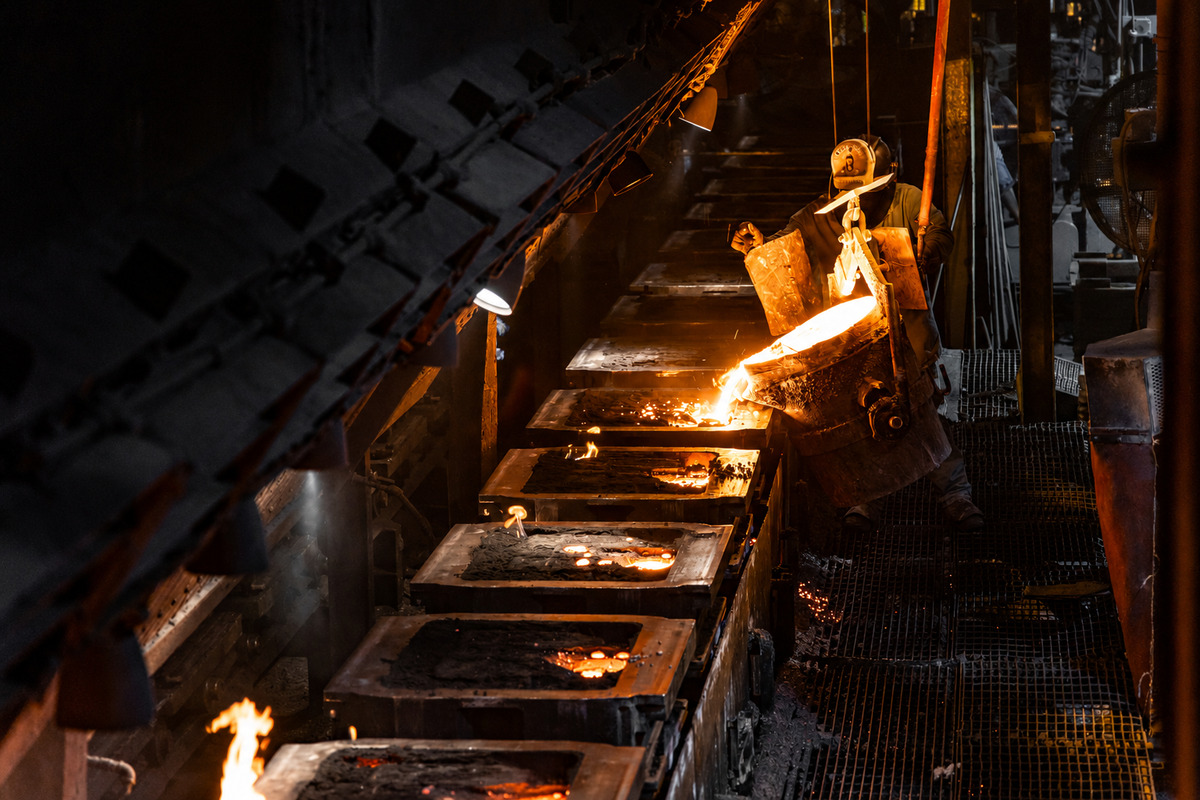
Casting produces a part by filling a mold with liquid metal and allowing it to solidify. Because the metal is liquid at the moment it takes shape, it can reach anywhere the mold allows, which is why casting produces geometry no other process can: internal passages, enclosed cavities, thin webs, and complex external form in a single piece.
The process family is broad, and the variants differ more from one another than buyers usually realize.
- Sand casting uses an expendable sand mold, is well-suited to very large parts and low to medium volumes, has the lowest tooling cost, and yields the roughest surface and the loosest dimensional tolerance.
- Investment casting uses an expendable ceramic shell formed around a wax pattern, yielding excellent surface finish, dimensional accuracy, and very fine detail, but at a higher cost per part and moderate tooling costs.
- Die casting injects molten metal into a metal die under pressure, yielding excellent surface finish, thin walls, tight tolerances, and very high production rates, but with high tooling costs and a limited range of alloys, principally lower-melting-point non-ferrous metals.
- Permanent mold and low-pressure casting use reusable metal molds without high-pressure injection, sitting between sand and die casting in terms of tooling cost, finish, and properties.
- Centrifugal casting spins the mold to distribute the metal, which is well-suited to cylindrical parts and produces a dense outer surface.
What it suits
- Complex geometry, internal passages, and enclosed cavities.
- Large parts, where sand casting handles sizes forging cannot reach economically.
- Shapes that would require extensive machining from a forging or from bar.
- Alloys that cast well and forge poorly, which includes several important cast irons and some aluminum and copper alloys.
- Consolidating what would otherwise be a fabrication of several parts into one piece, which removes joints and the labor that goes with them.
- High-volume production of small to medium parts in the appropriate alloys, where die casting rates are very high.
What it costs you
The dominant issue is solidification. Metal shrinks as it cools and solidifies, and unless the mold and gating are designed so that liquid metal continues to feed the shrinking regions, the shrinkage appears as internal porosity. Gas dissolved in the melt can also come out of solution during solidification and appear as gas porosity. Both are internal, both are invisible externally, and both reduce mechanical properties in ways that matter most under fatigue loading.
Porosity is controllable rather than inevitable, which is a large part of what separates a good foundry from a poor one. Solidification modeling, gating and riser design, melt treatment, and process control all bear on it, and section 08 covers what to require.
Other characteristic issues include inclusions carried into the mold from the melt or eroded from the mold itself, cold shuts and misruns where metal streams meet without fusing or fail to fill the mold, hot tears where the solidifying metal is restrained as it contracts, and segregation where alloying elements distribute unevenly during solidification.
Dimensional tolerances and surface finishes vary widely among casting processes, so a general statement about castings is not useful. What is useful is to compare the specific process being proposed against your requirement, and to establish the machining allowance being carried.
What a foundry can do about soundness
The porosity discussion above describes what happens if solidification is uncontrolled. It is worth knowing what is available when it matters, because a buyer who reads only the problem concludes that casting is closed to demanding fatigue duty when it may not be.
- Hot isostatic pressing applies high pressure and temperature to a finished casting to close internal porosity. The effect on fatigue properties is substantial, and it is a specifiable, priceable process step rather than a laboratory technique. Where a part is fatigue-loaded, and the geometry argues for casting, this is the first thing to ask about.
- Chills and directional solidification are foundry practices that control where the metal solidifies first and where the feed metal remains available, used deliberately to keep critical sections sound. Ask whether they are being used on your part and in which sections.
- Premium casting practice, meaning tighter control of melt cleanliness, pouring, and mold conditions than the commercial standard, is available at a price on most casting processes. Establish whether a quotation is against commercial or premium practice, because the two are different products.
None of these are free, and all three change the comparison in section 04. A HIP'd casting from a foundry running premium practice is a different proposition from the general case the guide describes, and it should be priced rather than assumed unavailable.
03. Forging
What it is
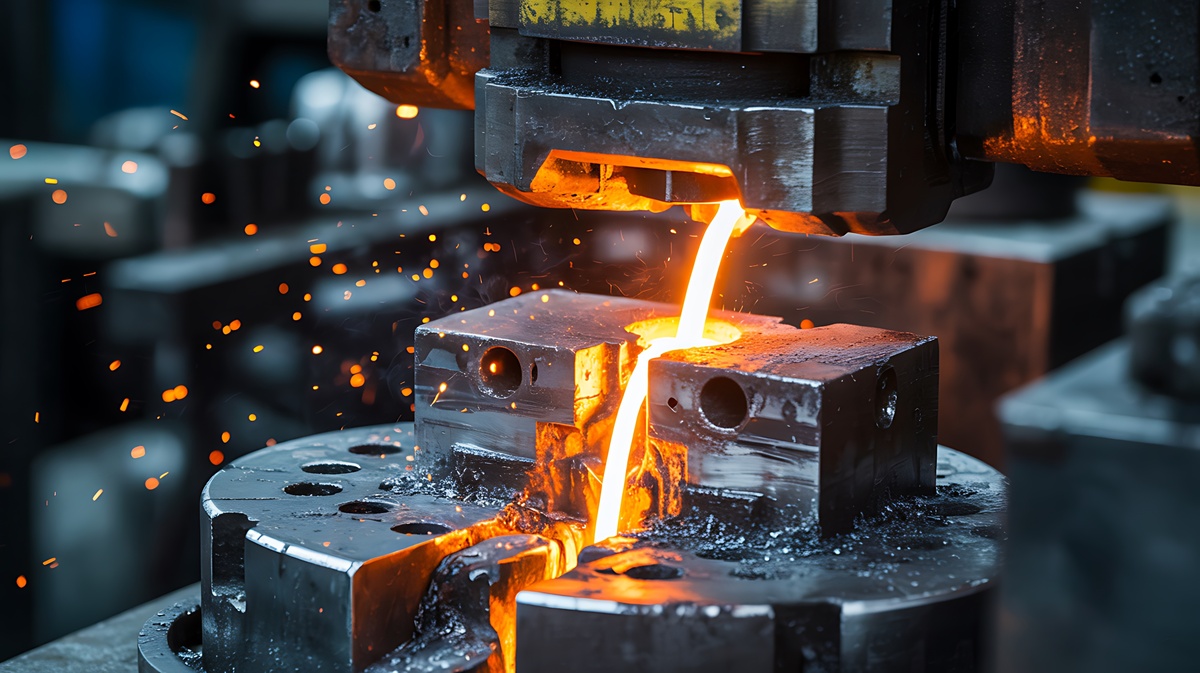
Forging shapes metal in the solid state by applying compressive force, usually under hot conditions. Because the metal is deformed rather than melted, two things follow that define the process. Any porosity in the starting stock is closed up by the deformation, and the grain structure is elongated and made to follow the contour of the part rather than being cut across it.
That directional grain flow is the metallurgical argument for forging. A forged part loaded along its grain flow performs better in fatigue and impact than the same alloy with a random or as-solidified structure, and the difference is most pronounced exactly where it matters, at changes of section and at fillets.
- Open die forging deforms stock between simple dies, with the operator manipulating the workpiece. It suits very large parts, low quantities, and simple shapes, with generous machining allowances and no expensive tooling.
- Closed-die or impression-die forging squeezes stock into a die cavity, producing a defined shape with tighter tolerances and less machining, at the cost of die tooling that must be paid for by volume.
- Seamless rolled ring forging produces rings with circumferential grain flow, which suits bearing races, flanges and gears.
- Cold forging deforms metal at room temperature, yielding excellent surface finish, tight tolerances, and increased strength through work hardening, for smaller parts made from ductile materials at high volume.
What it suits
- Parts in a primary load path where fatigue or impact performance governs and failure is consequential.
- Applications where internal soundness is required, and porosity is unacceptable.
- Simple to moderately complex external geometry without internal cavities.
- Very large components through open die forging, at quantities that would not justify a casting pattern.
- Rings and cylindrical parts, where rolled ring forging gives both the shape and favorable grain orientation.
- Alloys that forge well, including most structural steels and many stainless and nickel alloys.
What it costs you
Geometry is the standing limitation. A forging cannot produce internal cavities or enclosed passages; undercuts are difficult, and every feature must be reachable by dies moving in a straight line. Parts requiring internal complexity are often made as castings, fabrications, or forgings with extensive machining, and the third option can be expensive.
Draft angles and generous radii are required so that the part releases from the die and the metal flows without tearing; the as-forged shape is less refined than a casting from a metal mold, and more material is removed afterward.
Tooling for closed-die forging is substantial, and the dies wear, so tool life and maintenance are part of the cost, as they are for stamping. Open die work avoids this and pays for it in machining.
Forgings also have their own characteristic defects. Laps and folds occur where metal folds over itself rather than flowing; flow-through and die underfill occur where the metal does not fill the cavity correctly; and decarburization at the surface can occur during hot working. These are detectable and controllable; as with casting porosity, controlling them is what sets suppliers apart.
04. The decision path
In this order, the questions narrow the field. Where an answer is unknown, that is the work to do rather than an assumption to make.
- Does the part have internal passages, enclosed cavities, or undercuts? If it does, casting is the answer unless you are prepared to fabricate or machine extensively.
- Is the part in a primary load path, and does it experience fatigue or impact loading where failure would be consequential? If so, the argument for forging is strong and should be overcome deliberately rather than by default.
- What size and weight is the part? At the largest sizes, the choice narrows to sand casting or open-die forging, and at the smallest, to investment casting, die casting, or cold forging.
- Does your alloy cast well, forge well, or both? This quickly eliminates options and is a question for a metallurgist or a capable supplier rather than an assumption.
- What volume, over what period? Low volume favors processes with low tooling costs; high volume justifies tooling that reduces piece cost and machining time.
- How much machining follows, and what does it cost? Compare the delivered cost of the finished part rather than the price of the raw casting or forging.
- What internal soundness is required, and what examination will be applied to demonstrate it? This can rule out a process, and it certainly changes the price.
- Does a code, customer, or industry specification govern the part? If so, read it first, because it may prescribe the process, the material specification, and the acceptance criteria.
- What lead time is available, including tooling?
05. Where each option is the wrong answer
Where casting is wrong
- The part is a fatigue-critical load path where the properties of a forging are genuinely needed, and the design cannot be adjusted to compensate.
- Internal soundness requirements are demanding enough that achieving them reliably in a casting would require examination and rejection rates that make it uneconomic.
- The alloy casts poorly, which is true of several high-strength materials.
- Volume is high enough and geometry simple enough that a forging or a formed part reaches the same result with better properties.
Where forging is wrong
- The geometry includes internal passages or cavities, which forging cannot produce.
- The shape is complex enough that a forging would require machining away most of the forged material, at which point the grain-flow advantage is partly machined away as well.
- The alloy forges poorly, or the part size sits outside the practical range of available equipment.
- Volume does not justify closed die tooling, and open die work with heavy machining costs more than a casting would.
- Several parts could be consolidated into a single casting, eliminating joints and assembly labor.
Where neither is the answer
Two alternatives deserve a place in the comparison. A fabrication from plate and standard sections can beat both at low volume, particularly on large simple structures, at the cost of welds and their inspection. And machining from solid bar or plate beats both at very low quantities and for parts where the tooling and lead time of either process cannot be justified, at the cost of material and cycle time. Where the quantity is small, and the geometry is not extreme, ask for those to be priced alongside.
Where the process is not the problem
If parts fail in service, the process is often not the cause. A design with a sharp internal corner concentrates stress, whatever the process; a part loaded across its grain flow rather than along it loses the forging advantage entirely; a machining operation that cuts through the surface layer of a forging or into a casting's denser skin removes the best material; and heat treatment performed incorrectly can undo the properties either process delivered. Before changing the process, establish where the failure initiated and what the metal condition was there, because the same part made by another process may fail in the same place.
06. Defects, examination and what an acceptance criterion actually requires
Both processes make defects, and both make sound parts
The useful framing is not that one process is clean and the other is not. Both have characteristic discontinuities, both are controllable, and the difference between an acceptable part and an unacceptable one depends on what is present, where it is, how large it is, and whether that matters for the service. That last judgment has to be made in advance and written down.
Specifying examination is not specifying acceptance
This is the most consequential point in the guide for a buyer. Writing radiographic examination required on a drawing does not create an acceptance criterion, and the standards themselves say so.
For steel castings, ASTM International publishes reference radiograph standards organized by section thickness, with separate documents covering thin, medium, and heavy sections, and a further set for investment castings. Each presents illustrations of discontinuity categories, such as gas porosity or sand and slag inclusions, at graded severity levels. Critically, the basis of application requires a prior agreement between purchaser and supplier on the radiographic examination attributes and the classification criteria: which categories apply, what severity level is acceptable for each, and which energy level and technique are used.
Without that agreement, you have specified an activity rather than a standard. The supplier will radiograph the part, produce films, and then you and they will discover you disagree about what is acceptable, at the point where the parts already exist.
What an acceptance specification needs to state
- Which examination methods apply: radiography, ultrasonic, magnetic particle, liquid penetrant, visual, or a combination.
- Which areas of the part are examined, since examining everything is rarely necessary and rarely affordable. Identify the critical regions, usually the load paths, the thick sections, and the transitions.
- The governing standard for each method, and the acceptance level within it, category by category where the standard is organized that way.
- The personnel qualification requirement. The reference radiograph standards require interpreters to be qualified under a recognized practice, and require that the practice and its revision be identified in the agreement between the parties, so name it.
- For visual and surface acceptance, use a comparator standard or a physical reference sample, since verbal descriptions of surface acceptance often lead to disputes.
- What happens when something is found: the disposition route, who decides, and whether the finding triggers examination of adjacent areas or of other parts in the lot.
Weld repair
Weld repair of castings is normal, legitimate, and widely practiced, and buyers who assume it never happens are usually mistaken. The questions are whether it is permitted on your part, in which areas, to what extent, under what procedure, and whether repaired areas are re-examined to the same standard as the original.
Settle it in the inquiry, and start by reading your material specification rather than relying on trade custom. Several casting material specifications address repair welding directly, setting out what is permitted, what requires purchaser approval, and what must be reported, so the governing position is frequently already written down in a document you are citing anyway. Where the specification is silent, agree the position explicitly rather than assuming either permission or prohibition.
The position on forgings is different, and the difference matters. Weld repair of forgings is generally far more restricted, and on many specifications and in many industries it is not permitted at all without specific approval, because a repair interrupts the grain flow that was the reason for choosing the process. An unexplained repair on a forging is a more serious finding than the same repair on a casting, and a reader who carries the permissive framing above across to forgings will reach the wrong conclusion. Establish the position separately for each process.
The middle position, permitted in defined areas under a qualified procedure with re-examination and notification, is usually the right answer, and it has to be written down to exist.
Where the test bar comes from
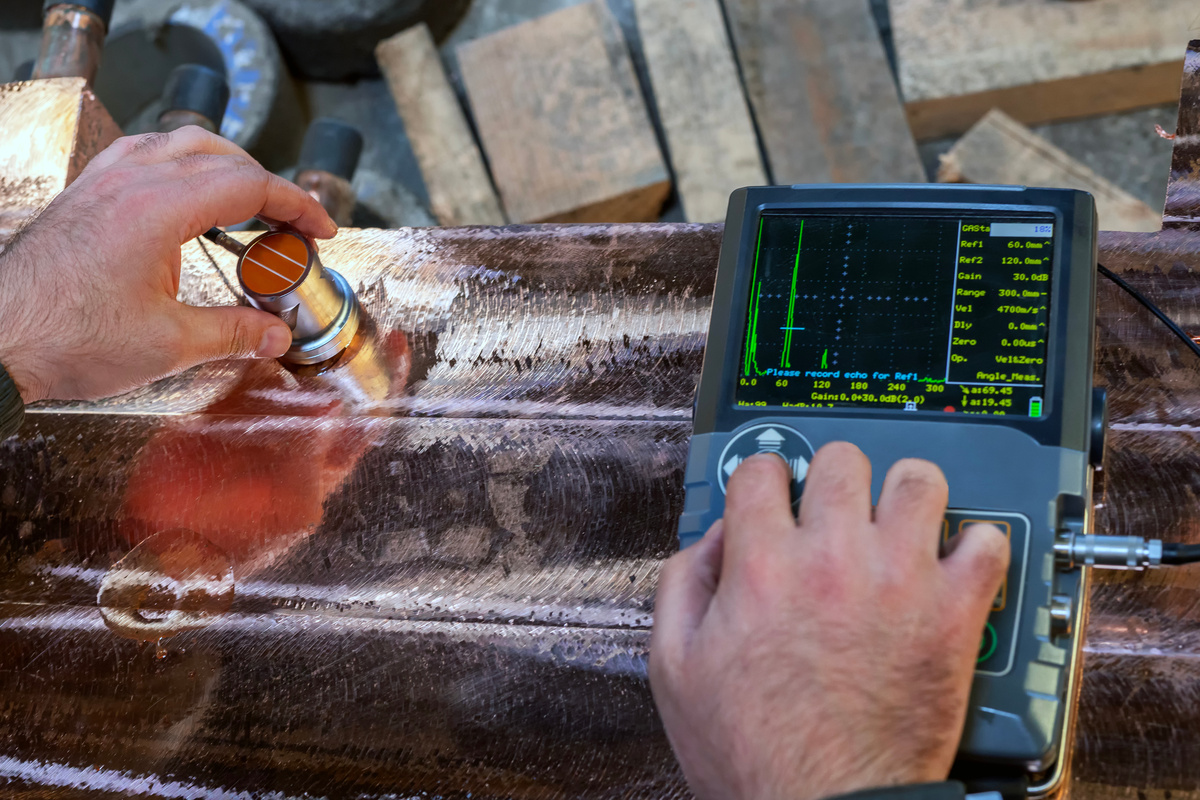
Mechanical properties are demonstrated through testing, and the source of the test material affects what the result proves. A bar cast separately from the same melt reports the properties of the metal as poured. A bar cut from a casting, or from a prolongation attached to it, reports the properties of that section of that part, including the effect of its cooling rate and any local condition.
The same distinction applies to forgings, where properties can vary with location and orientation relative to the grain flow. Specify where the test material is taken from and in which orientation, because the two options can differ, and the more demanding one costs more.
07. Qualifying the supplier: capability
Both processes determine the metal's condition at the supplier's plant, so supplier capability matters more here than in categories where you buy a cut shape from certified stock. What follows is verifiable rather than reputational, which is the only kind of assessment worth doing.
Can they make this part at all
- The specific process variants they operate, since a foundry running sand molds is not a supplier of investment castings, and the distinction is frequently blurred in marketing.
- The size and weight range they routinely produce, and where your part sits within it. A part at the extreme of a supplier's range is a part they will struggle with.
- The alloys they run routinely, as distinct from the alloys they can run. Ask what they poured or forged in your alloy in the last year.
- Melting or heating capacity and method, and whether the melt practice suits your alloy and cleanliness requirement.
- For forging, the equipment: press or hammer, capacity, and whether your part fits the available die space.
- What is performed in-house and what is subcontracted, specifically for pattern or die making, heat treatment, machining, examination, and finishing. Subcontracted operations are not disqualifying, and they are a control question.
Engineering capability
- Whether they perform solidification or forging simulation before cutting tooling, modeling gating, feeding, and metal flow in advance is one of the most effective ways of avoiding defects, so this is a straightforward capability question with a straightforward positive answer, and a supplier who does it will usually propose design changes before quoting rather than after first articles.
- Whether they will engage in design for the process, and what they would change about your part. A supplier who returns two or three specific suggestions about section thickness, transitions, draft, or parting line has engineered it.
- Who owns the pattern equipment or dies, where they are stored, who maintains them, and what happens on transfer. This is the same tooling ownership question that applies to stamping and molding, and it needs the same treatment.
Capacity and continuity
- Current utilization, lead time for a new pattern or die, and lead time for repeat orders.
- What happens if their furnace, press, or key equipment is down, and whether an alternate route exists.
- Raw material sourcing, and whether the alloy is readily available or on allocation.
08. Qualifying the supplier: process control and evidence
Capability indicates that a supplier can make the part. Process control tells you whether they will make it consistently. These are the questions that separate suppliers with similar equipment lists.
Material and melt control
- How is chemistry verified, at what point in the process, and with what equipment? Ask specifically whether chemistry is checked on every heat and whether the result is available before pouring.
- Melt treatment practice for the alloy, including degassing, inoculation, or grain refinement where applicable, and how it is controlled rather than performed by habit.
- Incoming material control, including scrap and returns, since foundry charge composition affects the result.
- Traceability from heat or lot to finished part, and how far it survives through finishing and machining.
Process control
- What process parameters are recorded and against what limits: pouring temperature, mold condition, heating temperature and time, die temperature, and press or hammer parameters.
- How is tooling condition monitored, since worn dies and degraded patterns produce gradual dimensional drift?
- Heat treatment: whether it is in-house, what furnace controls and instrumentation exist, whether furnace uniformity surveys are performed, and what records accompany each load.
Examination and testing
- Which methods are performed in-house and which are subcontracted, and what equipment they hold.
- Personnel qualification for each method, under which recognized practice, at what level, and whether a suitably qualified individual is available to interpret and adjudicate.
- How examination results are recorded and reported, and whether films or data are retained and for how long.
- Mechanical test practice: where test material is taken from, how it is recorded, and whether results are reported per heat or per lot.
- Dimensional inspection method, and whether first article results are provided with a marked-up drawing.
Quality system and what happens when something goes wrong
- The quality system operated, and any customer or industry approvals held, with scope and currency rather than a logo.
- First article or equivalent launch approval expectations, who approves, and whether production may begin before approval.
- The nonconformance and corrective action process, and how a defect found after shipment is contained.
- Scrap and rework rates for comparable work, which a confident supplier will discuss and a defensive one will not.
- Change notification: what they will tell you before changing, covering alloy source, pattern or die modification, subcontractor, heat treatment route or examination method.
09. What good and poor answers sound like
These distinctions are drawn from sections 06 to 08, and they are usually audible in a first conversation.
On the process choice
Good: Asks what the part does and how it is loaded before recommending a process, and is willing to say that their own process is not the right answer for this part.
Poor: Recommends the process they operate without asking about the load path, or explains that their process is generally superior.
On your design
Good: Returns specific comments on section thickness, transitions, draft, parting line placement, and where they expect feeding difficulty, before quoting a firm price.
Poor: Quotes from the model without comment, or raises design issues only after the tooling has been cut.
On defects
Good: Describes the characteristic defects of their process, says where on your part they would expect difficulty, and explains what they do to control it, including whether they simulate.
Poor: States that their process does not produce defects, or treats the question as an accusation.
On acceptance criteria
Good: Asks which standard, which acceptance level, which zones, and which categories before quoting, and points out where your specification is incomplete.
Poor: Accepts a drawing note saying radiographic examination required without querying it.
On testing
Good: Asks where you want test material taken from and explains what the alternatives would demonstrate.
Poor: Provides whatever their standard practice produces without raising the question.
On weld repair
Good: Raises it unprompted, states their normal practice, and proposes a defined position on permission, extent, procedure, and re-examination.
Poor: Does not mention it, or is uncomfortable discussing it.
On what could go wrong
Good: Names the two or three features on your specific part most likely to cause difficulty and says what they would do about each.
Poor: Presents the job as routine, or answers with reference to how long they have been in business.
Take This to Your Next Conversation
Fifteen questions drawn from this guide. The first several concern the process and the rest concern the supplier.
- Given how this part is loaded, which process would you recommend, and would you say so if it were not the one you operate?
- What would you change about my design to suit your process, and what would that save?
- Where on this part do you expect feeding difficulty or metal flow difficulty, and how do you control it?
- Do you simulate solidification or metal flow before cutting tooling, and can I see the output for my part?
- What does the finished part cost, delivered, including the machining that follows, rather than the cost of the raw casting or forging?
- Which examination methods, in which zones, to which standard, and at which acceptance level do you propose?
- Under what practice are your examination personnel qualified, and is a suitably qualified interpreter available?
- Where will mechanical test material be taken from, and what would the alternative demonstrate?
- What is your position on weld repair for this part: permitted where, under what procedure, and re-examined how?
- What is performed in-house and what is subcontracted, specifically for tooling, heat treatment and examination?
- How is chemistry verified, on every heat or by sampling, and is the result available before pouring?
- What heat treatment control and furnace survey practice do you operate, and what records come with each load?
- Who owns the pattern or die, where is it stored, who maintains it, and what happens if we move the program?
- What would you tell me about before you changed it: alloy source, tooling, subcontractor, or process route?
- What have you seen go wrong on parts like this, and what changed as a result?
About this guide
Written by the Industrial Web Search editorial team. This guidance is general and does not replace engineering and metallurgical advice for a specific component. The standards referenced here are revised periodically, and their current editions are the authority; reference radiograph standards require the purchaser and supplier to agree examination attributes and classification criteria in advance rather than providing an acceptance level by default. Properties, tolerances, achievable soundness and cost vary widely with the specific process variant, alloy, geometry and supplier, so comparisons should be made against quotations for your own part rather than against general statements about either process. Where a code, customer or industry specification governs the component, that document takes precedence. Confirm process selection, material specification, and acceptance requirements with a qualified engineer for your application.