
The Short Version
- An incomplete request for quotation forces a shop to choose between assuming and padding. Both produce a number that does not describe the part you need, and the correction arrives after you have committed.
- Send both a 3D model and a 2D drawing, and state explicitly which one governs if they disagree. The model is how a shop estimates machine time; the drawing or the annotated model is what defines the requirement.
- Material callouts need alloy, condition, and form, not a family name. Aluminum is not a specification. So is the certification you require, which is a separate question from the material itself.
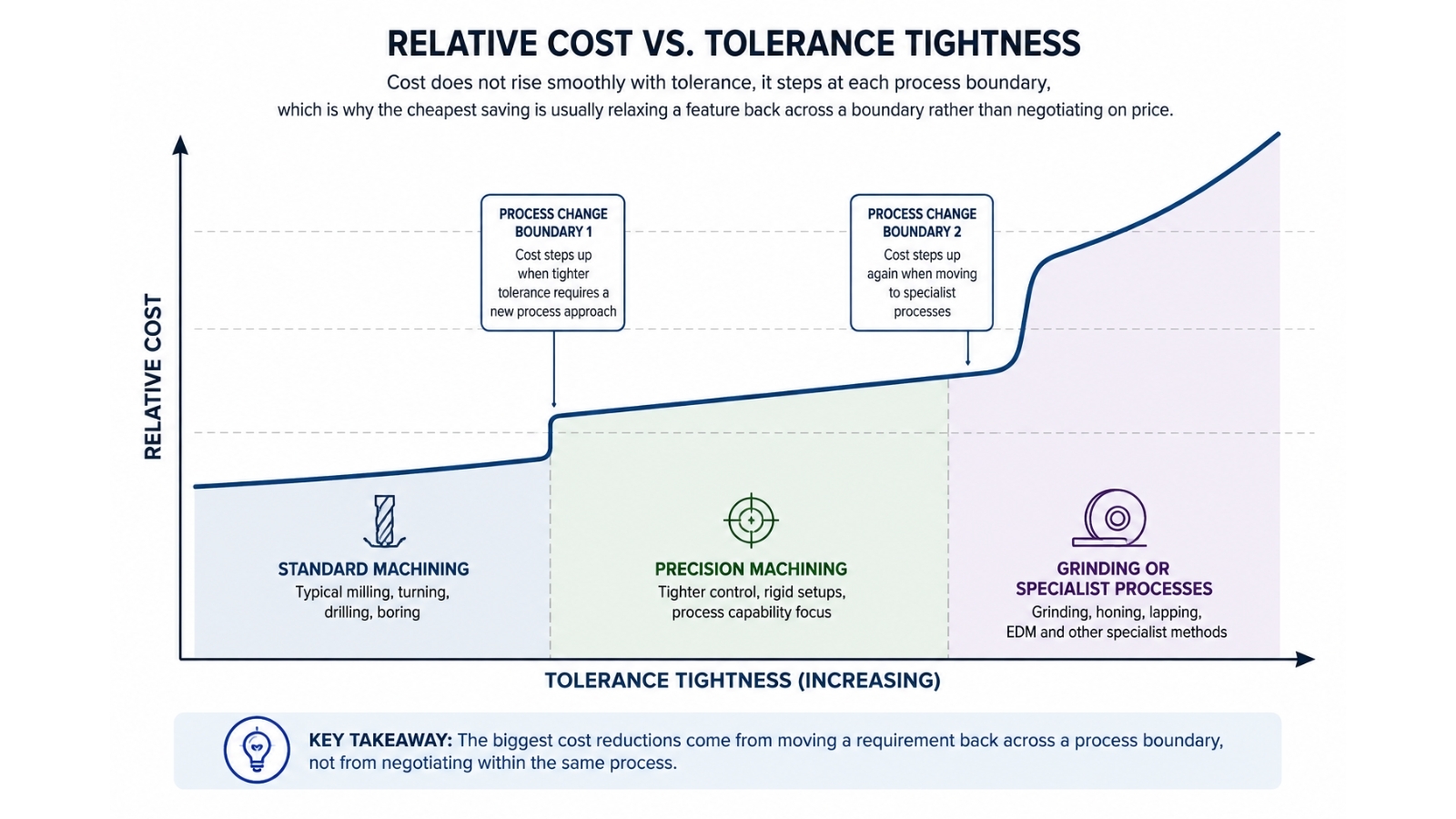
- Tolerance and surface finish should be applied where function demands them and nowhere else. Both drive process selection, inspection time and scrap rate, and the cost rises faster than the tolerance tightens.
- Quantity is not one number. State the quantity being quoted, the expected annual usage, the release pattern, and whether this is a prototype or a production part, because they price differently.
- Expect a quote to separate recurring unit price from one-time costs such as programming, tooling and fixturing, and expect lead time to be stated separately from price. A single number with no breakdown cannot be compared to anything.
- If the part is export controlled, that obligation attaches before the files are sent, not at the point of shipment. Releasing controlled technical data to the wrong recipient is itself the regulated act.
A machine shop quoting a part is answering a question. If the question is incomplete, the shop has two options: assume the missing detail and quote based on that assumption, or price the uncertainty and quote high. Experienced shops do the second, which is why an incomplete package tends to come back expensive from good suppliers and cheap from ones that have not understood the part. The buyer then reads the spread as a market signal when it is actually a measure of how clearly the request was written.
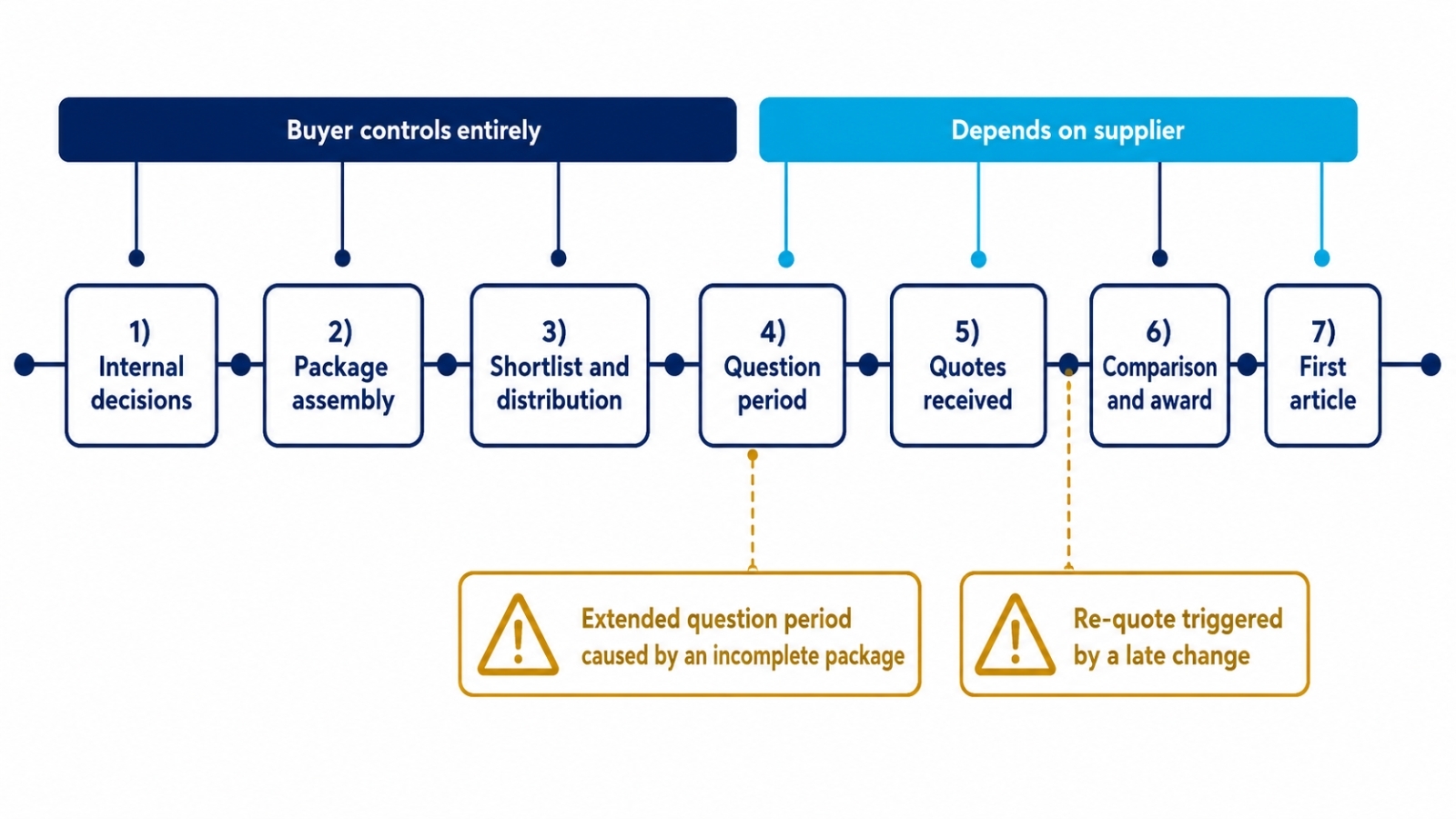
This matters more in machining than in most categories because the same drawing can describe several different parts depending on what is left unstated. Tolerance, finish, material condition, inspection requirement, and edge condition all change what has to happen at the machine, and any of them can double the work without changing the geometry at all. The good news is that the package is finite and knowable. This guide walks through the sequence from the first decision through award, and the order matters because each step closes questions that the next one depends on.
01. Why machining quotes go wrong
Five failure patterns account for most of the difficulty, and all of them originate in the request rather than the response.
- Missing information gets filled with assumptions. Every unstated requirement becomes a shop's default, and defaults vary from shop to shop. Two quotes built on different defaults are quotes for different parts.
- Requirements are stated in the wrong place. A tolerance mentioned only in an informal email is unlikely to be reliably reached in production or inspection. Put requirements in the controlled drawing, model-based definition, PO, or other document designated by your document-precedence hierarchy.
- Requirements are over-applied. A tight tolerance or fine finish applied to every feature, rather than to the ones that need it, prices in work that has no function, and it does so silently.
- The package contradicts itself. A model and a drawing that disagree, or a note that conflicts with a dimension, force the shop either to ask or to pick, and picking is where disputes begin.
- The commercial frame is left open. Quantity, release pattern, delivery date and inspection requirement all change the number, and a quote given without them is provisional whether or not it says so.
The cost of these is not only price. Every round of clarification adds days, and clarification rounds are where lead time quietly disappears before the order is even placed. A complete package is worth doing for schedule reasons alone.
02. Decide before you send anything
Seven questions have to be answered internally first. A supplier cannot resolve them, and sending an RFQ before they are settled means the answers get decided by whoever quotes fastest.
- What is this part for, and what does it interface with? Function determines which features are critical, and a shop that understands function can offer alternatives that a shop working blind cannot.
- Is this a prototype, a bridge quantity, or a production part? These are three different purchases with different tooling logic, different economics, and often different suppliers.
- What quantity is being quoted, and what is the realistic annual usage? Both, not one.
- What has to be inspected, to what standard, and what documentation do you require with delivery?
- What quality system certification does your application require, if any?
- Is the part subject to export control, and does that restrict who may receive the files?
- What is the real need-by date, and what is the consequence of missing it?
Specifically regarding export control, the obligation attaches to the release of technical data, not to shipping the part. Where a part falls under the International Traffic in Arms Regulations, administered by the Directorate of Defense Trade Controls within the Department of State, or under the Export Administration Regulations, administered by the Department of Commerce, sending drawings or models to an ineligible recipient can itself be the regulated act, and this includes release to foreign nationals working domestically. Determining jurisdiction is the buyer's responsibility and it has to happen before the distribution list is written. Defense procurement can also carry additional flow-down obligations, including traceability requirements for certain specialty metals, so confirm applicable contract clauses with your contracting authority rather than assuming they sit with the shop.
A confidentiality agreement, where you need one, also belongs here rather than later. Files sent before an agreement is in place have already been sent.
03. The geometry: model, drawing, and which one governs
Send both
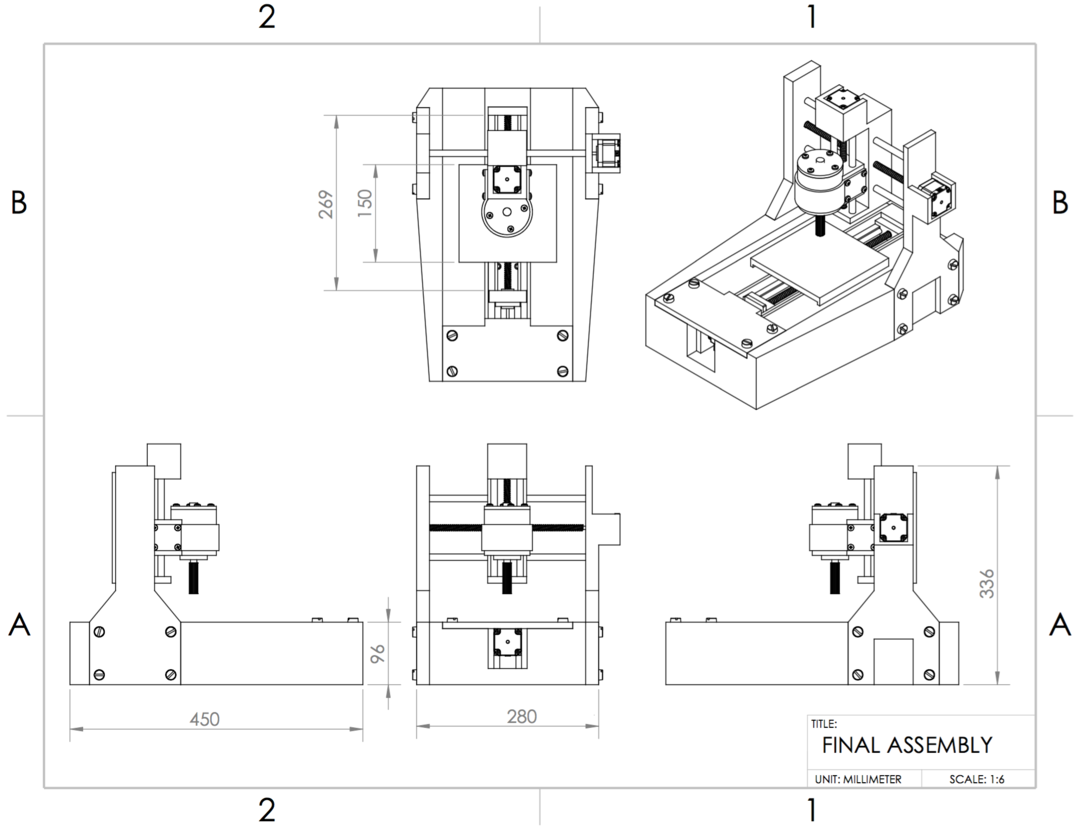
A 3D model and a 2D drawing do different jobs, and most shops want both. The model is what a programmer uses to understand the geometry and estimate machine time, and it is what feeds toolpath generation. The drawing, or an annotated model, states the requirements: which dimensions are critical, what tolerance applies, what the datum scheme is, what finish is required, and what has to be inspected. A model alone communicates shape without requirement. A drawing alone communicates requirement while forcing the shop to rebuild the geometry.
File formats
STEP, defined within the ISO 10303 family, and is a widely used neutral exchange format for solid geometry. Confirm the recipient's preferred import format, CAD version, and ability to read model-based PMI before release. It carries exact solid geometry, which is what a programmer needs. Application protocol AP242 is the merged successor to the earlier AP203 and AP214 protocols and additionally supports product manufacturing information, meaning tolerances, datums, and notes carried in the model itself rather than only on a drawing. IGES is an older neutral format that frequently arrives as loose surfaces rather than a closed solid and carries no manufacturing information, so it is a poor first choice. Native CAD files preserve the most but only for a recipient running the same system.
Two practical points. First, if you are relying on model-based definition, confirm that the recipient can actually read the product manufacturing information in your file, because support for it varies across systems and protocol editions. A model whose annotations do not survive the transfer has silently become a geometry-only file. Second, send a 2D drawing as a PDF alongside whatever else you send, because it is the one file everyone can open and the one that ends up printed at the machine.
State which one governs
If the model and the drawing disagree, one of them has to win, and the package should say which. This is a single sentence, and it prevents an entire category of dispute. Where the annotated model is the controlling definition, say so and reference the practices standard you are working to, such as the ASME digital product definition standard. Where the drawing governs, say that instead.
Name your standards and their editions
Geometric dimensioning and tolerancing is defined in ASME Y14.5, published by the American Society of Mechanical Engineers, or in the ISO geometric product specification standards, principally ISO 1101, published by the International Organization for Standardization. These are different systems with different default rules, not dialects of one another, so the drawing has to name which system applies and which edition. The same is true of general tolerances, the block that covers every dimension without a specific callout. General tolerance standards in this area are being revised and replaced, so name the standard and edition you intend rather than relying on a reference that may have been superseded, and confirm the shop is reading it the same way.
04. Material: alloy, condition, form and certification
Specify all four
A material callout that names a family rather than a specification is one of the most common causes of a re-quote. Aluminum, stainless, and steel are not specifications. The shop needs the alloy designation, the condition or temper, the form in which the raw material should be procured, and the specification to which the material is bought. The same alloy in a different temper machines differently, costs differently, and performs differently, and the form the stock arrives in determines both cost and whether the geometry can be produced at all from that starting shape.
Where you are willing to accept an alternative, say so explicitly and say what the constraint is. A shop that can substitute an equivalent alloy it already has in stock may quote materially better, but it cannot offer that unless you have told it whether the alloy is a functional requirement or a preference.
Certification is a separate decision
What material documentation you require is a different question from what material you require, and it has cost and lead time attached. The European standard EN 10204 defines types of inspection documents, and its 3.1 and 3.2 designations are widely used internationally as shorthand for the level of independence behind the certificate, with the higher designation requiring involvement beyond the manufacturer. Decide which you need and state it, because a shop that has not been asked will supply its standard documentation and a shop that has been asked late may need to source different material entirely.
Traceability requirements go beyond the certificate. If you need heat or lot traceability maintained from production through to the delivered part, that is an additional requirement on the shop's process, and it should be stated rather than assumed to come with the certificate.
Secondary processes
These processes are often performed by approved outside processors, though some shops perform them in-house. Ask which operations are internal, which are outsourced, and which processor specifications and accreditations apply. Three things need stating. Which specification the process is performed to, since these are governed by published specifications with types and classes that materially change the result. Whether dimensions on the drawing apply before or after the finish, since coatings add thickness and this is a frequent source of rejected parts. And whether the processor must hold a particular accreditation. In aerospace and other controlled programs, customers may require approved special processors or Nadcap accreditation for specified processes. State the applicable customer, contract, or quality requirement rather than assuming it.
05. Tolerances and finish: the cost you control
Apply tolerance where function requires it
Tolerance is often one of the largest controllable cost drivers, alongside geometry, material, machining strategy, quantity, inspection, and secondary processing. Tightening a tolerance changes what the shop has to do: it can require a different process, an additional operation, slower feeds, more frequent tool changes, temperature-controlled inspection, and a higher scrap rate for parts that miss. The cost does not rise in proportion to the tightening; it rises faster, and at some point it crosses from milling into grinding or another process entirely, at which point it steps rather than climbs.
The discipline is to identify which features interface with something and tolerate those, then let everything else fall to the general tolerance block. A part where every dimension carries a tight tolerance tells the shop either that everything is critical, which is rarely true, or that nobody decided, which is more often the case. Both get priced as though everything is critical.
Say what the general tolerance is
The block covering unspecified dimensions does most of the work on a typical drawing, and it needs to specify a standard and a class, or provide explicit values. A drawing that says to hold general tolerances without saying to what leaves the shop to apply its own default, and defaults differ. Two shops quoting the same drawing against different general tolerance assumptions are quoting different parts, and the price spread you see is not competitive information.
Surface finish
Surface roughness is normally specified as an Ra value under ASME B46.1, published by the American Society of Mechanical Engineers, or under the corresponding ISO surface texture standards, with drawing symbols following the applicable drafting standard. Finer finishes than a process can produce naturally require additional passes or a secondary operation, so a fine finish applied across the whole part carries the same over-specification cost as a tight tolerance. Specify Ra where the surface does something, such as sealing or bearing, and state the as-machined condition as acceptable elsewhere. Where surface direction matters, specify lay as well, since it is part of the requirement and is frequently omitted.
The requirements everyone forgets
- Edge condition. Burrs, break edges, and sharp corner requirements are routinely unstated and routinely disputed on receipt. Say what you want.
- Threads. Specify the thread standard, class of fit, and the depth of the full thread rather than the depth of the hole.
- Cosmetic requirements. If appearance matters on a visible surface, that is a requirement, and it needs stating separately from functional finish.
- Marking. Part number, revision, heat or lot identification, and the method and location of marking.
- Packaging. How parts are to be protected, separated, and packed matters more for finished or delicate parts than buyers expect.
- Cleanliness. Where residual machining fluid or particulate is a functional concern, say so, since standard cleaning may not be sufficient.
06. Quantity, delivery and commercial terms
Quantity is more than one number
State the quantity you want quoted, the expected annual usage, and the pattern in which you expect to release it. These price differently because they change the setup economics. A shop amortizes programming, tooling and fixturing across a run, so the same part quoted at one, at fifty and at five hundred produces three genuinely different unit prices, and a buyer who quotes a small quantity while intending a large program will get a number that misrepresents the program.
Ask for price breaks at defined quantities rather than a single point. It costs the shop little to provide them and it tells you where the economics change, which is useful information for your own planning even before an order is placed.
Delivery
State a date and the consequence of missing it. As soon as possible is not a requirement and cannot be planned against. If a partial delivery would help, specify the quantity and timing, because a shop that can ship a first batch early may be able to do so at no additional cost, whereas a shop that has quoted a single delivery will not offer it.
The commercial frame
- Delivery location and, for international sourcing, the delivery terms, since who bears freight, duty, and risk substantially changes the comparison between a domestic and an overseas quote.
- Payment terms, and whether tooling or setup is invoiced separately and when.
- Who owns fixtures and programming, which is worth settling before the first order rather than when you want to move the part.
- Quote validity period: material pricing moves, and a quote held for months may no longer be honored.
- Whether the shop may subcontract any operation, and whether you require notification if it does.
07. Issuing the RFQ and running the question period
Build the shortlist first
Use a qualified, manageable bidder list. A targeted RFQ with clear fit to a shop's capabilities is more likely to receive a substantive technical review than an undifferentiated broadcast. Shortlist on capability, meaning machine envelope, axis capability and the processes the part actually needs; on quality system certification where your application requires it; and on whether the shop works in your part size, material and volume band. A shop that is technically capable but works at a different scale will either decline or quote defensively.
Send a package, not an attachment
The complete package is the model, the drawing, a written statement of quantity and delivery requirements, the inspection and documentation requirements, and any terms that affect the quote. Number the revision on everything and reference the revision in the request. If you have physical samples or a predecessor part, offer them.
Run the question period deliberately
Set a date by which questions must be submitted and a date for the response. Then do the thing that most buyers skip: circulate every question and every answer to every bidder, not only to the one who asked. A question one shop asks reveals an ambiguity that all of them are dealing with, and answering privately means the bidders are quoting against different information. This single practice does more for comparability than anything else in the process.
Treat the questions themselves as information. A shop that asks about the datum scheme, the general tolerance block, or whether a dimension applies before or after plating has read the drawing properly. A shop that asks nothing has either quoted this exact part before or has not looked closely, and it is worth knowing which.
If a change is needed
If something in the package changes during the quoting period, revise the document, increment the revision number, reissue it to everyone, and extend the deadline. Verbal changes and one-to-one corrections destroy comparability and create a record that nobody can reconstruct later when a part arrives wrong.
08. What comes back, and how to read it
What a complete quote contains
- Unit price at the requested quantity and at any additional break quantities.
- One-time costs stated separately: programming, fixturing, tooling, and any first-article or documentation charges.
- Lead time, stated separately for the first delivery and for repeat orders, since the first run carries setup that later runs do not.
- Material specification and condition the shop has quoted to, in its own words, which is how you check that it read the requirement the way you wrote it.
- Any exceptions or clarifications the shop is taking to your package.
- Quote validity period.
- Outside processes identified, with whether their lead time is included.
The exceptions are the most useful part
A quote that lists exceptions is more valuable than one that does not, because the exceptions tell you where your package was unclear or where the requirement is difficult. A shop noting that it has quoted a particular general tolerance, or that it has assumed dimensions apply before plating, or that it cannot hold a stated flatness on that material, is giving you engineering feedback for free. Read the exceptions before the price.
Warning signs
- A single number with no breakdown. It cannot be compared, and it hides where the cost lies, which means you cannot negotiate the part that is negotiable.
- No exceptions and no questions on a package that contained a genuine ambiguity. Someone will discover the ambiguity later, and by then it will be a change order.
- Lead time stated as a range with no commitment, or omitted entirely.
- A price substantially below the others with no explanation of what is being done differently. Ask what process was assumed, since the answer is often a different process than the part requires.
- Reluctance to identify which operations are subcontracted.
09. Comparing quotes, awarding, and what happens next
Normalize before comparing
Quotes are rarely directly comparable as received, and the work of making them comparable is the buyer's. Build a comparison that puts every quote on the same basis: total cost at the quantity you will actually buy, including one-time costs amortized over that quantity, plus freight and duty where relevant, against a common delivery date. Then note where each shop has taken a different exception, because a lower price achieved by quoting a looser tolerance is not a lower price.
Resist comparing on unit price alone. A shop with higher tooling cost and lower unit price wins at volume and loses at low quantity, and which of those you are actually buying is a question worth being honest about, since intended volumes and realized volumes differ more often than not.
What is not on the quote
Some of what you are buying does not appear as a line item. Whether the shop raised manufacturability issues during the question period. Whether it holds the certification your application requires, verified rather than claimed. Whether it has capacity in the window you need, rather than a lead time quoted against a schedule that is already full. These are legitimate award criteria, and they are worth weighing explicitly rather than letting them lose silently to a price column.
First article and the documentation that follows
For anything beyond a simple prototype, expect a first article inspection before production quantities are released. When required by the customer, contract, or quality-management system, aerospace first-article inspection is commonly documented per AS9102. Specify the applicable revision, scope, forms, and submission expectations in the RFQ. In automotive supply, the equivalent discipline is the production part approval process defined by the Automotive Industry Action Group, which is broader in scope because it evaluates the production system rather than only the part. Medical device manufacture requires comparable verification under its own quality framework.
Two points for the buyer. Specify which requirement applies and at which revision, since these standards are revised and a submission built to the wrong revision will be rejected. And recognize that first article inspection is real work with real cost and lead time, so it belongs in the RFQ rather than arriving as a surprise after award.
Changes after award
Any change to the drawing after award is a change to the quote, including changes that appear to relax a requirement, because the shop may have already procured material or cut a fixture. Revise the document, increment the revision, and ask what it does to price and delivery before instructing the change. The alternative, which is a verbal instruction and an assumption that a small change is free, is the single most common source of disputes in this category.
Take This to Your Next Conversation
Fifteen questions drawn from this guide. The first several are for the shop; the last few are for your own team before the package goes out.
- Which document did you quote to if the model and the drawing disagree, and did you find any disagreements?
- What general tolerance did you assume for unspecified dimensions, and to which standard and class?
- Which features in this part drove your price, and which ones could be relaxed without affecting how it is made?
- What material specification and condition have you quoted, and what certification will ship with it?
- Do the drawing dimensions apply before or after finish, and how did you interpret that?
- Which operations are performed in-house and which are subcontracted, and are the outside process lead times included in your quoted delivery?
- What are your one-time costs, itemized, and who owns the fixtures and the program afterward?
- What are your lead times for the first delivery and a repeat order, and what capacity assumption underpins them?
- What exceptions are you taking to my package?
- What would you change about this part to make it cheaper to produce without changing how it functions?
- Is first article inspection included, to which requirement and revision, and at what cost?
- Before issuing: have we stated which document governs, the general tolerance, the material condition, and the edge and thread requirements?
- Before issuing, have we determined whether this part is export-controlled and whether that restricts our distribution list?
- Before issuing: have we stated the annual usage and release pattern, not only the quantity being quoted?
- Before issuing: is there anything we have told one bidder that we have not told all of them?
About this guide
Written by the Industrial Web Search editorial team. This guidance is general and does not replace engineering advice for a specific part or program. The drafting, tolerancing, inspection, and quality standards referenced here are revised periodically, and their current editions are the authority, which is why the practice recommended throughout is to name both the standard and the edition on the drawing. Export control obligations depend on the jurisdiction of the specific item and are determined by the responsible agencies, and contractual flow-down requirements vary by program. Verify every specification against the current edition of the governing standard, and confirm export and contractual obligations with your own compliance or contracting function.