The Short Version
- Start with function, not type. Isolation, throttling, and non-return are three different jobs, and most bad valve selections come from asking one valve to do a job another type was designed for.
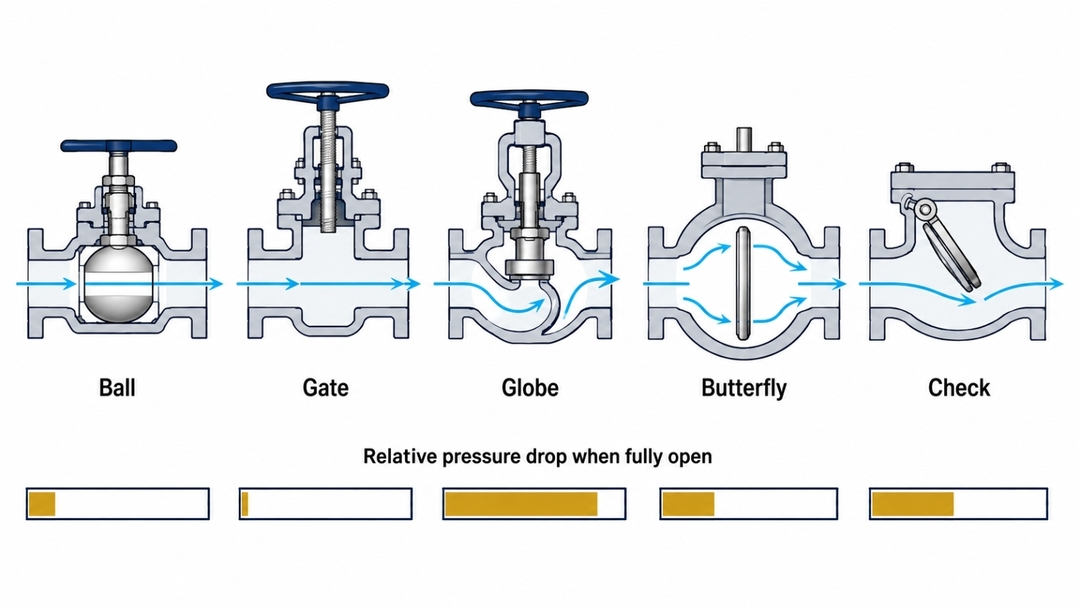
- Ball and gate valves are isolation valves. Both give a straight, largely unobstructed path when open, and neither should be used to throttle, because partial opening concentrates flow across a small area and erodes the sealing surfaces that shutoff depends on.
- Globe valves are the throttling type among the isolation family. The flow path turns twice inside the body, which is exactly what gives them control authority and also makes them the highest-pressure drop in the group.
- Butterfly valves keep the disc in the flow at all times, which is what makes them compact and light in large sizes and also why they never offer a truly unobstructed bore.
- Butterfly performance depends heavily on geometry. API 609 divides butterfly valves into Category A and Category B, which differ in how they are pressure rated rather than in disc geometry alone, and the two are not interchangeable.
- Check valves are the only type in this guide with no operator. They are sized for the flow that will hold them fully open, not for the line size, and an oversized check valve flutters, wears, and slams.
- A valve that closes quickly can cause water hammer. Quarter-turn convenience and surge risk are the same property viewed from two sides.
There is a version of valve selection that consists of matching a line size, a pressure class and a body material, then choosing the type on availability or habit. It produces valves that fit the pipe and do the wrong job. A ball valve installed where flow needs regulating will hold shutoff beautifully for a while and then stop sealing, because throttling drove flow across a narrow gap and cut the seat. A gate valve left half open will chatter and damage itself. A swing check valve sized to the line rather than the velocity will flutter for its whole life and eventually slam hard enough to be heard across a building.
None of those are manufacturing defects. Each is a valve doing what its geometry allows when asked to work outside the duty for which it was designed. This guide describes the five families on their own terms, including what each costs you, then gives the decision path in the order the questions should be asked. None of the five is best. Each wins under conditions that can be stated plainly, and stating them is most of the work.
This guide covers valve type selection. Sizing, material selection for the specific fluid, actuation and the wider piping design each carry their own considerations and are treated separately.
01. What actually decides this
Function first
Before anything else, establish which of three jobs the valve is doing. Almost every bad selection in this category traces back to skipping this step.
- Isolation. The valve is open or closed, and its job is to stop flow completely when closed and get out of the way when open. Ball, gate, and butterfly valves are primarily isolation valves.
- Throttling or regulation. The valve is held part open to control flow rate or pressure. This demands a geometry that can sit in a partially open position without destroying itself, which is what a globe valve provides and what a gate valve does not.
- Non-return. The valve prevents reverse flow in the absence of an operator or external signal, responding only to the fluid itself. That is the check valve family; it is a protective device rather than a control device.
The rest of the variables
- Service fluid and its character: clean, dirty, slurried, abrasive, corrosive, viscous, gas, steam, or two-phase. Solids in particular rule out several geometries.
- Pressure and temperature, both operating and design, since the pressure a valve can contain falls as temperature rises.
- Shutoff tightness is required, with defined test criteria rather than a general expectation of tightness.
- Operating frequency. A valve that cycles many times a day and a valve that operates twice a year have different wear and failure modes, and the second has its own problem of seizing in position.
- Speed of operation required, and whether fast closure is desirable or dangerous.
- Space envelope: face-to-face length, stem clearance above the valve, and weight, which becomes decisive in large sizes.
- Whether the line must be pigged, cleaned in place, or drained, all of which require an unobstructed bore.
- Actuation, now or later, and whether the valve carries a standard mounting interface for it.
- Emissions and fire safety obligations, which apply to the stem seal and the body rather than to the closure member.
A note on the ordering. Function narrows the field to a family, and service fluid then narrows it within the family. Everything else is refinement. A buyer who arrives with those two settled can have a useful conversation with any competent supplier; a buyer who arrives with a size and a class will get whatever the supplier stocks.
02. Ball valves
What it is
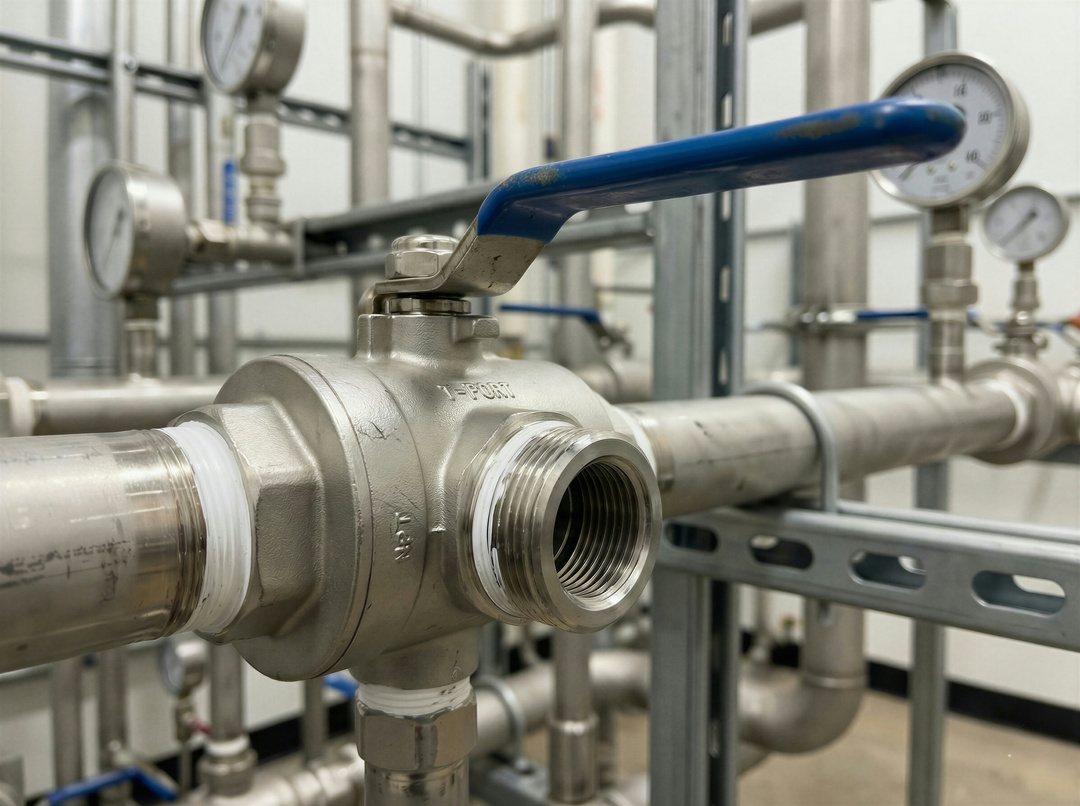
A ball valve uses a spherical closure member with a bore through it, rotated a quarter turn between open and closed. Open, the bore lines up with the pipe and flow passes through with little disturbance. Closed, the solid face of the ball presses against the seats to provide a tight shutoff.
Two construction families matter to a buyer. In a floating design, line pressure pushes the ball against the downstream seat to seal, a simple and effective approach for moderate sizes and pressures. In a trunnion-mounted design, the ball is fixed on bearings, and the seats are pushed against it, which reduces operating torque and suits larger sizes and higher pressures. Bore is also a decision: a full-bore valve matches the pipe's internal diameter, while a reduced-bore valve is smaller, cheaper, and lighter but introduces a restriction.
What it suits
- On-off isolation where tight shutoff matters, including hazardous and high-value fluids.
- Frequent operation, since a quarter turn is quick and the seats are not in the flow path when open.
- Applications requiring a full unobstructed bore for pigging, draining or cleaning in place, using a full bore valve.
- Compact installations, since the face-to-face length is short relative to gate and globe valves.
- Automated service, since quarter-turn motion suits actuators well.
What it costs you
Throttling is the clear limitation. Held partly open, the flow is forced through a crescent-shaped opening at high velocity across the edge of the ball and the seat, which erodes exactly the surfaces that shutoff depends on. A ball valve used as a throttling valve will usually still isolate for a while, which is what makes the damage insidious: the valve appears to work until the day it does not.
Quarter-turn operation is also fast, and fast closure on a liquid line generates a pressure surge. In a long line at meaningful velocity, closing a ball valve quickly is a way to produce water hammer, and gearing or actuation is used specifically to slow it down.
Two construction issues are worth raising with a supplier. Soft seat materials define the temperature and fire performance of the valve, so the seat rather than the body frequently sets the service limits. And in designs with two seats, fluid can be trapped in the body cavity when the valve is closed, which matters where the trapped fluid can expand with temperature or where the fluid must not be retained. Cavity relief or a single-seat arrangement addresses it, and it should be raised rather than assumed.
03. Gate valves
What it is
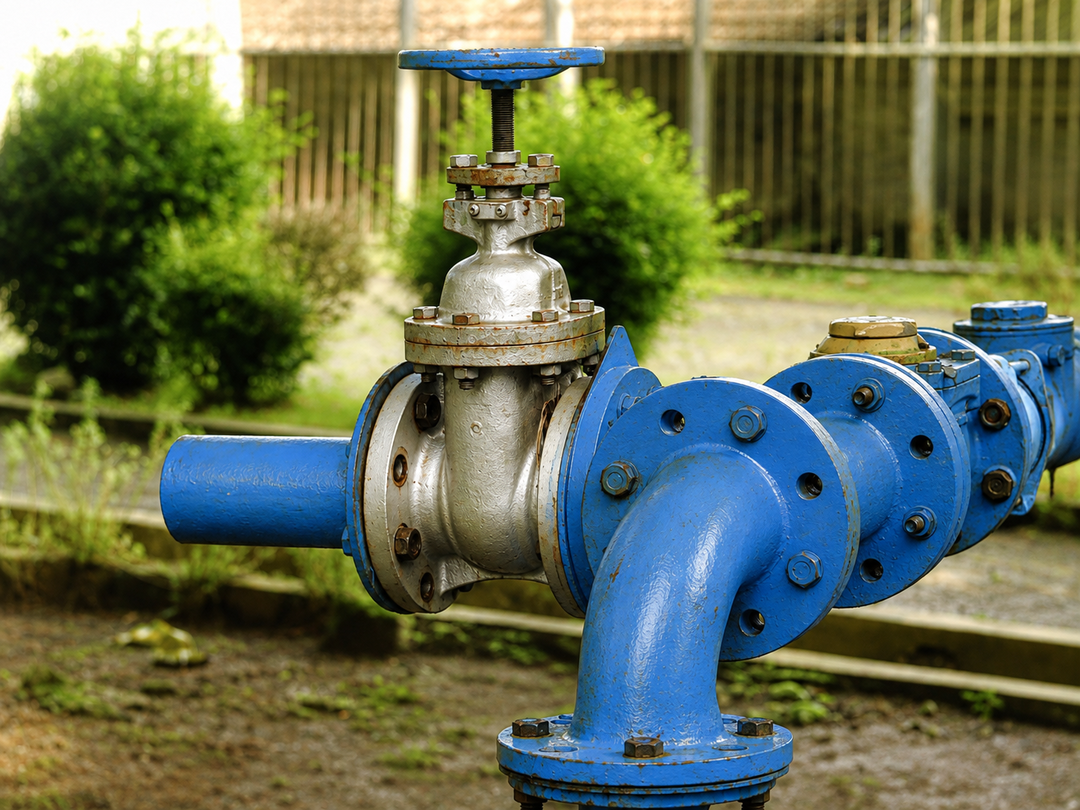
A gate valve raises and lowers a gate, usually a wedge, across the flow. Fully open, the gate is withdrawn into the bonnet, and the flow path is straight and essentially unobstructed, giving very low pressure drop. Operation is multi-turn, so opening and closing are slow. Wedge forms vary, with solid, flexible, and split designs offering different tolerances to thermal distortion and pipe strain, and parallel slide and knife gate variants are available for specific services.
Stem arrangement is a practical decision. A rising stem gives a visual indication of position and needs clearance above the valve; a non-rising stem does not, which suits confined spaces but removes the visual cue.
What it suits
- Isolation duty in lines where low pressure drop when open is important.
- Applications requiring a straight, unobstructed bore for pigging or cleaning.
- Infrequent operation, particularly where a valve is normally left fully open or fully closed for long periods.
- Higher temperature and pressure service, with a long-established body of design standards behind it.
- Situations where slow closure is desirable to limit surge.
What it costs you
A gate valve is not a throttling valve. When held partly open, flow is concentrated along the edge of the gate at high velocity, which erodes the seat and the gate face and can set the gate vibrating against its guides. Damage to those surfaces destroys the shutoff the valve was bought for.
It is also physically demanding of the installation. Face-to-face length is long, height is considerable because the gate has to withdraw fully, and weight rises steeply with size. Multi-turn operation takes time and effort, which is a genuine drawback where a valve must be closed quickly in an emergency, and a strength where surge is the concern.
Two further practical points. A valve that sits in one position for years can seize, so infrequent operation is both a reason to choose a gate valve and a reason to exercise it. And the seating surfaces are in the flow path when the valve is partly open, so a line carrying solids can leave the seat area fouled, preventing full closure later.
04. Globe valves
What it is
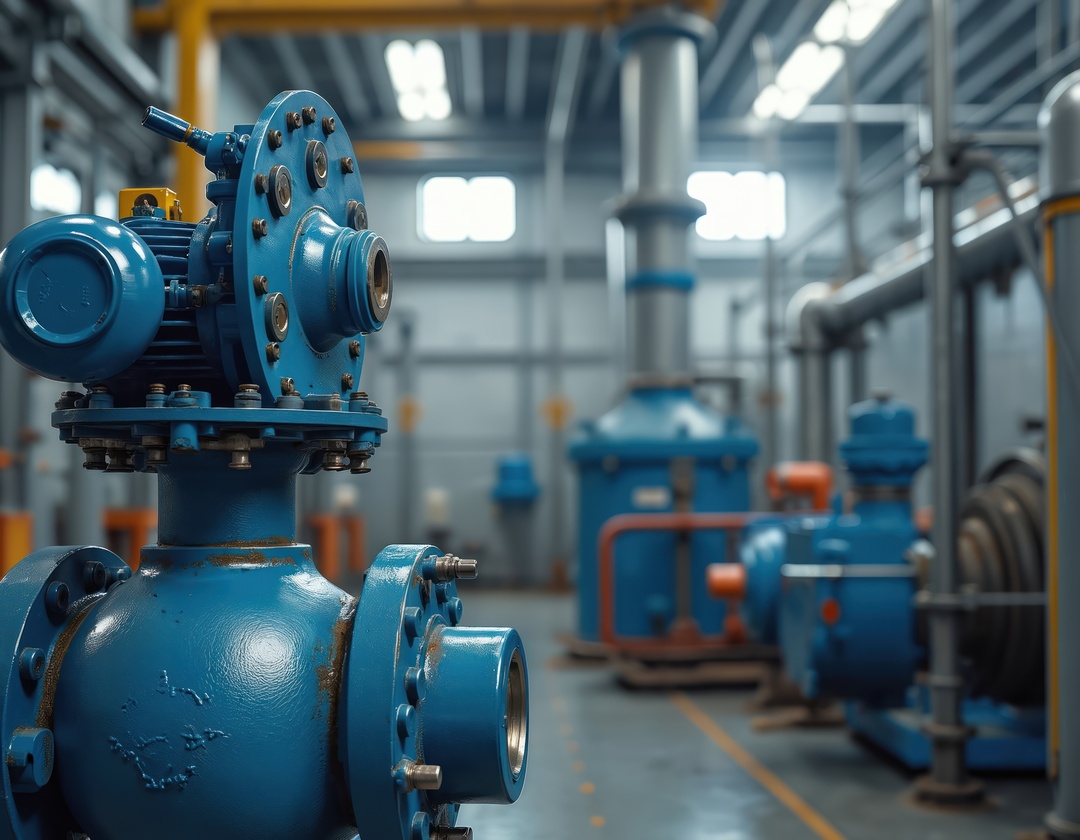
A globe valve moves a disc perpendicular to a seat, with the flow path entering, turning up through the seat and turning again to leave. That double turn is the defining feature. It incurs a pressure drop and buys the ability to sit at a partial opening, with the disc and seat presenting a controlled, progressively varying gap rather than a high-velocity slot.
Because the disc approaches the seat along its axis rather than sliding across it, seating contact is short and largely free of the wiping action that damages gate and ball seats, which is why globe valves tolerate frequent operation and partial opening.
What it suits
- Throttling and flow regulation, which is the job the geometry exists for.
- Frequent operation, since the seating action does not wipe the sealing surfaces.
- Tight shutoff combined with regulation, where a single valve has to do both.
- Applications where the disc and seat will need periodic maintenance, since they are generally accessible and often renewable.
- Smaller line sizes, where the pressure drop penalty is easier to accept, and the weight is manageable.
What it costs you
Pressure drop is a standing cost and is present whenever the valve is open. In the long run with many valves, or in a system where pump head is scarce, that penalty accumulates and is paid continuously in energy.
The forces are higher too. Because the disc closes against the flow, the operating effort and actuator sizing are greater than for a quarter-turn valve of equivalent size, and the valve is heavier and longer than a butterfly valve performing a similar duty.
Orientation matters in a way it does not for the other types. Globe valves have a defined flow direction, and whether flow arrives under or over the seat affects the operating force, throttling behavior, and the valve's ability to maintain pressure. The correct arrangement depends on the service, so it is a question for the supplier and the piping designer rather than an installation detail.
Finally, globe valves become impractical in large sizes, where their weight, length, and cost rise faster than those of alternatives, and a butterfly or control valve arrangement takes over.
05. Butterfly valves
What it is
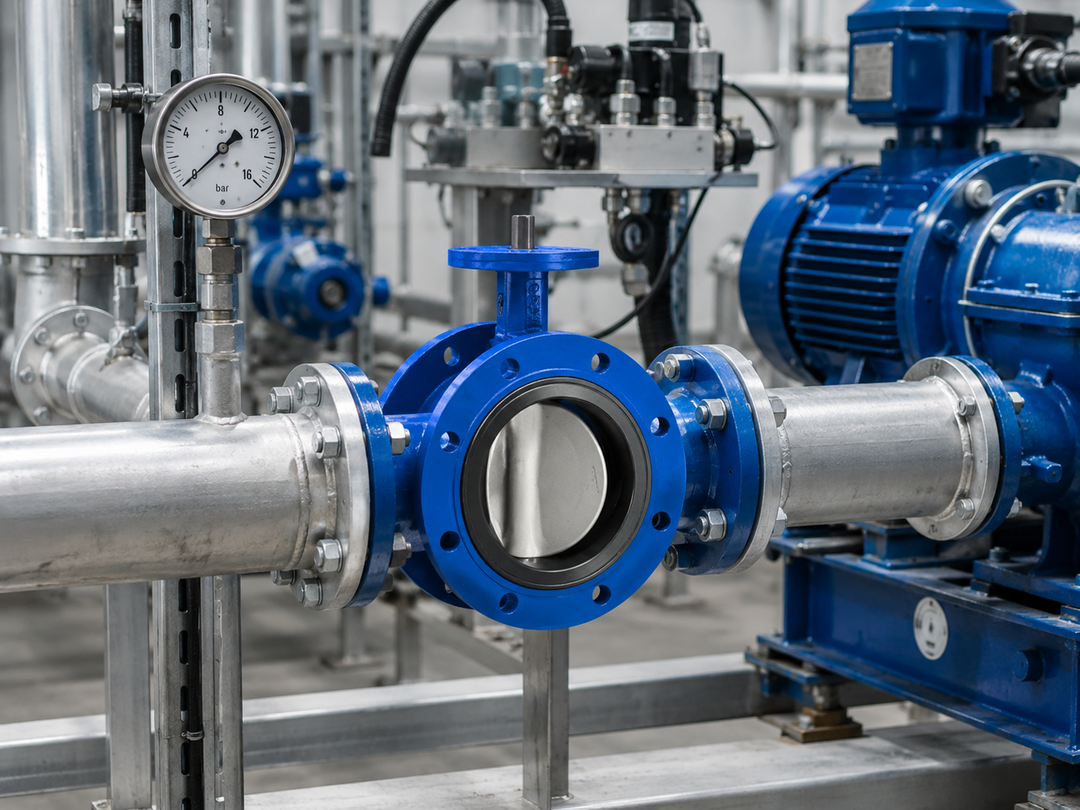
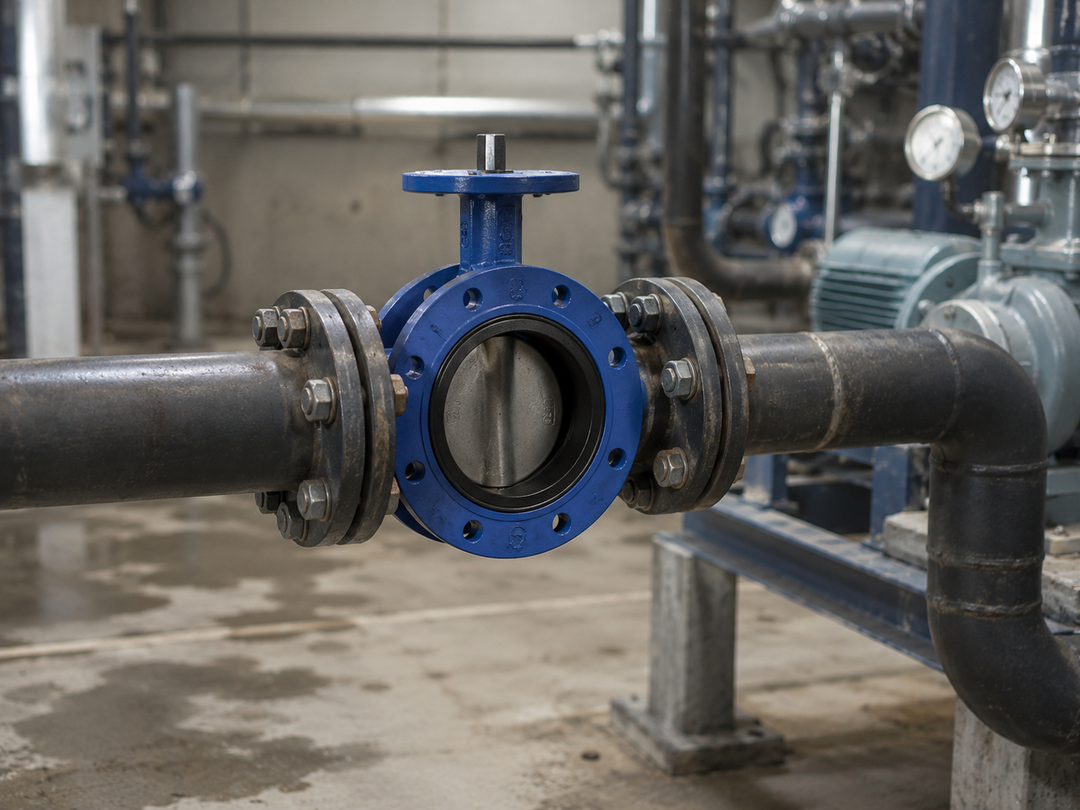
A butterfly valve rotates a disc a quarter turn within the bore. The disc is always in the flow, even fully open, which is the trade-off at the heart of the type: it never gives a fully clear bore, and in exchange it is short, light and comparatively inexpensive, with the advantage growing as size increases.
Geometry divides the family, and API 609 treats the divisions as separate categories rather than variants. Category A valves are rated at a cold-working pressure and use a concentric disc. Category B valves are pressure-temperature rated per ASME B16.34 and cover eccentric and offset disc designs, though the standard also permits a concentric disc configuration within the category; thus, the category is defined by rating basis rather than by disc geometry alone. Concentric resilient-seated designs have the shaft passing through the center of the disc, with the disc centered in a rubber or elastomer seat, in contact with the seat throughout the stroke. Offset designs move the shaft out of the seal plane and the disc off the bore centerline so that the disc lifts clear of the seat as it opens, reducing friction and wear. A further offset introduces a conical seat geometry, which allows a metal-to-metal seal that seats under torque rather than by interference, providing high-temperature capability and bidirectional shutoff.
What it suits
- Large-diameter service, where the weight, length and cost advantage over gate and globe valves is substantial.
- Installations with limited face-to-face space, using wafer or lug bodies mounted between flanges.
- Water, wastewater, ventilation and general utility service, where concentric resilient-seated designs are the standard answer.
- Moderate throttling, which butterfly valves handle better than ball or gate valves, though not as authoritatively as globe valves.
- Frequent cycling in offset designs, where the disc lifting clear of the seat reduces wear.
- Demanding isolation duty in the offset and triple-offset forms, including higher temperature service where soft seats would fail.
What it costs you
The disc is permanently in the flow, so there is always some pressure drop and the bore is never clear. That rules out pigging and complicates cleaning. It also creates a practical hazard that catches people out: the disc swings outside the valve body as it opens, so it can strike pipe liners, reducers, gaskets or a neighboring component. Clearance has to be checked at installation, particularly with lined pipe.
Seat material usually sets the service limits on resilient-seated designs, and exceeding its temperature or chemical tolerance destroys the seat rather than degrading it gracefully. Torque also rises with differential pressure, so an actuator sized against a catalog torque figure without accounting for the pressure across the disc may fail when it is most needed. Large valves warrant confirming actuator sizing with the manufacturer.
Finally, throttling with a butterfly valve concentrates high-velocity flow past the disc edge, which can produce cavitation, noise, and erosion depending on the service and position. It is capable of regulation, but at the demanding end of throttling duty, a valve designed for control is the correct answer.
06. Check valves
What it is
A check valve permits flow in one direction and closes against reverse flow, with no operator and no external signal. It is opened by the flow itself and closed by gravity, a spring, reverse flow, or a combination. Because it responds to the fluid rather than to an instruction, it is a protection device, and it fails in ways the other four do not.
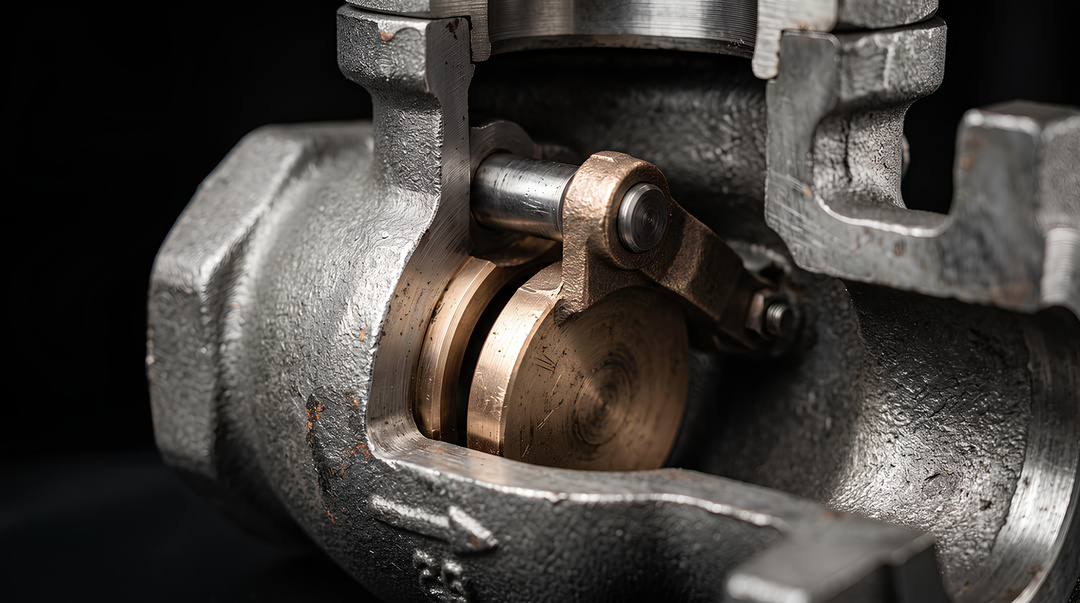
The main forms differ in how the closure member moves. A swing check hinges a disc out of the flow, giving low resistance when open but a long travel distance and therefore slow closure. A lift or piston check moves the closure member along the flow axis, with shorter travel and often a spring assisting closure. A dual plate design splits the disc into two spring-loaded halves, which are lighter and close faster in a short body. A spring-assisted axial or nozzle design, often called a silent check, closes as forward velocity decays rather than waiting for reverse flow.
What it suits
- Preventing reverse flow through pumps and compressors on shutdown.
- Protecting equipment from backflow in any line where reverse flow is credible.
- Maintaining prime and preventing drain-down in vertical lines, using a form suited to the orientation.
- Swing checks specifically, where solids are present, and cycling is infrequent, since the disc swings clear of the flow.
- Silent and dual-plate designs specifically on pump discharge where slam is a concern.
What it costs you
The defining problem is slam and the water hammer that follows. When a pump stops, flow decelerates and then reverses, and the valve closes. If closure occurs after reverse flow has been established, the moving column of fluid is stopped abruptly, and its kinetic energy is converted into pressure. Even a modest change in velocity produces a noticeable surge, and a larger one produces a spike that can damage the pipework and equipment around it. Swing checks are particularly susceptible because their disc travels a long way.
The mitigation is to match the closure characteristic to the system's deceleration rate. Spring-assisted designs begin closing as forward velocity decays rather than waiting for reversal, and lighter dual plate discs close faster than a single swinging disc. No type eliminates the problem in every system, because piping layout, pump behavior, velocity, and valve sizing all contribute.
The second problem is sizing, which buyers get wrong most often. A check valve should be sized so that normal flow velocity holds the closure member fully open against its stop. Sized to the line rather than to the velocity, a check valve sits partly open, the disc flutters, wear accelerates, pressure drop rises, and closure behavior becomes unpredictable. It is entirely legitimate for a check valve to be smaller than the line it sits in.
Two further points. Orientation is not universal: swing checks generally rely on gravity and suit horizontal lines, lift checks suit vertical upward flow, and spring-assisted designs are the most tolerant of any orientation, but the manufacturer's instructions govern. And any debris caught on the seat means the valve leaks, so upstream straight pipe and, where appropriate, a strainer are part of the installation rather than optional extras.
07. The decision path
In this order, the questions narrow the field. Where an answer is unknown, that is the work to do, not an assumption to make.
- What is the valve's function: isolation, throttling, or non-return? If non-return, you are choosing within the check family, and the remaining questions are about closure characteristic and sizing.
- If throttling, is regulation the primary duty? If so, a globe valve or a valve designed for control is the starting point, and the quarter-turn types are candidates only for moderate duty.
- If isolation, does the line need an unobstructed bore for pigging, cleaning, or draining? If yes, full-bore ball or gate, and butterfly is excluded.
- What does the fluid contain? Solids, slurry, and abrasives push toward geometries that keep the closure member and seat out of the flow when open, and away from soft seats and close-clearance designs.
- How tight must shutoff be, and against what test criterion? Soft-seated quarter-turn valves and metal-seated designs behave differently here, and the requirement should be stated as a class rather than as an expectation.
- How often will it be operated? Frequent cycling favors ball, globe, and offset butterfly designs. Very infrequent operation increases the risk of seizure, regardless of the type chosen.
- Is fast closure desirable or dangerous? Quarter-turn valves close quickly, which is convenient in an emergency and a surge risk in a long liquid line.
- What is the size, and what space is available? As size rises, butterfly valves gain a substantial weight, length and cost advantage, and globe valves become impractical.
- What are the emissions, fire safety and material requirements for the service, and will the valve be actuated now or later?
08. Where each option is the wrong answer
Where a ball valve is wrong
- Any throttling duty, where partial opening erodes the seat and eventually destroys shutoff.
- Long liquid lines at meaningful velocity without gearing or a controlled actuator, where quick closure produces surge.
- Service where trapped fluid in the body cavity is unacceptable or can expand, unless cavity relief is provided.
- Service beyond the temperature or fire tolerance of the seat material, which often limits the valve before the body does.
- Slurries and fluids carrying solids that can lodge in the seat area or score the ball.
Where a gate valve is wrong
- Any throttling duty, for the same erosion and vibration reasons.
- Applications requiring quick closure, since multi-turn operation is inherently slow.
- Installations with limited face-to-face length or restricted height above the valve for a rising stem.
- Frequent cycling, where the sliding seating action wears surfaces faster than the alternatives.
- Large sizes where weight and cost make a butterfly valve the sensible choice, unless the clear bore is genuinely required.
Where a globe valve is wrong
- Pure isolation duty in a line where pressure drop matters, since you pay the drop continuously for control authority you never use.
- Lines that must be pigged or cleaned through, which the internal geometry prevents.
- Large diameters, where weight, length, cost, and operating force all become unreasonable.
- Installations where flow direction cannot be guaranteed, given the valve's defined orientation.
Where a butterfly valve is wrong
- Lines requiring an unobstructed bore, since the disc is always in the flow.
- Installations where disc clearance cannot be confirmed, particularly with lined pipe, reducers or close-coupled fittings.
- Service beyond the seat's temperature or chemical tolerance in resilient-seated designs.
- Demanding throttling duty where cavitation, noise or erosion at the disc edge would be a problem.
- Applications where an actuator has been sized from a catalog torque figure without accounting for differential pressure across the disc.
Where a check valve is wrong
- Anywhere positive, verifiable isolation is required. A check valve is a protection device, not an isolation valve, and it must not be treated as one for maintenance safety.
- Lines where flow velocity will not hold the closure member fully open, which is a sizing error rather than a type error.
- Orientations the specific design does not support.
- Systems with rapid deceleration where the closure characteristic has not been matched to it.
Where the valve is not the problem
When a valve fails repeatedly, the cause is often upstream of the valve. Solids that should have been strained out, cavitation caused by the system rather than the valve, pipe strain distorting the body, insufficient straight pipe ahead of a check valve, and an actuator sized for the wrong torque all present as valve faults. Before specifying a different valve, establish what the current one is actually being subjected to, because a better valve in the same conditions often fails the same way.
09. Standards, testing, and what to confirm with a supplier
The standards that govern
Valve procurement rests on a layered set of documents, and confusing the roles of these documents is a common source of specification errors.
- ASME B16.34, published by the American Society of Mechanical Engineers, establishes pressure-temperature ratings, materials, dimensions, testing, and marking for valves generally. It is the base document that pressure class means anything against.
- Product standards published by the American Petroleum Institute cover specific types. API 600 covers bolted bonnet steel gate valves with flanged and butt-welding ends. API 602 covers gate, globe and check valves in the smaller sizes, up to DN 100, or NPS 4. API 608 covers metal ball valves with flanged, threaded and welding ends. API 609 covers butterfly valves in double-flanged, lug, and wafer forms and divides the family into Category A and Category B. API 623 covers bolted-bonnet steel globe valves. API 594 covers check valves in flanged, lug, wafer and butt-welding forms.
- API 6D covers gate, ball, plug and check valves for pipeline service, with its own inspection and testing regime.
- Face-to-face and end-to-end dimensions are standardized so that valves of a given type, size and class are interchangeable between manufacturers.
- Inspection and pressure testing requirements are covered by their own standard, with an ISO equivalent, and a pipeline valve specification imposes a more demanding regime again.
Many of these have ISO counterparts, and manufacturers frequently certify to both. Two things follow for a buyer. A product standard, a rating standard and a test standard answer different questions, so naming one does not cover the others. And a valve tested to a recognized method is not automatically a valve built to a particular product standard, which is a distinction worth being explicit about on a datasheet.
Shutoff, fire safety and emissions
Shutoff tightness should be specified against a defined criterion rather than described. Valve inspection and testing standards set allowable seat leakage for pressure testing, and control valve seat leakage is classified separately under its own scheme. State which applies.
Fire testing for quarter-turn valves and valves with nonmetallic seats is covered by API 607, with ISO 10497 as the international counterpart, and it establishes that the valve retains pressure containment during and after exposure to fire. This matters most for soft-seated ball and butterfly valves, whose seats would otherwise be the first to fail.
Fugitive emissions are addressed through a family of type tests: API 622 covering valve packing itself, API 624 covering rising-stem valves such as gate and globe valves, and API 641 covering quarter-turn valves, with ISO 15848-1 providing an alternative classification scheme with its own tightness, endurance, and temperature classes. The important practical point is that these are type tests on a qualified design rather than a property of every valve shipped, so ask what was certified, to which standard and class, and whether the valve being supplied is within that qualification.
Actuation and materials
Where a valve will be actuated now or later, a standardized part-turn actuator mounting interface makes future automation straightforward, and specifying it on a manually operated valve is cheap insurance. For sour service, material requirements are governed by the joint NACE and ISO standard for materials in hydrogen sulfide-containing environments, and compliance has to be specified rather than assumed.
What to confirm with a supplier
- Which product standard the valve is built to, and which test standard it was tested to, stated separately.
- The pressure-temperature rating at your actual operating temperature, not the nominal class.
- The seat material and its temperature and chemical limits, since these often govern before the body does.
- The seat leakage criterion the valve is certified to, and the test under which it was evaluated.
- For quarter-turn valves: whether fire testing applies and to which standard.
- For emissions service: what fugitive emissions certification exists, to which standard and class, and whether the supplied configuration is inside that qualification.
- Operating torque or thrust at your differential pressure, and how the actuator was sized against it.
- Face-to-face dimension and the standard it conforms to, plus disc swing clearance for butterfly valves.
- For ball valves: bore, seat arrangement, and whether body cavity relief is provided.
- For check valves: the velocity required to hold it fully open at your flow, and the recommended orientation and upstream straight pipe.
- For check valves: the closure characteristic and how it was matched to the deceleration of your system.
- Materials certification, and sour service compliance where it applies.
- What the supplier has seen fail in this service, which is the question that most reliably separates a knowledgeable supplier from a catalog.
Take This to Your Next Conversation
Fifteen questions drawn from this guide. The answers together will usually settle the type and expose any mismatch between what you asked for and what is being quoted.
- Which product standard is this valve built to, and which test standard was it tested to?
- What is the pressure-temperature rating at my actual operating temperature rather than at the nominal class?
- What is the seat material, and does it or the body set the service limit for my fluid?
- What seat leakage class is this certified to, and under which test?
- Is this valve intended to be throttled, and if I hold it partially open, what wears out?
- What is the operating torque or thrust at my differential pressure, and how did you size the actuator against it?
- What is the face-to-face dimension, to which standard, and will it drop into my existing spool?
- For a butterfly valve: how far does the disc swing outside the body, and have you checked it against my pipe and liner?
- For a ball valve: is this full-bore or reduced, and is body-cavity relief provided?
- For a check valve, what flow velocity is needed to keep it fully open, and does my normal flow meet that requirement?
- For a check valve: what closure characteristic does this have, and how does it match how quickly my system decelerates?
- If fire safety applies, is this fire tested, and to which standard?
- What fugitive emissions certification exists, to which standard and class, and is the configuration you are quoting inside that qualification?
- Does this carry a standard actuator mounting interface if I automate it later?
- What have you seen fail in this service, and what changed as a result?
About this guide
Written by the Industrial Web Search editorial team. This guidance is general and does not replace engineering advice for a specific system or service. The standards referenced here are revised periodically, and their current editions are the authority. Product, rating, and test standards answer different questions and are not interchangeable. Material requirements for corrosive and sour service, pressure equipment obligations, and emissions requirements vary by jurisdiction and by service and are revised on their own schedules. Verify every specification against the current edition of the governing standard and against manufacturer documentation for the specific valve, and confirm regulatory and material requirements with a qualified engineer for your service and market.